
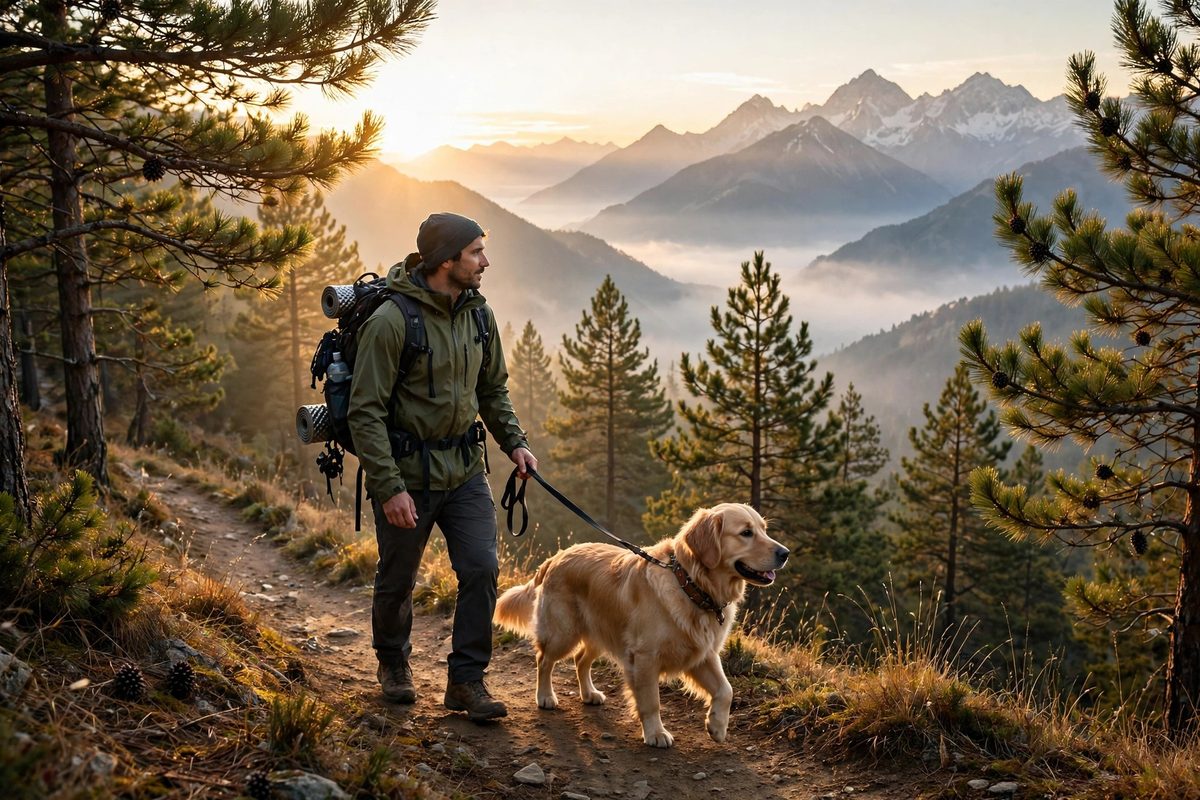
 Featured imageA hiker and a golden retriever on a mountain trail at sunrise
Hiking with dogs is one of the best parts of life on the trail — a good trail dog is a hiking partner, a lookout, and a reason to slow down and notice the day. But a dog changes the hike: it needs more water, more rest, and more planning than a solo hiker, and its behaviour affects every other person and animal on the trail. This guide covers the fitness, leash rules, heat and paw care, water and food, wildlife, first aid, and Leave No Trace habits that keep a dog hike safe — and when to leave the dog at home.
Hiking with dogs is safe and fun when the dog is fit for the distance, kept on a leash where required, given plenty of water and shade, and kept away from wildlife and other hikers. Check the trail’s dog rules before you go, carry water and food for the dog as well as for yourself, watch for heat and sore paws, pack out all dog waste, and turn back early if the dog is tired, limping, or overheating.
Position and Plan
Position: A practical guide to taking a dog hiking — fitness, leash rules, heat, water, paws, wildlife, first aid, and trail etiquette — written for dog owners who want a safe day out without spoiling the trail for anyone else.
Plan: Walk through each part of a dog hike in the order you will meet it: choosing the right trail, keeping the dog under control, managing heat and water, protecting paws, meeting wildlife, handling first aid, and leaving no trace — plus the times when the kindest choice is to leave the dog at home.
Hiking with dogs at a glance
| Topic | What to know |
|---|---|
| Fitness first | Build distance slowly; a fit dog still needs rest days and shorter first hikes. |
| Leash rules | Keep the dog on a leash where required — and under control everywhere else. |
| Heat and weather | Dogs overheat fast: hike early, offer shade, and watch for heavy panting. |
| Water and food | Carry water for the dog too — about half a litre per hour in warm weather. |
| Paw care | Check paws at every stop; hot rock, ice, and rough ground all cause injuries. |
| Wildlife | Keep the dog close and quiet; never let it chase or approach wild animals. |
| First aid | Carry a small dog first-aid kit and know the signs that mean turn back. |
| Leave No Trace | Pack out all dog waste and keep the dog on the trail and out of water sources. |
| When to stay home | Banned trails, fragile wildlife areas, puppies, and reactive dogs stay home. |
1. Is your dog ready for the trail?
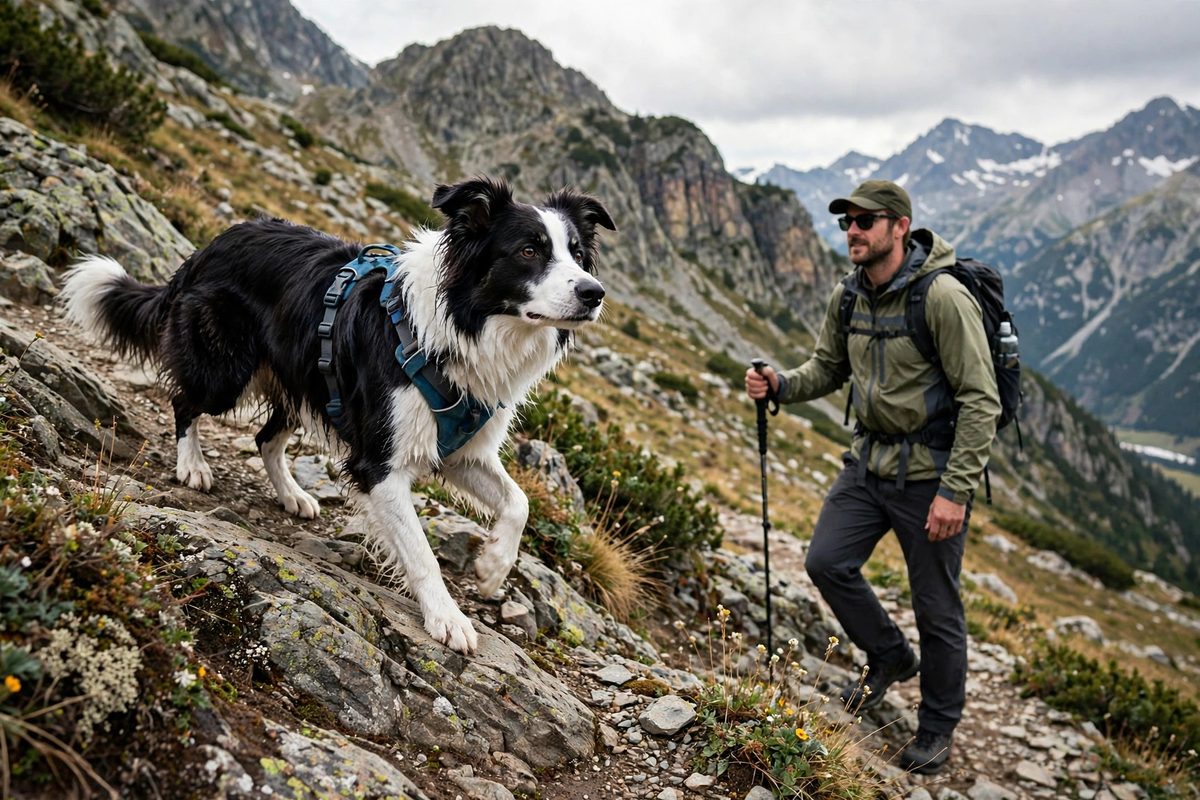
Not every dog is a trail dog, and fitness is the first question, not the breed. A healthy adult dog that walks an hour a day without tiring can usually handle a gentle half-day hike, but a dog that spends most of its time on the sofa will struggle on the first climb — just as an unfit hiker would. Build distance over several weeks: start with short, flat walks, add hills and distance gradually, and watch how the dog recovers the next day. A dog that is stiff, reluctant to move, or sleeping all day after a walk went too far. Puppies under a year old should not do long or steep hikes, because their joints are still growing, and older dogs with arthritis or heart problems need shorter, flatter routes and more breaks.
Breed and body shape matter too. Short-nosed breeds such as bulldogs and pugs overheat quickly and struggle to cool down, so they suit short, cool, shaded walks rather than long summer hikes. Very small dogs tire fast on rough ground and may need to be carried over scrambles, while very large dogs carry more weight on their joints on steep descents. A dog’s coat matters as well: thick-coated dogs overheat in summer, and thin-coated dogs get cold fast in wind and rain. Whatever the breed, the honest test is the dog in front of you — if it is panting hard, lagging behind, or lying down on the trail, it is telling you to stop. Our hiking safety checklist is a good place to start planning any hike, dog or no dog.
Training matters as much as fitness. A trail dog needs a reliable recall — the dog must come back the first time you call, even when it has found something interesting. It should walk on a loose leash without pulling, sit and wait at road crossings and trail junctions, and ignore other dogs and people unless invited. Practice these skills in a park before the first real hike, and carry treats to reward calm behaviour. A dog that cannot be recalled is a dog that should stay on a leash for the whole hike, no exceptions.
2. Leash rules and trail etiquette
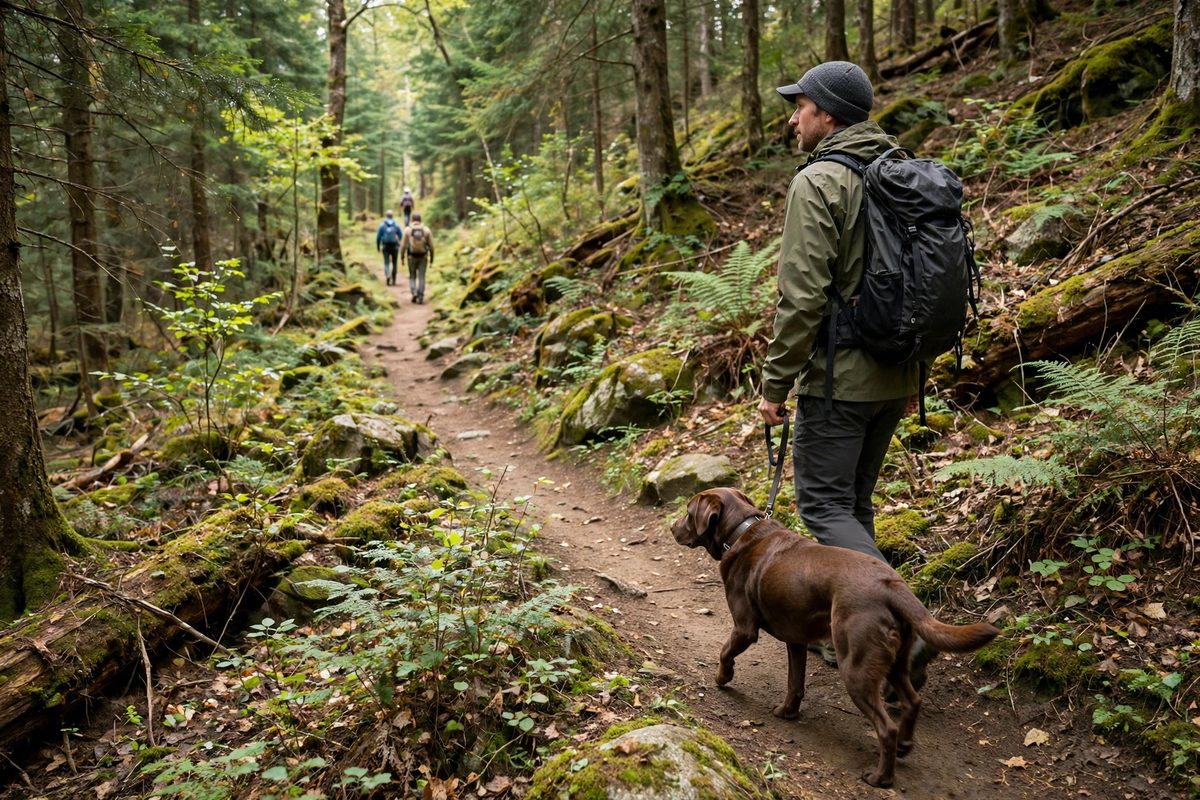
The leash is the single most important piece of dog hiking gear. Many trails require dogs on a leash at all times, and some areas — national parks, nature reserves, and wildlife refuges — ban dogs entirely, so check the rules before you set off. Even where off-leash hiking is allowed, a leash is the right choice on busy trails, near roads, at viewpoints, and anywhere livestock or wildlife may be close. A leash of about two metres gives the dog room to sniff and explore without letting it charge at other hikers or disappear around a bend. Retractable leashes are a poor choice on trails: they tangle around legs, give you little control, and can injure a dog that bolts.
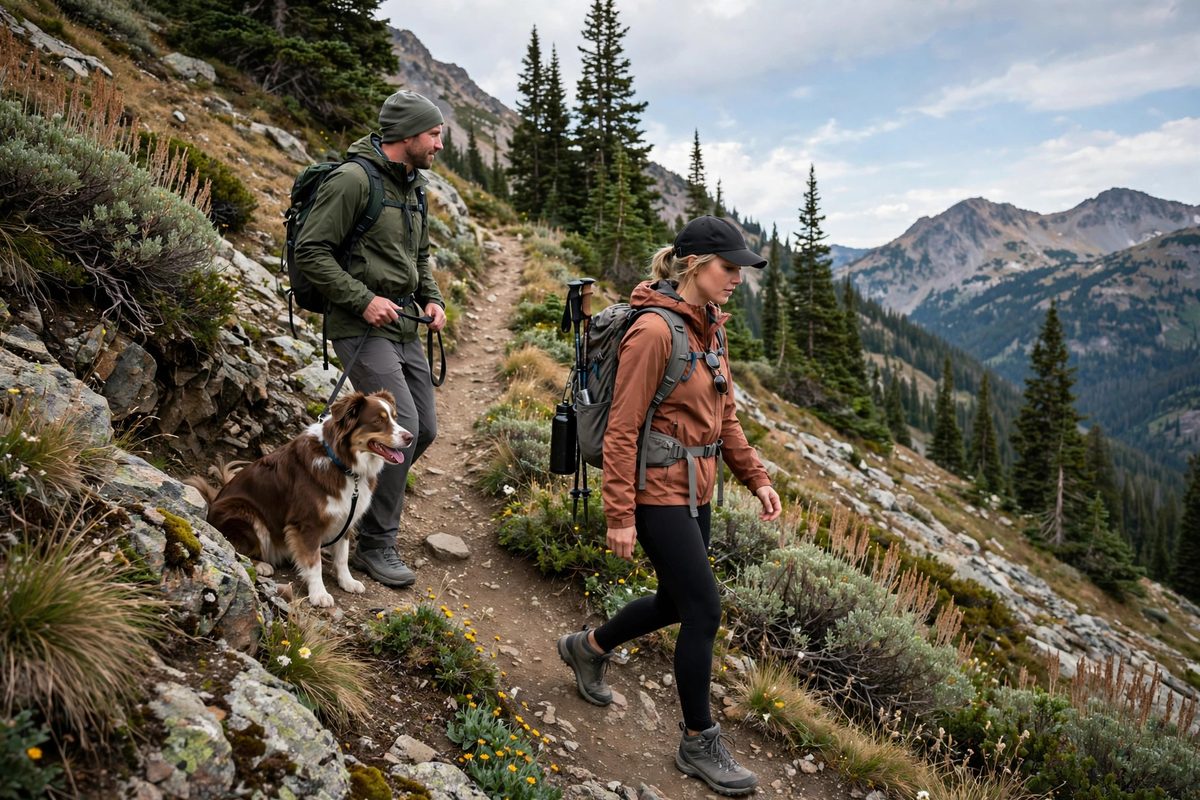
Trail etiquette is simple: your dog should be invisible to other hikers unless they want to meet it. Step off the trail with the dog close beside you when others pass, keep it on the downhill side so it cannot trip anyone, and shorten the leash at narrow spots and blind corners. Never let the dog approach other people, children, or dogs without asking first — some people are afraid of dogs, some are allergic, and some are walking a reactive dog of their own. If your dog barks at strangers, work on that before the hike, not during it. Yielding to uphill hikers matters even more with a dog, because a dog on a long leash across the path is a tripping hazard for someone already working hard on a climb.
3. Heat, cold and weather
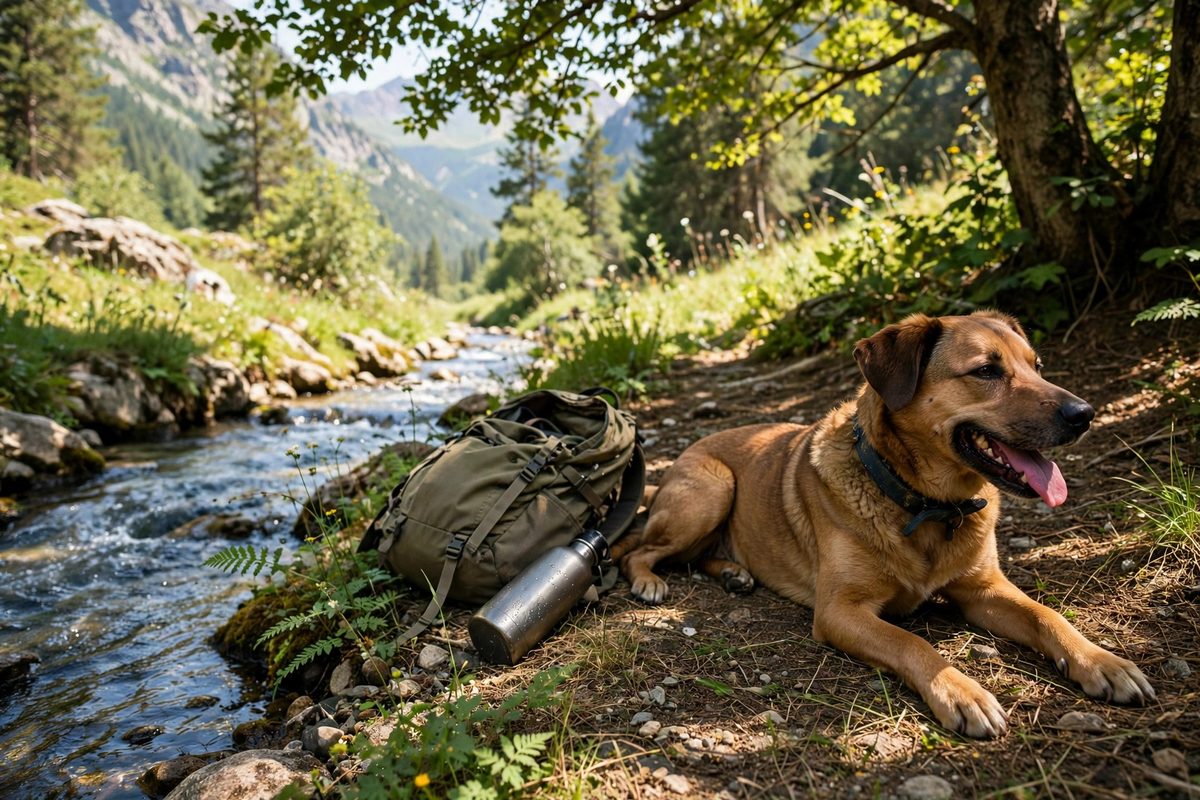
Dogs overheat far faster than people do. A dog cools itself mainly by panting, which is inefficient in hot, humid air, and a thick coat adds insulation a human never carries. The danger signs are heavy, rapid panting, a bright red tongue, drooling, glazed eyes, wobbling, or vomiting — any of these means stop, find shade, and cool the dog with water on its belly, paws, and ears. Never leave a dog in a car, even for a few minutes, and never hike in the heat of the day in summer: start early, finish before midday, and choose shaded, wooded routes over open, sun-baked ridges. As a rough guide, if the ground is too hot for the back of your hand, it is too hot for the dog’s paws.
Cold brings the opposite problem. Thin-coated and small dogs lose heat fast in wind, rain, and snow, and a wet dog in a cold wind can become hypothermic surprisingly quickly. Carry a dog coat or an extra layer for rest stops, dry the dog off before a long break, and keep it moving on cold days. Ice and snow ball up between a dog’s toes and cause limping, and road salt and grit irritate paws — rinse them at the end of the day. Check the forecast the way you would for yourself, and be ready to shorten the route: our guide to hiking in the rain explains how to stay dry and safe when the weather turns.
4. Water and food on the trail
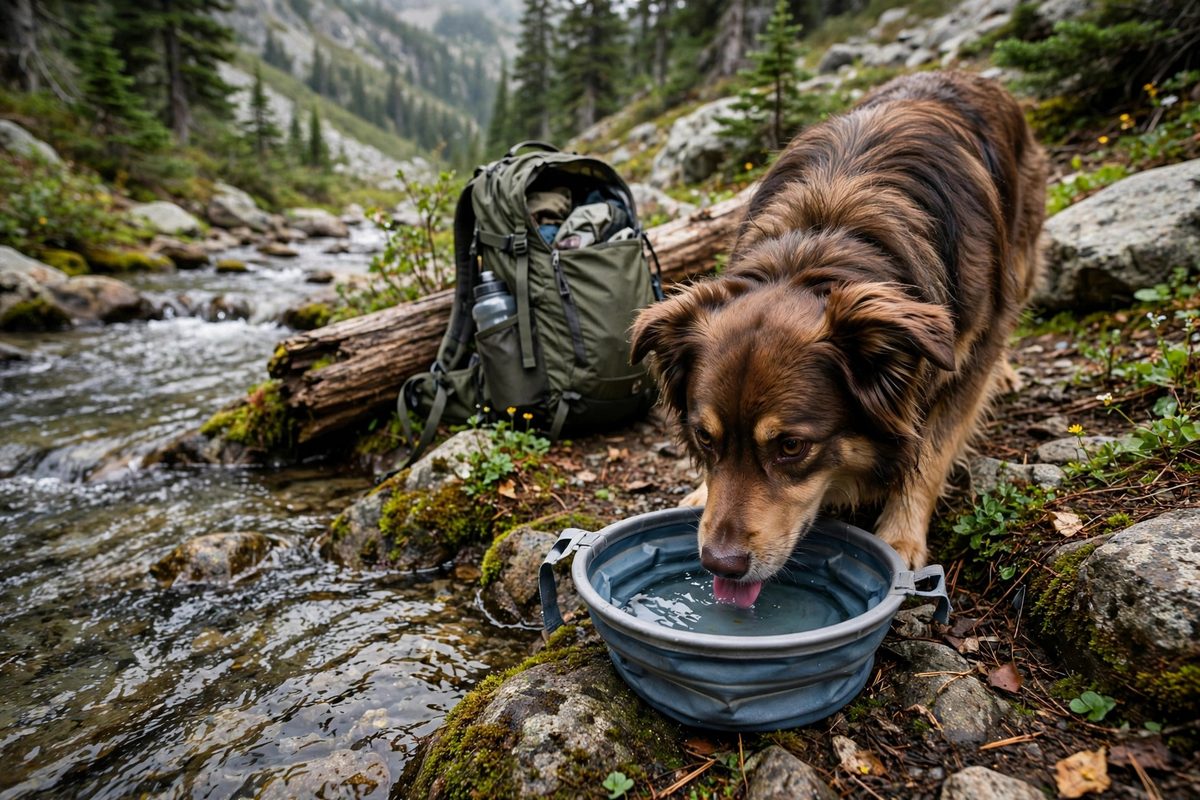
A hiking dog needs far more water than a dog at home — roughly half a litre per hour of walking in warm weather, and more on steep or exposed ground. Carry the dog’s water yourself: a dog cannot carry much, and a dog that drinks from every puddle and stream risks stomach bugs and parasites. Bring a collapsible bowl so the dog can drink properly at rest stops, and offer water little and often rather than letting the dog gulp a huge amount at once. If you do need to refill from a stream, treat the water the same way you treat your own: our guide to water treatment basics for hiking explains which methods work and when filtering is not enough.
Food matters too, especially on a long day. A dog burns far more calories on a hike than at home, so bring its normal food plus a little extra, and offer small snacks at rest stops rather than one big meal on the trail — a dog that eats a large meal and then runs hard can become seriously ill. Keep the food in a sealed bag the dog cannot open, and never feed the dog from your own trail snacks: chocolate, raisins, nuts, and many sweeteners are poisonous to dogs. At camp, store the dog’s food with your own food, away from animals, and never leave food scraps on the ground — they attract wildlife to the trail and to your tent.
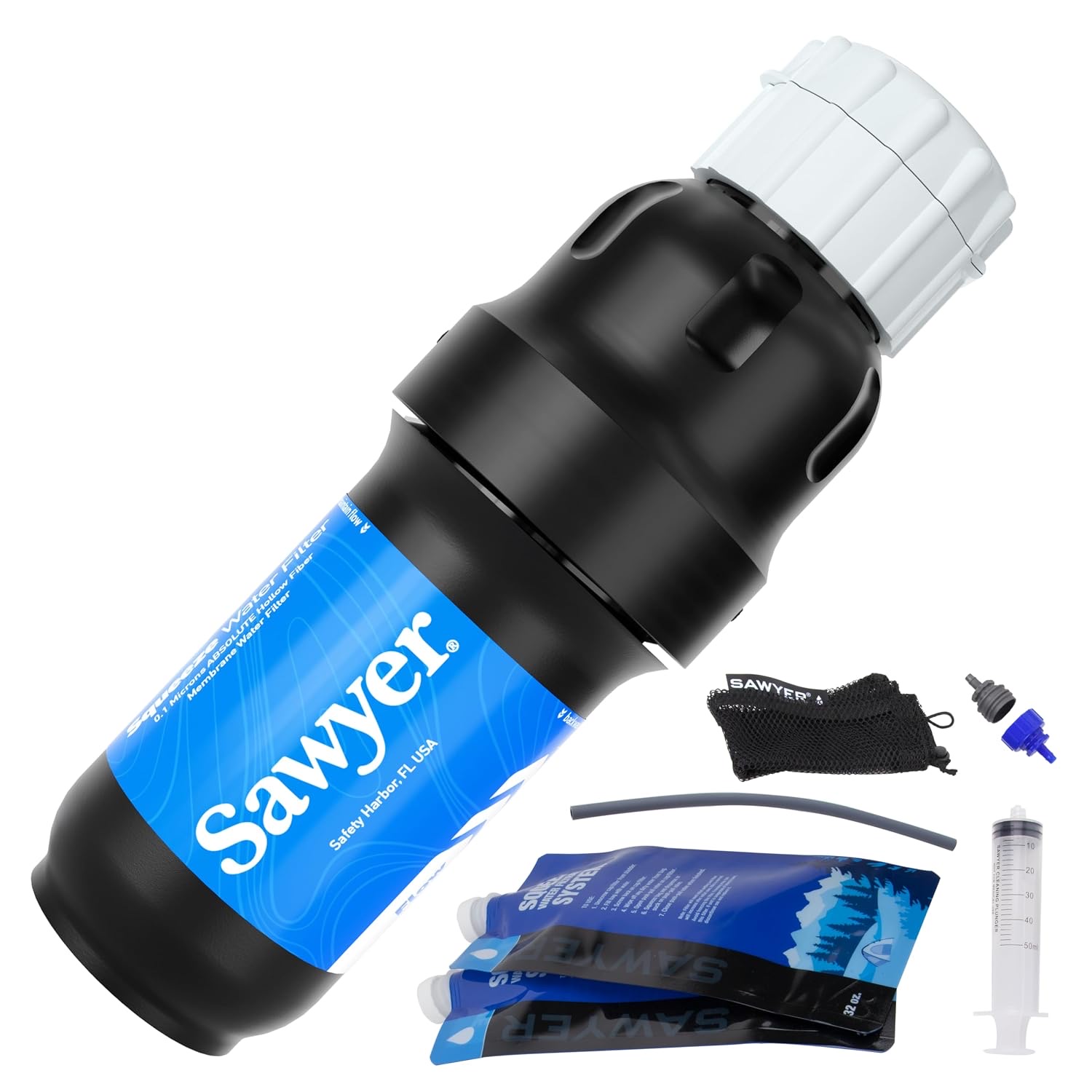
Sawyer Squeeze
Best for: Hikers who want a simple, light filter for streams and lakes.
A compact squeeze filter that treats water on the move with no pumping.
4. Water and food on the trail
- Very light and simple to use
- No pumping or batteries
- Fits standard bottles and pouches
- You want to filter large volumes at camp or muddy water.

Platypus QuickDraw 1 Liter Water Filter System
Best for: Hikers who want a fast filter with a clear view of the water flow.
A compact 1-litre filter system with a fast flow rate for quick trail refills.
4. Water and food on the trail
- Fast flow for quick refills
- Clear body shows the water
- Light and easy to pack
- You want a gravity system for groups or a larger capacity.
5. Paw care
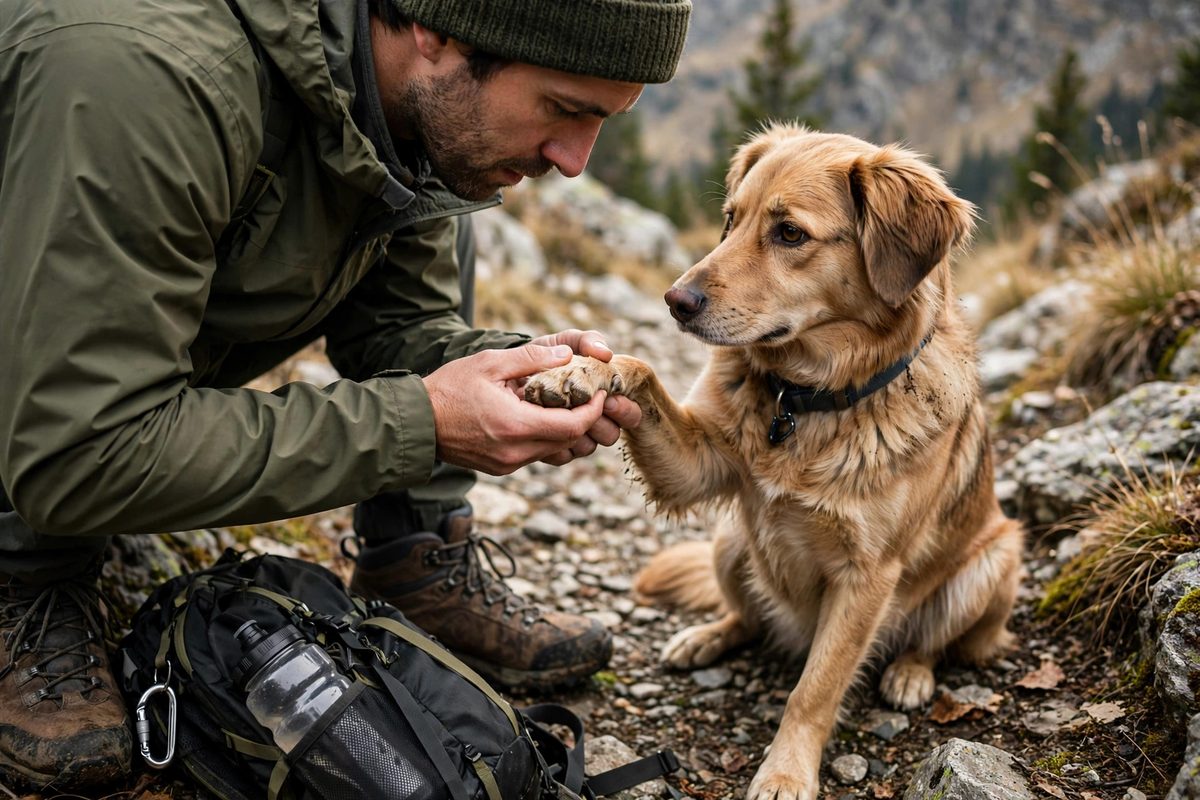
A dog’s paws take the same punishment as a hiker’s feet, and they blister, cut, and crack in the same ways. Rough granite, sharp scree, hot rock, ice, and salt all damage paw pads, and a dog that has only ever walked on grass and pavements has soft pads that will not survive a rocky mountain trail. Toughen paws gradually with short walks on varied ground over several weeks, and check the paws at every rest stop: look between the toes for stones, thorns, and ice balls, and feel for heat, swelling, or cuts. If the dog starts limping, licking a paw, or refusing to walk, stop and look — a small thorn found early is a minor problem, but a dog that walks on an injured paw for another hour can be badly hurt.
Dog booties are worth carrying, even if the dog never wears them on a normal day. They protect injured paws, shield pads from hot rock and sharp scree, and give grip on ice — but a dog must get used to them at home first, or it will walk like a startled puppet and refuse to move. Carry paw balm for dry, cracked pads, and keep the nails trimmed so they do not catch on rocks. The same care applies to your own feet: our guide to preventing blisters on long hikes covers the foot care that keeps the human half of the team walking, and boot fit matters just as much — see our guide to how hiking boots should fit.
6. Wildlife encounters
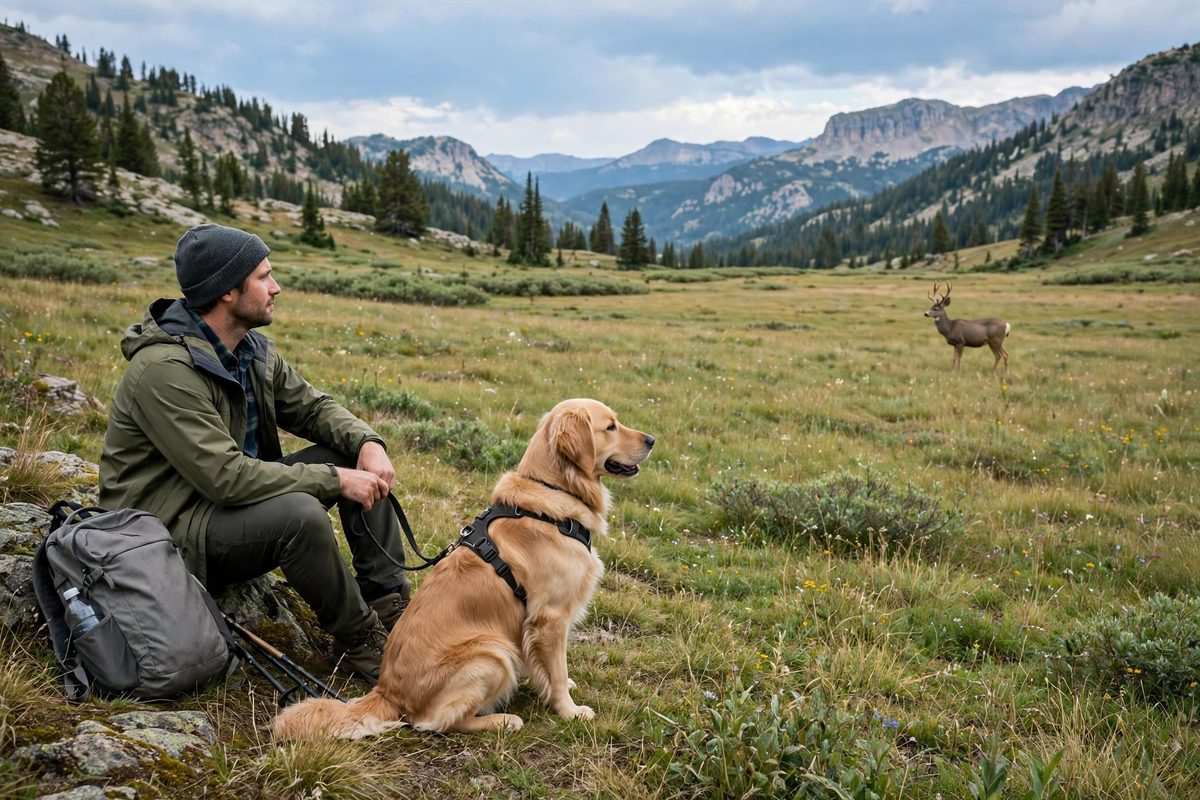
Wildlife is where a dog hike can go wrong fastest. A dog that chases a deer can run for kilometres, get lost, or drive the animal into a road; a dog that corners a snake, a badger, or a bear can be badly hurt in seconds. Keep the dog on a leash in wildlife areas, on a short leash at dawn and dusk when animals are most active, and never let it investigate burrows, nests, or carcasses. A dog that barks at wildlife stresses animals that are feeding, raising young, or trying to survive winter — and in some areas, a dog worrying livestock can legally be shot, so keep it away from sheep, cattle, and horses at all times.
If you meet wildlife, the rules are the same as for a hiker without a dog, only stricter: stop, keep the dog close and quiet, and back away slowly. Do not let the dog approach, and never pick the dog up in front of a large animal — a small dog held in your arms can look like prey. Make noise in bear country, carry bear spray where it is recommended, and know the signs of snakes in the area you are hiking. A good recall is your safety net: if the dog does bolt, a dog that comes back on the first call is a dog you can get home safely. Run through the whole safety picture before you go with our hiking safety checklist.
7. Dog first aid on the trail
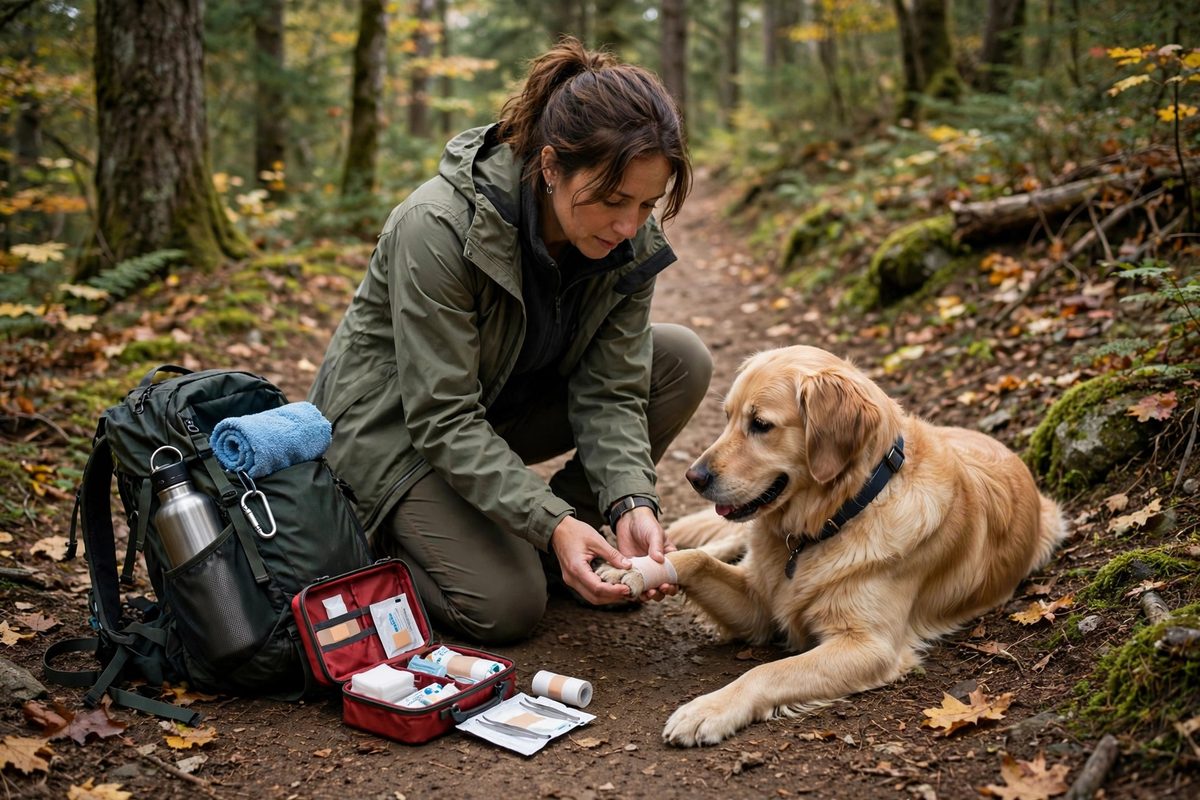
A dog first-aid kit is small, light, and worth its weight many times over. Pack tweezers for ticks and thorns, a small bottle of saline or clean water for flushing wounds, antiseptic wipes, gauze and self-adhesive bandage, a tick remover, any medicine your vet has prescribed, and a spare leash. Learn the basics before you need them: how to stop bleeding with pressure and a bandage, how to cool an overheated dog, how to carry an injured dog — a large dog is heavy, and you may need a makeshift stretcher from trekking poles and a jacket, or a proper dog-carry harness on remote routes. Know your vet’s phone number and the nearest emergency vet to the trailhead, and save both on your phone before you set off.
The most common trail injuries are cut paws, thorns, ticks, bee stings, and heat exhaustion, and most are handled the same way: stop, stay calm, treat the problem, and decide whether to continue or turn back. A dog that is limping, vomiting, shaking, or unusually quiet is a dog that needs to go home — do not push on because the summit is close. If the dog is bitten by a snake, keep it still, keep the bite below the heart, and get to a vet as fast as you can; do not try to suck out the venom or apply a tourniquet. For a multi-day trip, the same planning applies to your own pack: our first overnight packing list covers what belongs in the bag for a first night out.
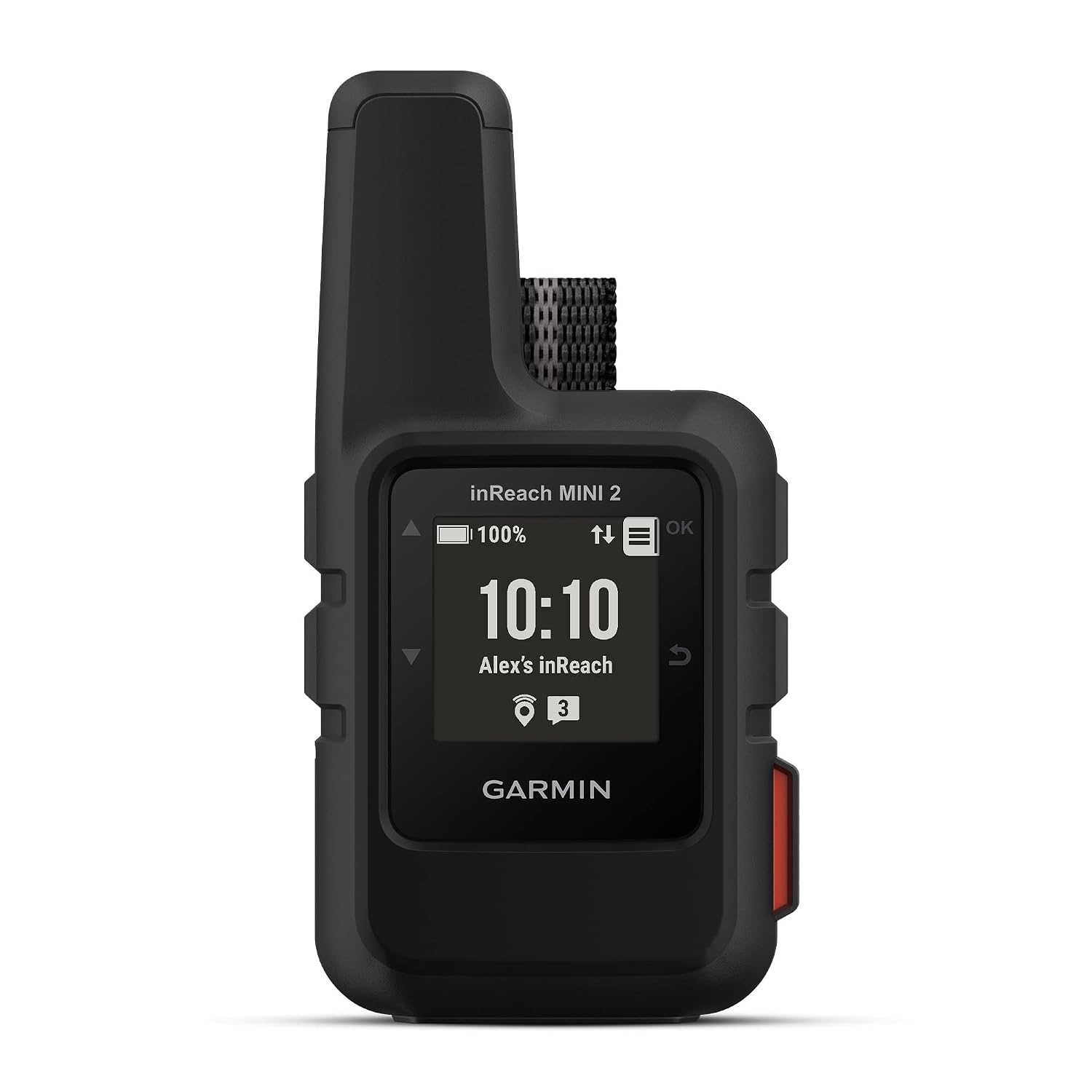
Garmin inReach Mini 2
Best for: Hikers who go beyond phone signal and want two-way contact.
A compact satellite communicator for messages and SOS when there is no mobile coverage.
7. Dog first aid on the trail
- Two-way messages off the grid
- SOS when there is no signal
- Small and light to carry
- Needs a subscription plan for messaging and SOS.
8. Leave No Trace with a dog
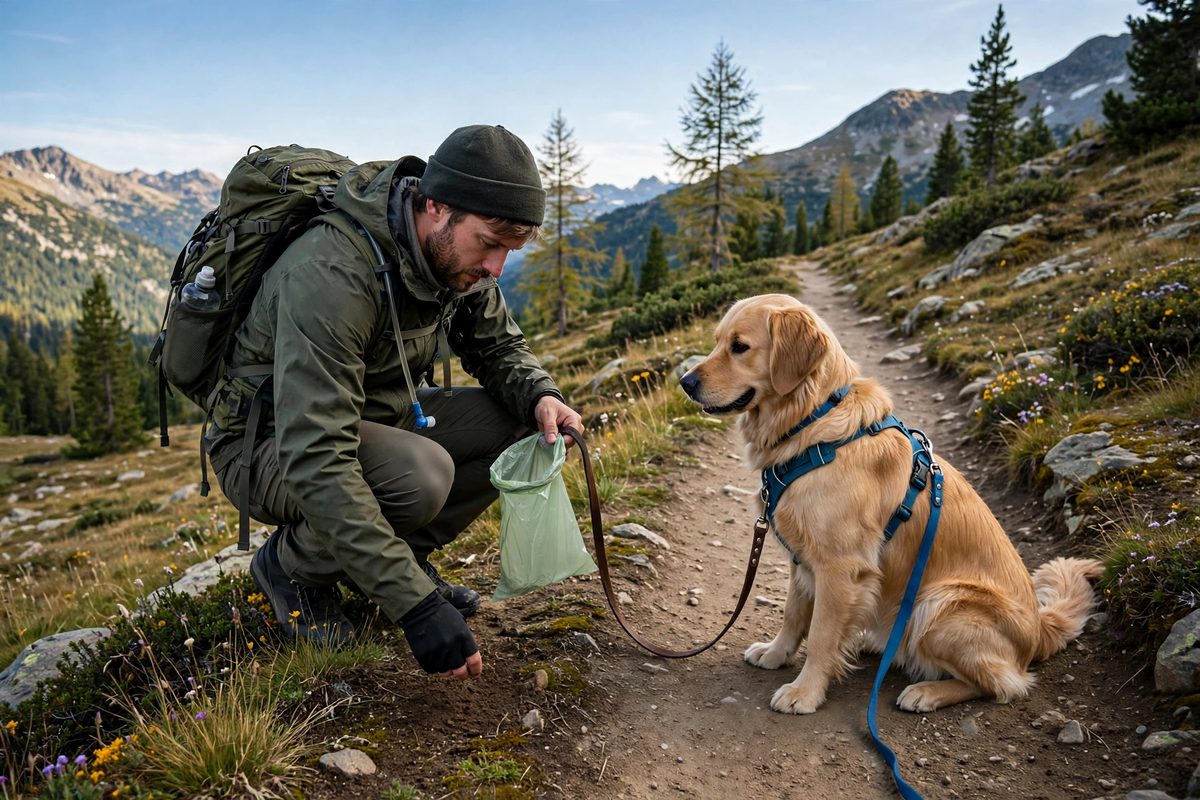
A dog’s waste is not natural fertiliser and it does not just wash away: it carries bacteria and parasites that pollute streams, spread disease to wildlife, and ruin the trail for the next hiker. Bag it and pack it out, every time, on every trail — burying it is not good enough, and leaving a bag beside the trail “to collect on the way back” is littering. Carry spare bags, a small sealed container to carry them in, and hand sanitiser. The same rule applies to the dog’s behaviour: keep it on the trail, out of streams and lakes where other hikers fill their bottles, and away from meadows and nesting areas. A dog that digs, chases, or tramples vegetation leaves a trace long after it has gone home.
Noise is a trace too. A barking dog carries for hundreds of metres and ruins the quiet that many people come to the trail to find — and it stresses wildlife. Train the dog to be quiet on the trail, and keep it close at campsites, especially at night. If the dog cannot be quiet, it is not ready for a busy trail or a shared campsite. These habits are part of a bigger ethic: our guide to the seven Leave No Trace principles sets out the full set of low-impact habits for every hiker, with or without a dog.
9. When NOT to bring your dog
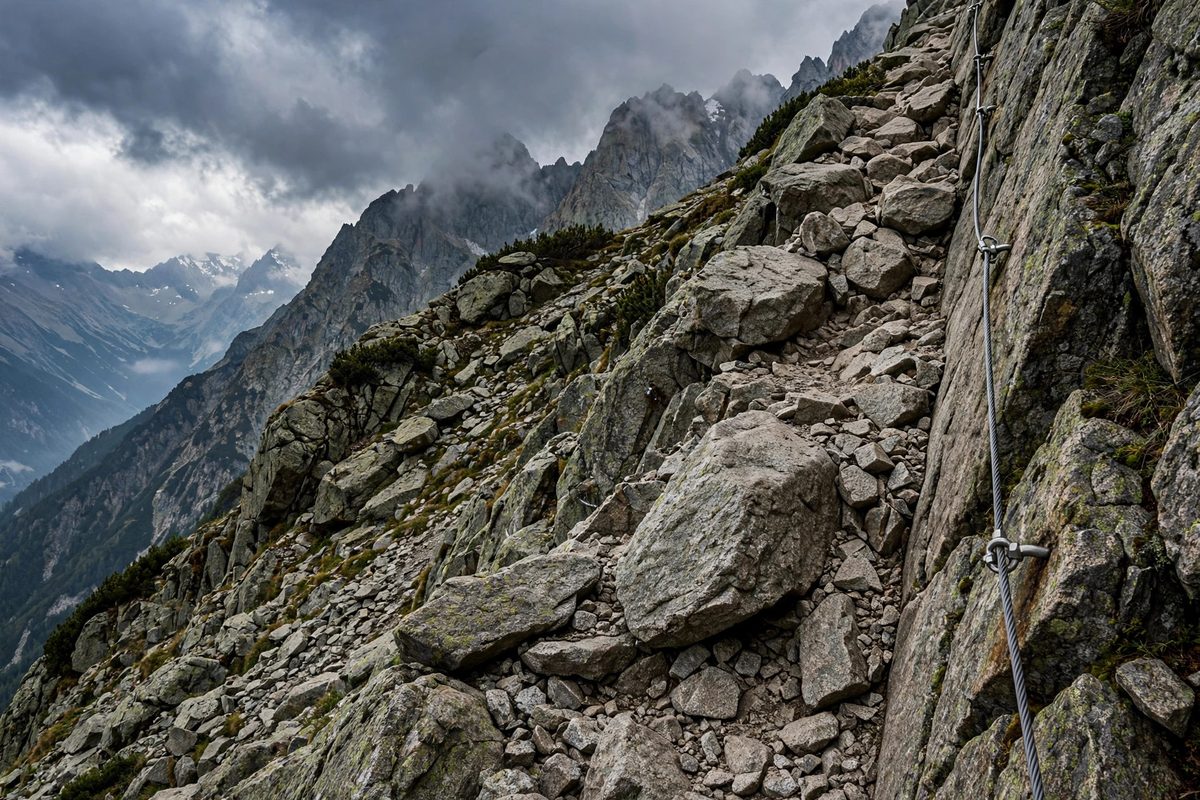
The hardest part of hiking with dogs is knowing when to leave the dog at home. Some trails ban dogs outright — most national parks, many nature reserves, and some mountain areas — and the ban exists for a reason, usually fragile wildlife or livestock. Fragile seasons matter too: nesting season, lambing season, and the hottest weeks of summer are all times to leave the dog behind. A dog that is reactive, fearful, or aggressive with other dogs or people is not a trail dog yet, however much it loves a walk in the park, and a puppy, an old dog, or a dog recovering from illness or surgery should stay home until a vet says otherwise.
Long, technical, or exposed routes are also a no: a dog cannot climb a ladder, cross a via ferrata, or be carried down a steep scramble safely, and a dog on a narrow ledge is a danger to itself and to everyone behind it. The same goes for multi-day routes with no water, no shade, and no way out if the dog is injured. Leaving the dog at home is not a failure — it is the responsible choice, and the dog will be far happier with a good walk near home than with a miserable day on a trail it was never suited for. If you are just starting out, our guide to the best hiking gear for beginners covers the basics for the human half of the team.
Frequently asked questions
Can I take my dog on any hiking trail?
No. Many national parks and nature reserves ban dogs, and some trails require a leash at all times. Check the rules for the specific trail and land manager before you go — a ban is usually there to protect wildlife or livestock.
How much water does a dog need on a hike?
Roughly half a litre per hour of walking in warm weather, and more on steep or exposed ground. Carry the water yourself, offer it little and often from a collapsible bowl, and do not rely on streams — treat any water you collect first.
How far can a dog hike?
A fit, healthy adult dog can often manage 10 to 15 kilometres on gentle ground, but build up slowly over weeks. Puppies, old dogs, and short-nosed breeds need much shorter distances, and any dog that is lagging, limping, or lying down has gone too far.
Should my dog wear boots on a hike?
Not always, but carry a pair. Boots protect paws from hot rock, sharp scree, ice, and salt, and they are essential if a paw is already injured. Let the dog get used to them at home first.
What should I do if my dog meets wildlife?
Keep the dog on a short leash, stay calm, and back away slowly. Never let the dog chase or approach wild animals, and keep it away from livestock at all times — a dog worrying sheep can be in serious danger.
How do I know if my dog is overheating?
Heavy, rapid panting, a bright red tongue, drooling, glazed eyes, wobbling, or vomiting are all warning signs. Stop immediately, move to shade, and cool the dog with water on its belly, paws, and ears. If it does not improve quickly, get to a vet.
Do I have to pick up my dog’s waste on the trail?
Yes, always. Bag it and pack it out — dog waste pollutes streams, spreads disease to wildlife, and is litter. Burying it is not good enough, and leaving a bag beside the trail is not acceptable either.
Useful Sources and Verification
Use these source types to check current details for the area you plan to visit.
- Current dog rules from the land manager or park authority for the area you plan to visit (leash rules, bans, seasonal closures)
- Veterinary guidance on heatstroke, paw care, and first aid for dogs on the trail
- Local trail conditions, water sources, and wildlife advice from the managing authority