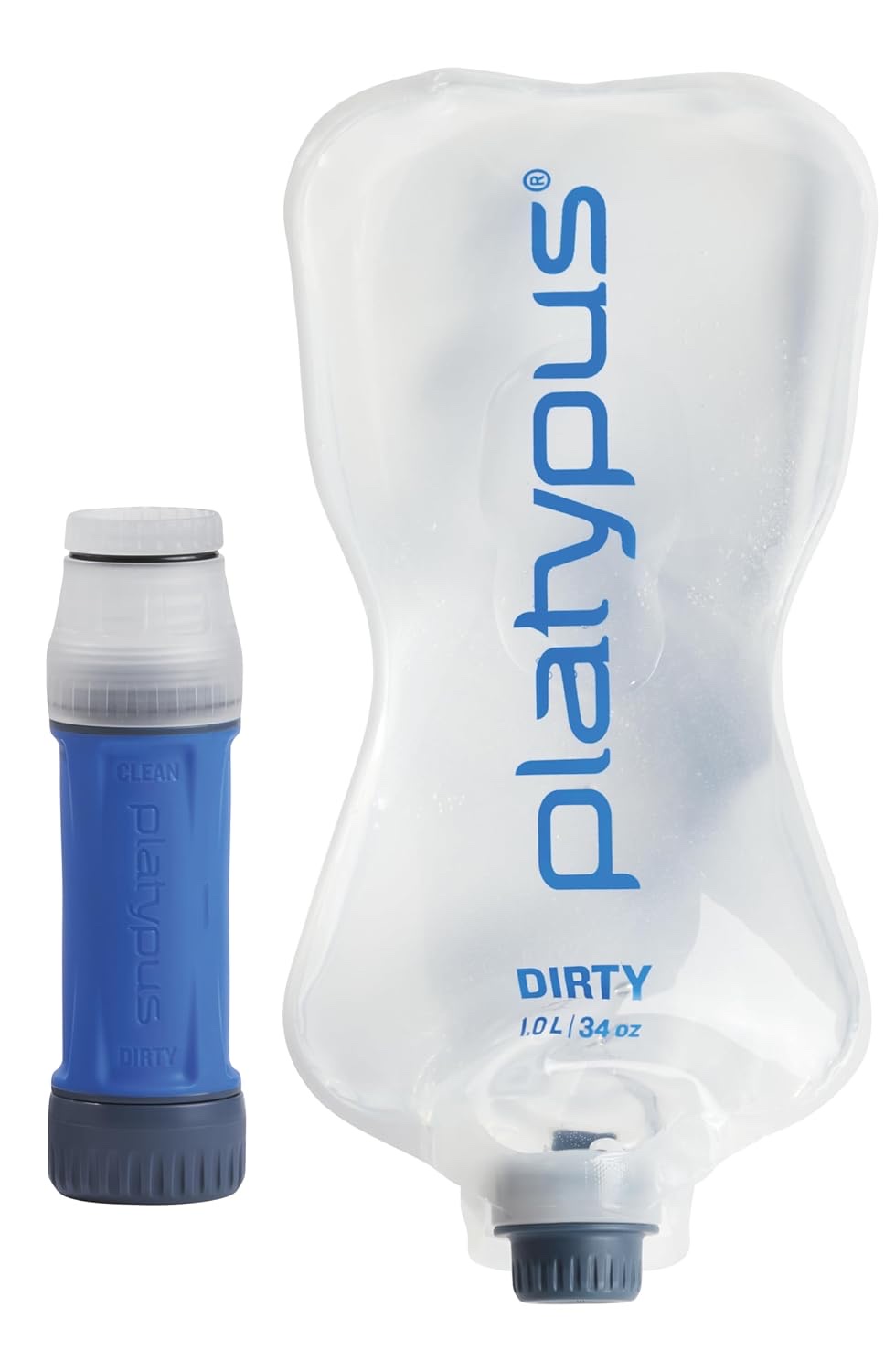
 Product photoPlatypus QuickDraw 1 Liter Water Filter System
A compact squeeze filter for hikers who want a fast way to treat water on day hikes and overnights. This long-form profile explains where the model fits, what to verify, and which trade-offs deserve attention before you buy.
The Platypus QuickDraw 1 Liter Water Filter System is a compact squeeze filter for hikers who want a fast way to treat water on day hikes and overnights. Its 0.2-micron hollow-fiber filter removes bacteria and protozoa from clear stream water, and the squeeze-and-backflush workflow keeps maintenance simple. It is not a virus filter or a silty-water solution, so check the kit contents and flow rate on the listing before buying.
Affiliate disclosure: some retailer links may earn a commission. That does not change the evidence labels or the need to verify the exact product, variant, current price, availability, warranty, and returns.
- Compact squeeze-filter format
- Fast backcountry refills
- Works with compatible soft bottles
- 0.2-micron hollow-fiber filter
- Squeeze and backflush workflow
- Current flow rate and kit contents vary by version
What retailer reviews can and cannot tell you
Retailer evidence captured on 13 November 2026. Ratings and review themes can change and are not firsthand testing.
What a squeeze filter does at a stream
A squeeze filter turns a stream into drinking water in under a minute. Fill the soft bottle or pouch, attach the filter, and squeeze clean water into your bottle or straight into your mouth. The QuickDraw's 1-litre system is sized for individual use, which makes it ideal for solo hikers and pairs who refill often rather than carrying large volumes.
Speed matters at a refill stop. A filter that takes five minutes to produce a litre will make you skip refills and carry more water than you need, while a fast filter encourages you to refill at every good source. The QuickDraw is designed for quick refills from clear streams, which is the most common backcountry water situation.
The 0.2-micron filter and what it removes
The QuickDraw's 0.2-micron hollow-fiber filter removes bacteria and protozoa, including the organisms responsible for giardia and similar waterborne illnesses. That covers the realistic risks from clear mountain streams and springs in most hiking regions. It does not remove viruses, chemicals, or heavy metals, so it is not the right tool for water sources with those risks.
Understanding the limit matters. In regions where viruses are a concern, or where water sources are shared with livestock or human settlement, you need a purifier or a chemical treatment that addresses viruses. The QuickDraw is a filter, not a purifier, and using it as one would be a mistake. Check the water risks for your region before choosing a treatment method.
Squeeze and backflush: the maintenance routine
Hollow-fiber filters slow down as sediment and organic matter collect in the fibers, and backflushing is how you restore the flow. The QuickDraw's backflush workflow uses clean water pushed backward through the filter to clear the fibers, and doing it regularly keeps the filter fast. A filter that has never been backflushed will eventually slow to a trickle, no matter how good it was when new.
The routine is simple: backflush after trips where the water was less than clear, and always backflush before storing the filter. Never let a filter dry out with dirty water inside it, and never let it freeze with water in the fibers, since freezing can crack the hollow fibers and ruin the filter. Store it clean and dry between trips.
Bottles, pouches, and the system around the filter
The QuickDraw works with compatible soft bottles, and the 1-litre system includes the components you need to get started. The soft bottle rolls up small when empty, which saves pack space compared to rigid bottles, and the squeeze action is the pumping mechanism, so there are no moving parts to break. Check the kit contents on the listing, since included bottles and connectors can vary by version.
Think about the whole water system, not just the filter. You need a dirty-water container for collecting, the filter itself, and a clean-water bottle for drinking. Keeping dirty and clean containers separate is essential, since a single mix-up can contaminate your drinking water. Label or color-code your bottles if you use more than one.
Clear water, silty water, and knowing the difference
The QuickDraw is designed for clear water, and it performs best on streams, springs, and lakes with low sediment. Silty or muddy water clogs the filter quickly and can reduce the flow to a frustrating drip, even with backflushing. If your routes include desert potholes, glacial melt, or muddy lowland streams, you need a prefilter or a different treatment method.
A simple prefilter, such as a bandana or a coffee filter over the intake, can extend the filter's life on less-than-clear water. It will not make silty water safe on its own, but it keeps the worst sediment out of the fibers. For consistently silty sources, a gravity filter with a larger prefilter or a pump filter may be the better tool.
How it compares: QuickDraw vs Sawyer Squeeze vs a gravity filter
Against the Sawyer Squeeze, the QuickDraw is the simpler, more streamlined system. The Sawyer is more modular, with more bottle and pouch options and an inline use mode, while the QuickDraw is designed as a compact 1-litre system that just works. Choose the Sawyer if you want flexibility and the QuickDraw if you want simplicity.
Against a gravity filter, the QuickDraw is lighter and faster for individual use, but a gravity system is better for groups and base camps, where you can hang a bag and let water filter while you do other tasks. For solo hikers and pairs, the squeeze filter is the more practical choice. For groups of three or more, gravity wins.
Who should choose a different treatment method
Skip the QuickDraw if you need virus protection, since a 0.2-micron filter does not remove viruses. Skip it if your water sources are consistently silty or muddy, since the filter will clog quickly. And skip it if you do not want a manual squeeze setup, since the squeezing is the pumping mechanism and there is no way around it.
Also consider a different method if you hike in a group, where a gravity filter or a larger pump system will serve everyone faster. A 1-litre squeeze filter is an individual tool, and using it to fill water for four people is a slow chore.
A practical decision table
| Decision point | What to verify | Why it matters |
|---|---|---|
| Role | A compact squeeze filter for hikers who want a fast way to treat water on day hikes and overnights. | Fast refills encourage drinking enough water |
| Fit and access | Backpackers who refill from clear streams and want a small, simple treatment system. | Simple squeeze workflow suits clear streams |
| Limit | You need virus protection, expect silty water, or do not want a manual squeeze setup. | Virus and silt limits rule out some buyers |
| Evidence | 0.2-micron hollow-fiber filter | Flow rate and kit contents vary by version |
Frequently asked questions
Does the QuickDraw remove viruses?
No. The 0.2-micron hollow-fiber filter removes bacteria and protozoa, but not viruses. In regions where viruses are a risk, you need a purifier or a chemical treatment that addresses them.
How do I backflush the QuickDraw?
Push clean water backward through the filter to clear sediment from the fibers. Make it a habit after any trip on murky water, and always backflush before you put the filter away, since a filter that is never backflushed will slow down over time.
Can I use the QuickDraw with silty water?
Not well. Silty or muddy water clogs the hollow fibers quickly. Use a prefilter such as a bandana for mildly turbid water, and choose a different treatment method for consistently silty sources.
What is included in the 1 Liter system?
The system includes the filter and the components for a 1-litre squeeze setup, but kit contents can vary by version. Check the listing for the exact bottles, connectors, and accessories included.
How does it compare to the Sawyer Squeeze?
The Sawyer Squeeze offers more ways to use it, with extra bottle and pouch options and an inline mode. The QuickDraw keeps things simple with a compact 1-litre kit. Pick the Sawyer for flexibility and the QuickDraw for simplicity.
Can the filter freeze?
Yes, freezing can destroy it. Water trapped in the hollow fibers expands into ice and cracks them, so on cold trips keep the QuickDraw in a jacket pocket or inside your sleeping bag at night, and never leave it wet in a freezing pack.
Useful Sources and Verification
Use these source types to verify current details before buying or publishing a recommendation.
- The current manufacturer product page and technical documentation for Platypus QuickDraw 1 Liter Water Filter System
- The exact retailer listing checked for the model, variant, included components, and commercial terms
- Independent review patterns treated as context rather than a substitute for personal fit or field testing
- Platypus official website for the current product page and technical documentation