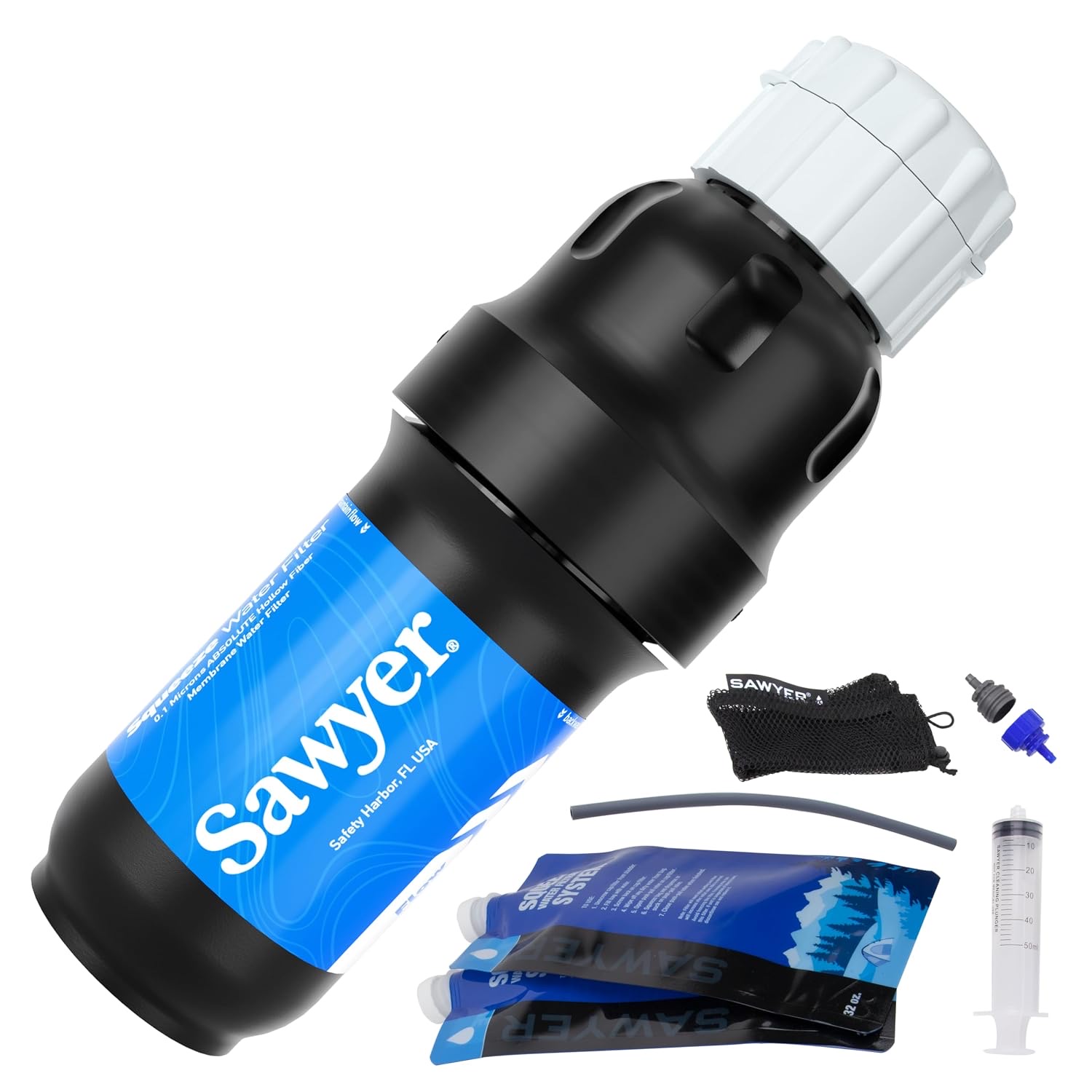
 Product photoSawyer Squeeze
A widely used squeeze-filter system for hikers who want flexible bottle and pouch compatibility. This long-form profile explains where the model fits, what to verify, and which trade-offs deserve attention before you buy.
The Sawyer Squeeze is a widely used squeeze-filter system for hikers who want flexible bottle and pouch compatibility. Its 0.1-micron absolute hollow-fiber filter removes bacteria and protozoa, and the modular design works with pouches, bottles, and inline setups. It is not a gravity filter or a maintenance-free option, so check the kit contents and backflush routine before buying.
Affiliate disclosure: some retailer links may earn a commission. That does not change the evidence labels or the need to verify the exact product, variant, current price, availability, warranty, and returns.
- Modular squeeze filtration
- Multiple pouch and bottle options
- Backflushable maintenance design
- 0.1-micron absolute hollow-fiber filter
- Backwashable maintenance design
- Pouch, bottle, and inline use options
What retailer reviews can and cannot tell you
No exact-variant review signal is used until the listing is confirmed.
Retailer evidence captured on 13 November 2026. Ratings and review themes can change and are not firsthand testing.
A modular filter that adapts to your water system
The Sawyer Squeeze is popular because it adapts to almost any water-carrying setup. Screw it onto a soft pouch and squeeze, attach it to a standard bottle, or plumb it inline with a hydration reservoir, and the same filter serves all three. That flexibility matters because hikers carry water differently, and a filter that only works one way forces you to change your system to match it.
Modularity also means you can replace parts rather than the whole filter. A torn pouch, a lost cap, or a worn gasket can be swapped without buying a new filter, which keeps the long-term cost down and reduces waste. Check the kit contents on the listing, since included pouches and adapters can vary by version.
The 0.1-micron absolute filter and what it removes
The Sawyer Squeeze uses a 0.1-micron absolute hollow-fiber filter, which removes bacteria and protozoa including the organisms that cause giardia. The word absolute matters: it means the pore size is a maximum, not an average, so nothing larger than 0.1 microns passes through. That covers the realistic risks from clear backcountry water sources.
Like all hollow-fiber filters, it does not remove viruses, chemicals, or heavy metals. In regions where viruses are a concern, or where water sources are shared with livestock or settlements, you need a purifier or chemical treatment as well. The Squeeze is a filter, not a purifier, and understanding that limit is part of using it safely.
Backflushing and the maintenance habit
Every hollow-fiber filter slows down as sediment collects in the fibers, and backflushing is how you restore the flow. The Squeeze's backwashable design lets you push clean water backward through the filter using a syringe or a clean-water squeeze, clearing the fibers and restoring speed. A filter that is backflushed regularly will last for years; one that is never maintained will slow to a trickle.
The habit to build is simple: backflush after trips with less-than-clear water, and always backflush before storage. Never let the filter dry out with dirty water inside, and never let it freeze with water in the fibers, since freezing can crack the hollow fibers and ruin the filter. Store it clean, dry, and protected between trips.
Pouches, bottles, and inline use
The Squeeze's pouch system is its most common setup: fill a soft pouch from the source, screw on the filter, and squeeze clean water into your bottle. The pouches roll up small when empty and weigh almost nothing, which makes them ideal for backpacking. The trade is durability, since soft pouches can tear or develop leaks at the seams after heavy use.
Inline use is the Squeeze's quiet advantage. Plumb it into a hydration reservoir's hose, and you can drink filtered water without stopping to squeeze, which suits hikers who drink on the move. Bottle use is the simplest option: screw the filter onto a standard bottle and drink directly. Each mode suits a different hiking style, and the Squeeze covers all three.
Flow rate and the patience question
The Squeeze's flow rate depends on how clean the filter is, how hard you squeeze, and how clear the source water is. A well-maintained filter on clear water fills a litre quickly, while a dirty filter on silty water can take several minutes. The practical answer is maintenance: a backflushed filter is a fast filter, and a neglected one is a slow one.
If you regularly filter for a group, the squeeze workflow can feel slow, since each litre needs individual squeezing. For groups, a gravity filter that fills a large bag while you do other tasks is more efficient. For solo hikers and pairs, the Squeeze's speed is more than adequate.
How it compares: Sawyer Squeeze vs QuickDraw vs a gravity filter
The Platypus QuickDraw keeps the same job in a tidy 1-litre kit with fewer decisions, while the Squeeze offers more bottle and pouch options, inline use, and a finer 0.1-micron absolute rating. If you want the simplest possible setup, the QuickDraw is the easier buy; if you want to adapt the filter to pouches, bottles, and a reservoir, the Squeeze is the more flexible tool.
Against a gravity filter, the Squeeze is lighter and more compact, but gravity wins for groups and base camps, where you can hang a bag and let water filter unattended. For solo hikers and pairs who refill on the move, the squeeze filter is the more practical tool. For groups of three or more, gravity is worth the extra weight.
Who should choose a different filter
Skip the Squeeze if you want instant gravity filtration without squeezing, since the manual squeeze is the pumping mechanism. Skip it if you do not want to backflush and maintain a filter, since a neglected hollow-fiber filter will slow down and eventually fail. And skip it if you need virus protection, since this filter does not remove viruses.
Also consider a different system if your water sources are consistently silty, since sediment clogs hollow fibers quickly. A prefilter helps, but for very silty water a pump filter or a settling-and-decanting routine may be the better approach.
A practical decision table
| Decision point | What to verify | Why it matters |
|---|---|---|
| Role | A widely used squeeze-filter system for hikers who want flexible bottle and pouch compatibility. | Modular design fits pouches, bottles, and inline use |
| Fit and access | Hikers who want a proven modular filter for weekend trips and longer routes. | Backflush routine keeps the flow fast |
| Limit | You want instant gravity filtration or do not want to backflush and maintain a filter. | Manual squeezing and maintenance rule out some buyers |
| Evidence | 0.1-micron absolute hollow-fiber filter | Kit contents and flow vary by listing |
Frequently asked questions
What does 0.1-micron absolute mean?
It means the largest pore in the filter is 0.1 microns, so nothing larger passes through. The filter removes bacteria and protozoa, including the organisms that cause giardia. It does not remove viruses.
How do I backflush the Sawyer Squeeze?
Push clean water backward through the filter using the included syringe or a clean-water squeeze. Backflush after trips with less-than-clear water and always before storage. Regular backflushing keeps the flow rate fast.
Can I use it inline with a hydration reservoir?
Yes. The Squeeze can be plumbed into a reservoir hose so you drink filtered water without stopping to squeeze. That setup suits hikers who drink on the move and want hands-free filtration.
How does it compare to the Platypus QuickDraw?
The Squeeze adapts to more setups, with extra bottle and pouch options and an inline mode. The QuickDraw is a tidier 1-litre kit with fewer decisions. Choose the Squeeze for flexibility and the QuickDraw for simplicity.
Can the filter freeze?
A filter with water inside it can be ruined by freezing, since ice cracks the hollow fibers. In cold weather, keep the filter in a pocket or sleeping bag, and never store it wet in freezing conditions.
How long does a Sawyer Squeeze last?
With regular backflushing and careful storage, many years of use. The filter itself is durable; the pouches and gaskets wear out sooner and can be replaced. A filter that is never maintained will slow down and eventually fail.
Useful Sources and Verification
Use these source types to verify current details before buying or publishing a recommendation.
- The current manufacturer product page and technical documentation for Sawyer Squeeze
- The exact retailer listing checked for the model, variant, included components, and commercial terms
- Independent review patterns treated as context rather than a substitute for personal fit or field testing
- Sawyer official website for the current product page and technical documentation