
A practical guide to hiking shoe and boot fit, with a clear decision path, route-aware checks, and a repeatable plan that does not depend on a universal winner.
Good hiking boot fit comes down to three checks: toe room for downhills, heel hold without pressure, and width that matches your foot with the socks you actually wear. Measure your feet, try shoes on later in the day when your feet are slightly swollen, and always test on a slope before buying.
Affiliate disclosure: some retailer links may earn a commission. This does not change the evidence boundaries or the need to verify current product, variant, price, availability, warranty, and return details.
Measuring your feet at home
Start by measuring both feet, standing, on a piece of paper, with the socks you plan to hike in. Trace around each foot, measure the length and the width at the widest point, and use the larger foot as your guide. Feet are rarely the same size, and the larger foot determines the fit.
Measure later in the day, when your feet are closer to their hiking size, since feet swell during activity. Compare your measurements to the brand's size chart, but treat the chart as a starting point, not a promise: sizing varies between brands, and the only reliable test is trying the shoe on.
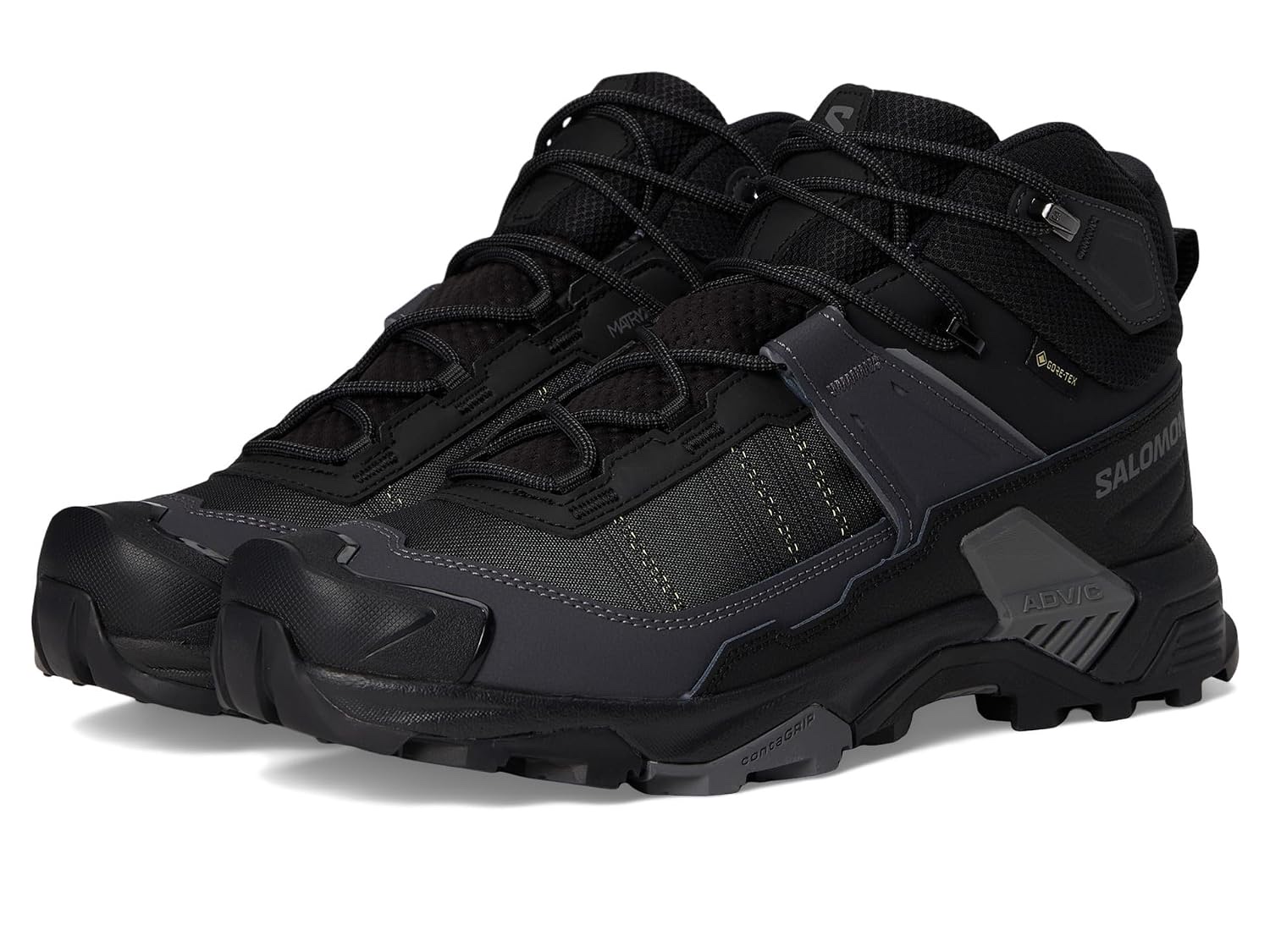
Salomon X Ultra 5 Mid GTX
Best for: Day hikers needing wet-weather protection and a secure foothold on uneven trails.
A supportive waterproof hiking shoe for mixed terrain, wet mornings, and hikers who prefer agility over a heavy boot.
Measuring your feet at home
- Mid-height waterproof construction
- Aggressive trail outsole
- Hiking-shoe weight with added ankle coverage
- You want a soft road-running feel, wide unstructured toe space, or a non-waterproof summer shoe.
Toe room: the downhill test
Toe room is the most important fit check for hiking, because downhill walking pushes your foot forward with every step. Stand on a slope or a staircase, lean forward, and check that your toes do not touch the front of the shoe. A thumb's width of space in front of your longest toe is a good starting point.
Bruised toenails are the classic sign of too little toe room, and they can take weeks to heal. If your toes touch the front on a downhill test in the shop, the shoe is too short, no matter how comfortable it feels on flat ground. Go up half a size and test again.
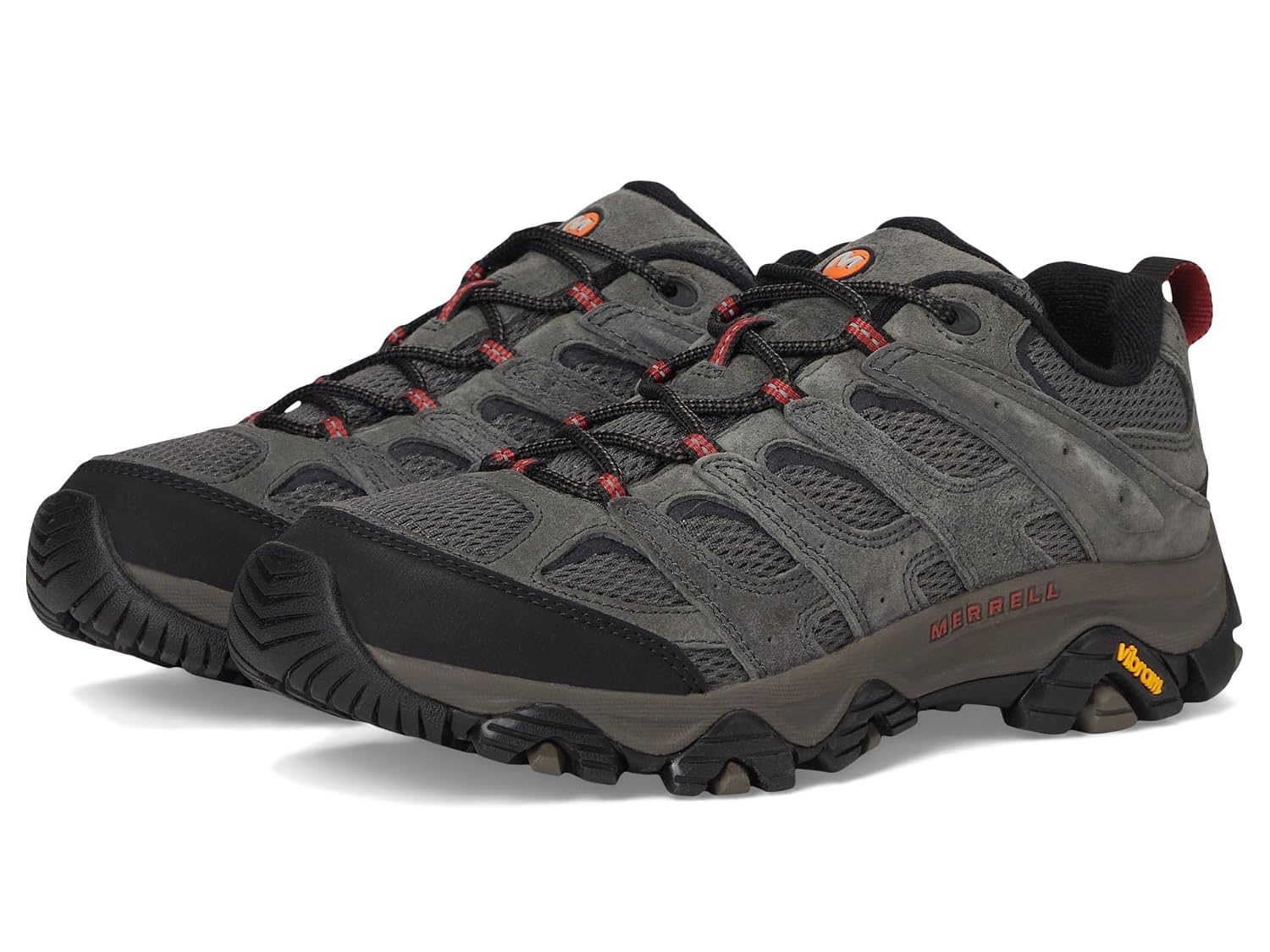
Merrell Moab 3
Best for: Newer hikers and casual trail users who want a forgiving, supportive starting point.
A familiar leather-and-mesh hiking shoe for buyers who value comfort, durability, and an easy break-in curve.
Toe room: the downhill test
- Leather and mesh upper options
- Supportive insole platform
- Durable outsole for mixed trail surfaces
- You need a very light fast-hiking shoe or a narrow technical fit.
Heel hold and the lacing lock
Heel hold means the heel stays in place without slipping or pressure. Walk up and down stairs, and check that your heel does not lift with each step. A heel that lifts causes blisters, and a heel that is pinched causes pain. The fit should feel secure without being tight.
If the heel slips slightly, try the lacing lock: use the top eyelets to create a loop that holds the ankle back without tightening the whole shoe. That technique fixes most minor heel slip. If the heel still lifts after proper lacing, the shoe's shape does not suit your foot.
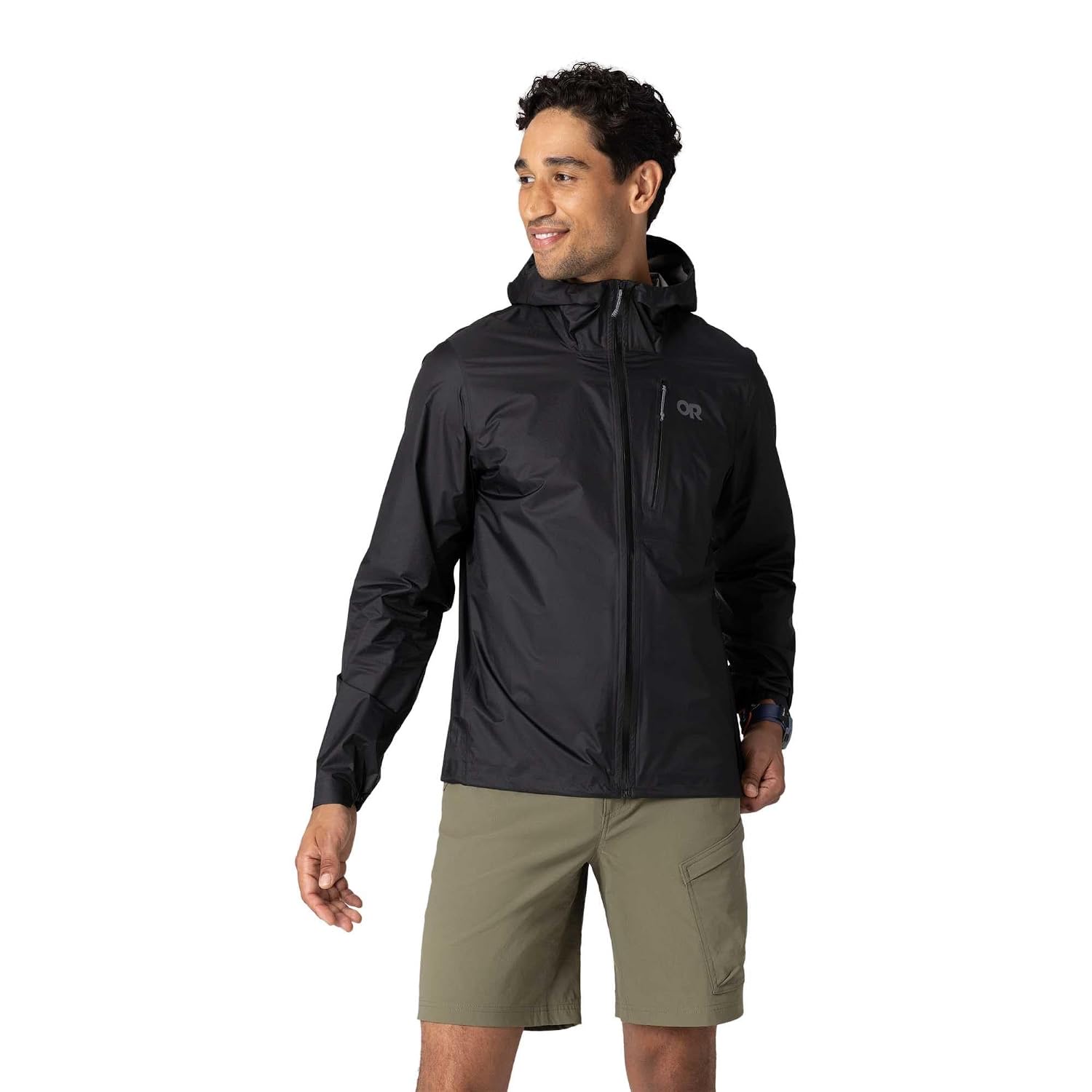
Outdoor Research Men's Helium UL Jacket
Best for: Day hikers and backpackers who want a dependable emergency layer for changing forecasts.
A lightweight rain shell for hikers who need packable weather protection without carrying a bulky hard shell.
Heel hold and the lacing lock
- Packable waterproof shell format
- Lightweight emergency layer
- Useful for wind and rain protection
- You need a heavy winter shell, maximum abrasion resistance, or a soft casual jacket.
Width, volume, and the sock question
Width and volume are as important as length. A shoe that is the right length but too narrow will pinch the forefoot, while a shoe that is too wide will let the foot slide and cause blisters. The forefoot should feel held without pressure, and you should be able to wiggle your toes.
Socks change the fit significantly, so always try shoes with the socks you plan to hike in. A thick merino sock adds volume that a thin shop sock does not, and the difference can be half a size. If you wear different socks in summer and winter, test with the thicker pair.
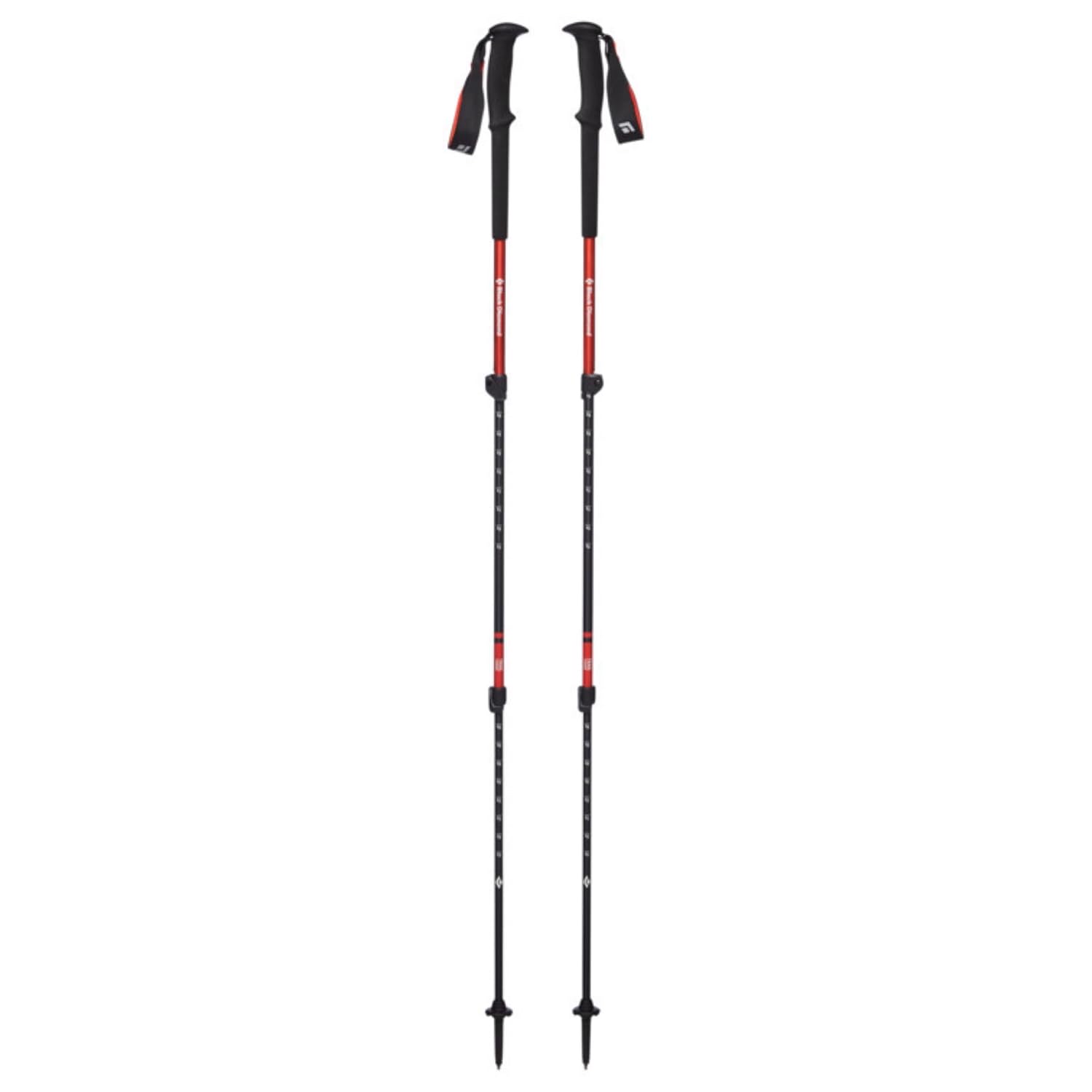
BLACK DIAMOND Trail Trekking Poles
Best for: Hikers who want a dependable two-pole setup for rocky or steep routes.
Adjustable trekking poles for stability on descents, uneven ground, and long days when your knees need help.
Width, volume, and the sock question
- Adjustable aluminum construction
- Comfort-focused grips
- Useful for climbs, descents, and balance
- You only need an ultralight single pole or dislike carrying poles between obstacles.
Breaking in and the first long walk
Modern hiking shoes need less breaking in than traditional leather boots, but a new pair still deserves a gradual introduction. Wear them around the house, then on short local walks, then on a half-day hike, before committing to a long day. That sequence lets the shoe mould to your foot and reveals pressure points while you are close to home.
If a spot rubs during the break-in, address it early. Adjust the lacing, try a different sock, or use a blister plaster on the hot spot before it becomes a blister. A shoe that hurts on a short walk will not improve on a long one, and the first long walk should confirm comfort, not test endurance.
A practical decision table
| Fit checkpoint | What to check | Why it matters |
|---|---|---|
| Toe space | Room for swelling and downhill movement | Reduces contact with the front of the shoe |
| Heel hold | Minimal lift without pressure | Improves control and reduces rubbing |
| Width | No pinching at the forefoot | Supports comfort over distance |
| Upper and sole | Flex, support, traction, weather needs | Matches terrain and personal movement |
Frequently asked questions
How much toe room should hiking shoes have?
About a thumb's width in front of your longest toe, tested on a downhill slope. Your toes should not touch the front when walking down, and your heel should stay put.
Should I buy hiking shoes a half size larger?
Often, yes, since feet swell during the day and you need toe room for downhills. But sizing varies by brand, so measure your feet and test the shoe on a slope rather than relying on a rule.
How do I stop my heel slipping?
Use the top eyelets to create a lacing lock that holds the ankle back without tightening the whole shoe. If the heel still slips after proper lacing, the shoe's shape may not suit your foot.
What socks should I wear when trying on hiking shoes?
The socks you plan to hike in. Sock thickness changes the fit noticeably, so testing with thin shop socks gives a misleading result. Bring your hiking socks to the shop.
How long does it take to break in hiking shoes?
Modern shoes need only a few short walks. Wear them at home, then on local walks, then on a half-day hike. If a shoe still hurts after several outings, the fit is wrong.
What causes blisters when hiking?
Friction, moisture, and heat, usually from a poor fit, damp socks, or a hot spot that was ignored. Address hot spots early with lacing adjustments, a sock change, or a blister plaster.
Useful Sources and Verification
Use these source types to verify current details before buying or publishing a recommendation.
- Current official manufacturer documentation for any product, material, technical limit, or safety instruction mentioned
- Current retailer or service documentation for availability, variant, warranty, returns, subscriptions, or consumables
- Independent review patterns used as context and clearly separated from firsthand testing