
A practical guide to daypack fit and capacity, with a clear decision path, route-aware checks, and a repeatable plan that does not depend on a universal winner.
Choose a daypack by starting with your real day load, then matching capacity, torso fit, back ventilation, and pocket access to that load. A 20 to 27-litre pack covers most day hikes, and the fit matters more than the feature list. Test the pack loaded, on an incline, before deciding.
Affiliate disclosure: some retailer links may earn a commission. This does not change the evidence boundaries or the need to verify current product, variant, price, availability, warranty, and return details.
Capacity first: what your day load really looks like
Lay out everything you carry on a typical day hike before choosing a pack size. Water, food, a rain shell, an insulation layer, sun protection, a first aid kit, and a headlamp are the core items, and extras like a camera, a guidebook, or binoculars add volume quickly. The pile on the floor is a far better guide to capacity than any number on a product page.
A pack in the 20 to 27-litre range covers most day hikes, but the honest test is your own gear. If the pile fits a smaller pack with room to spare, go smaller and save weight. If it strains the zippers, go larger rather than forcing a fit that will fail on the trail.
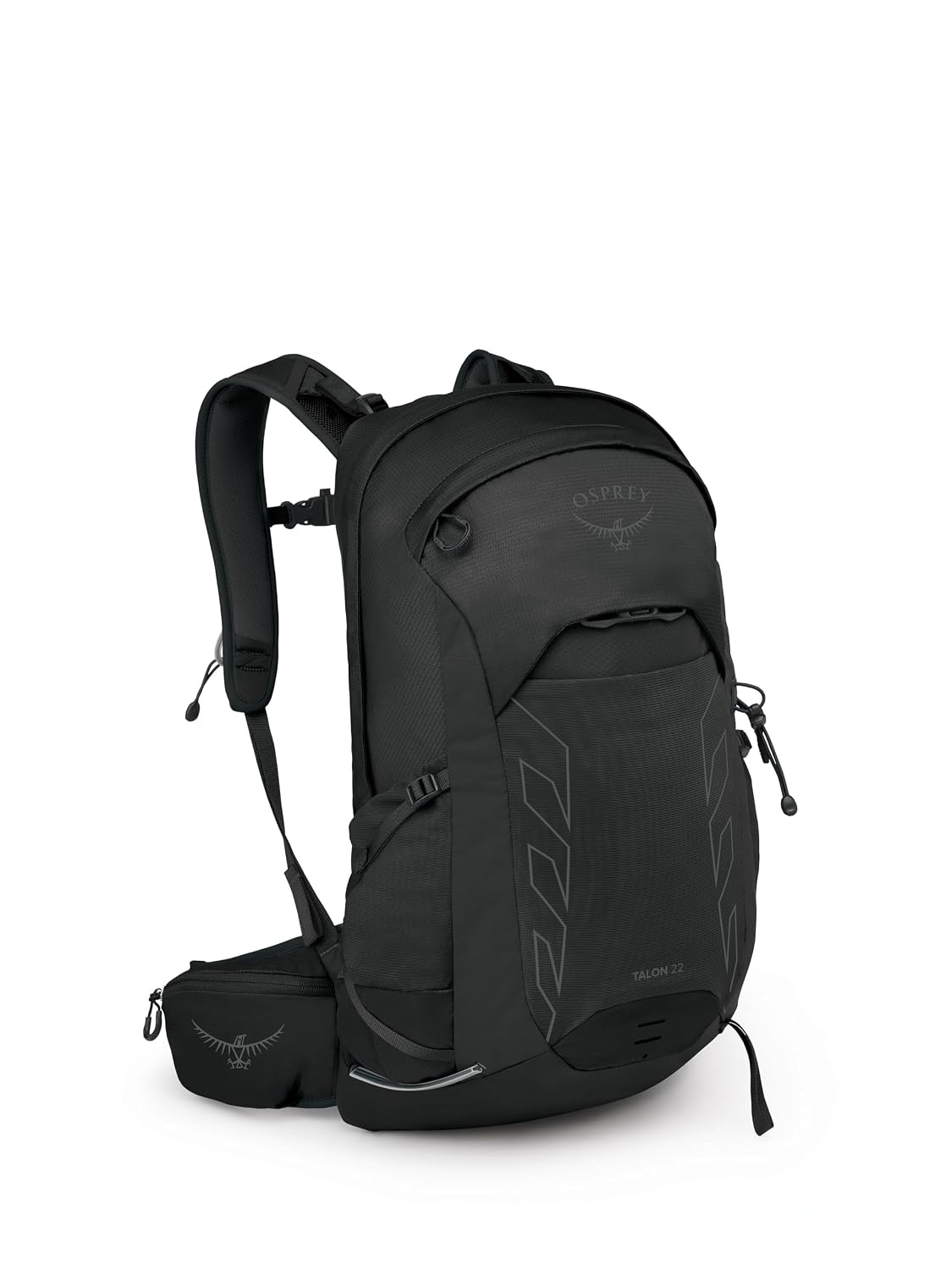
Osprey Talon 22
Best for: Day hikers carrying layers, water, and a light lunch who want a close, flexible fit.
A ventilated daypack for hikers who want a stable carry without turning a short route into an expedition.
Capacity first: what your day load really looks like
- 22-liter day-hike format
- Close-to-body harness with adjustable torso
- Useful organization for layers and small essentials
- You need a framed overnight pack, a very minimal summit vest, or a fully waterproof shell.
Torso fit: the measurement that matters most
Torso length, the distance from the bony bump at the base of your neck to the top of your hip bones, determines whether a pack fits your back. A pack that is too long pulls on your shoulders, and a pack that is too short rides high and feels unstable. Many daypacks offer adjustable torso lengths, which is worth seeking out if you fall between sizes.
Measure your torso at home with a tape measure and a friend, then check the pack's stated torso range against your number. Load the pack with your real gear, tighten the hipbelt first, then the shoulder straps, and walk around. A good fit disappears; a poor fit announces itself within minutes.
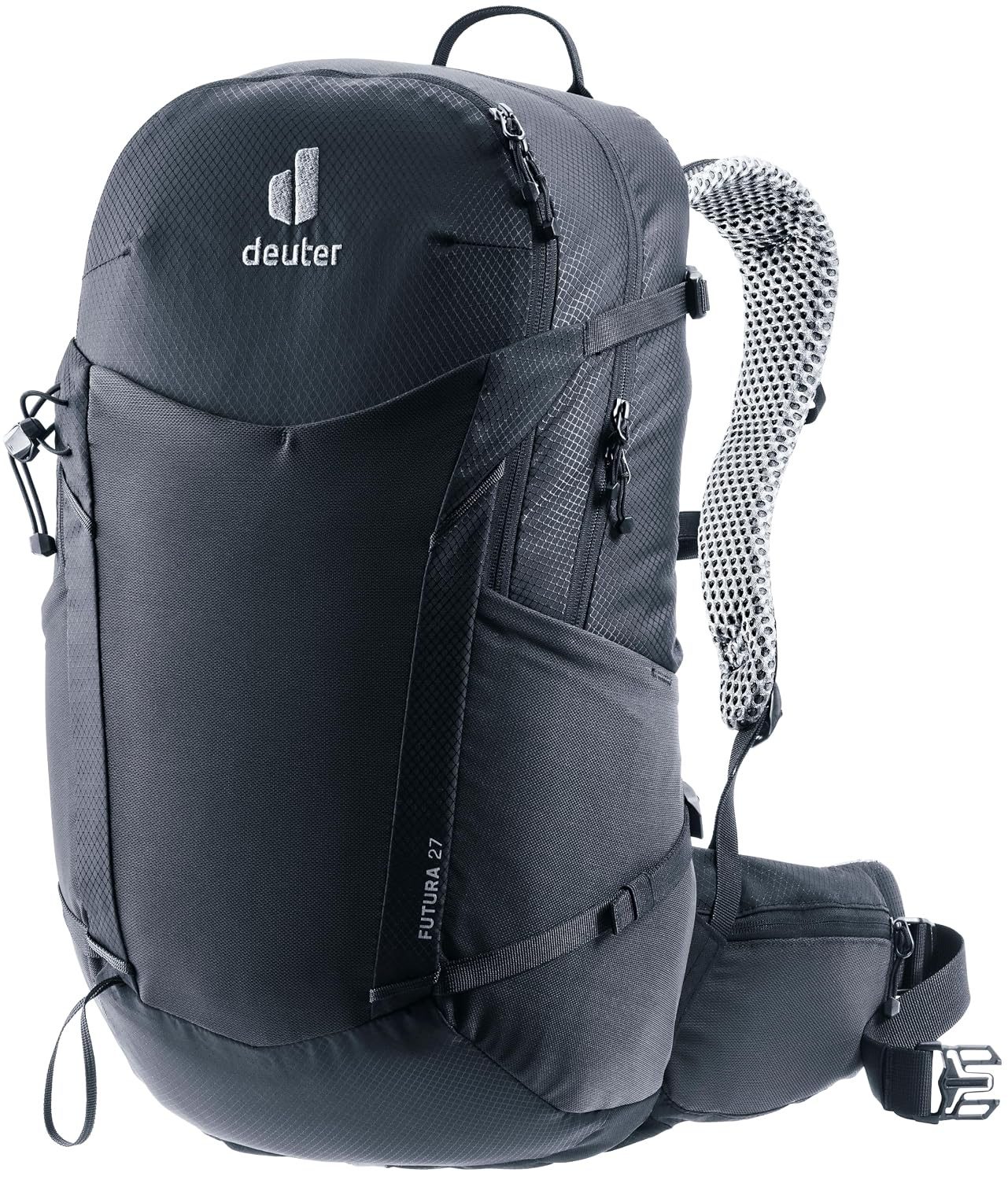
Deuter Futura 27
Best for: Hikers who carry more layers, a camera, or comfort items and prefer a structured back panel.
A structured ventilated pack for warm-weather day hikes where airflow and organization matter.
Torso fit: the measurement that matters most
- 27-liter day-hike capacity
- Ventilated back system
- Structured load transfer for longer days
- You want the lightest possible pack or a close-fitting technical vest.
Back ventilation vs close fit
Back ventilation and close fit pull in opposite directions. A suspended mesh back holds the pack away from your body so air can flow, which reduces sweat on warm climbs, but it shifts the load rearward and can feel less stable on steep or uneven ground. A close-fitting foam backpanel keeps the load stable and controlled, but it traps more heat.
The right balance depends on your climate and your pace. Hot-weather hikers on smooth trails benefit most from ventilation, while fast hikers on steep, uneven ground benefit most from a close fit. Try both styles loaded, on an incline, and notice which one you stop thinking about first.
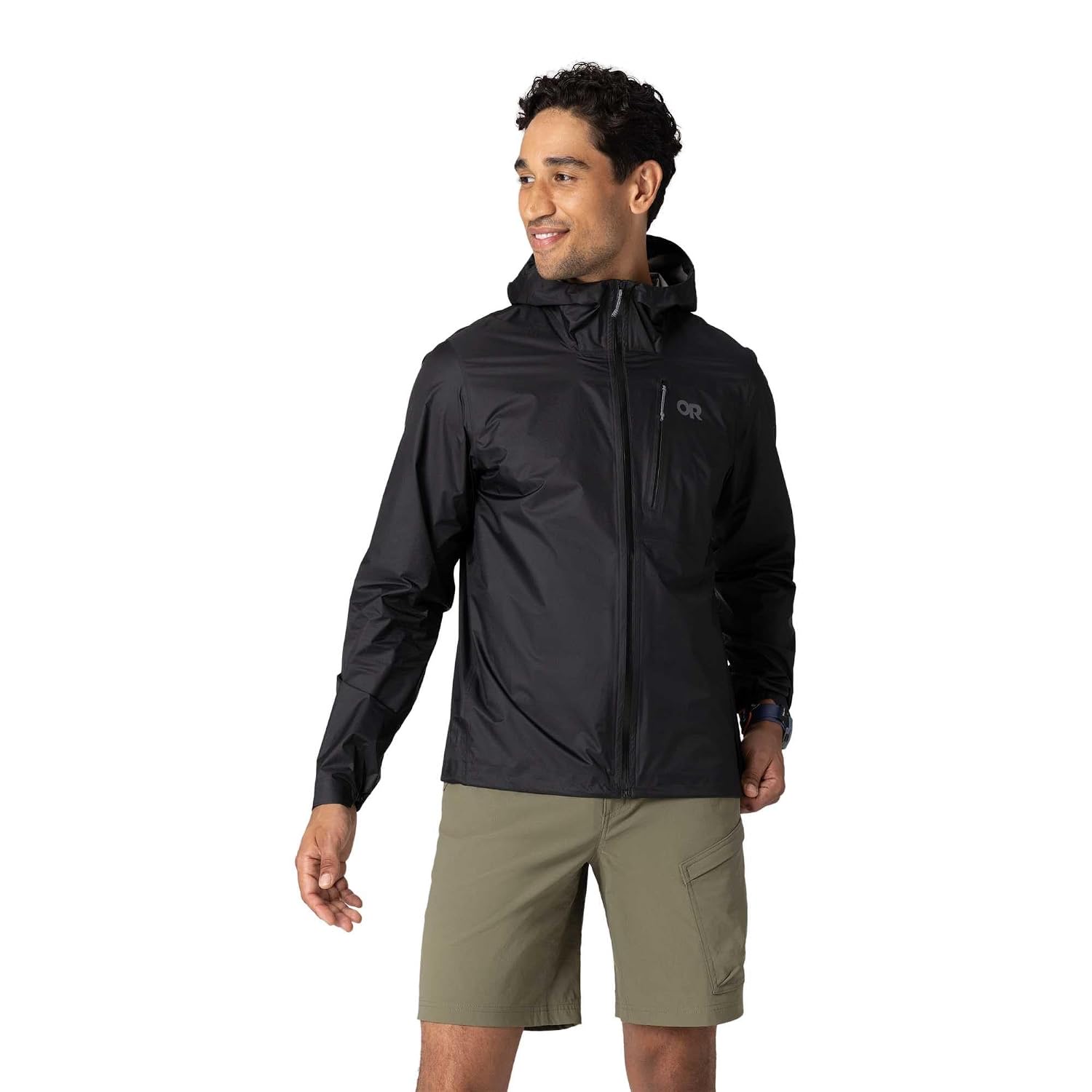
Outdoor Research Men's Helium UL Jacket
Best for: Day hikers and backpackers who want a dependable emergency layer for changing forecasts.
A lightweight rain shell for hikers who need packable weather protection without carrying a bulky hard shell.
Back ventilation vs close fit
- Packable waterproof shell format
- Lightweight emergency layer
- Useful for wind and rain protection
- You need a heavy winter shell, maximum abrasion resistance, or a soft casual jacket.
Pockets and access: reaching what you need
Pockets decide whether a pack is pleasant to use or a constant frustration. Side pockets should hold your water bottles within reach while walking, a hipbelt pocket should hold your phone and snacks, and a top pocket should hold small essentials like sunscreen and a map. The rain shell deserves a pocket or compartment of its own, so you can grab it without unpacking.
Think about your own habits before judging a layout. If you drink from bottles, check the side pocket depth and angle. If you carry a camera, check whether it fits in a pocket you can open one-handed. A pocket layout that matches your routine is worth more than extra volume.
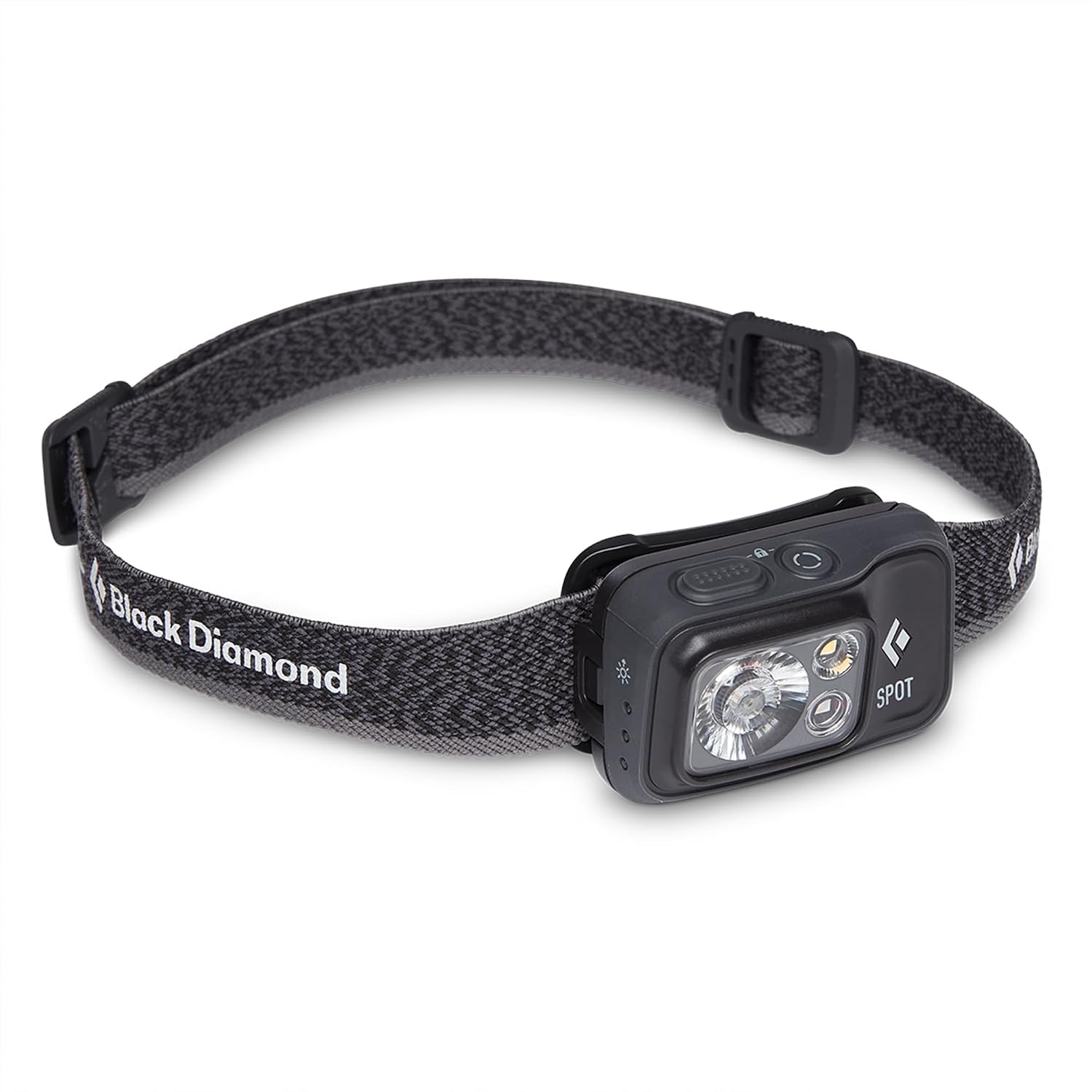
Black Diamond Spot 400
Best for: Every hiker who wants a reliable light with useful brightness and a small pack footprint.
A compact headlamp for early starts, late finishes, camp chores, and emergency visibility.
Pockets and access: reaching what you need
- Multiple brightness modes
- Compact trail-ready body
- Useful red-light and emergency modes
- You need a high-output expedition light or a rechargeable-only system.
Weather protection: covers, liners, and dry bags
No daypack is fully waterproof, so weather protection is a system, not a feature. A rain cover keeps most rain off the outside, a pack liner keeps the contents dry even if water gets past the cover, and dry bags protect the items that matter most: spare clothing, electronics, and food. The three together weigh little and cover almost any downpour.
The simplest system is a large dry bag or bin liner inside the pack, with everything packed inside it. That single layer of protection is more reliable than any rain cover, and it costs almost nothing. Add a rain cover for the outside, and your gear will stay dry in sustained rain.
A practical decision table
| Decision point | What to check | Why it matters |
|---|---|---|
| Capacity | Normal load plus a small margin | Avoids both overstuffing and unused bulk |
| Torso fit | Harness range, shoulder contact, hipbelt position | Transfers weight without pressure points |
| Access | Water, layers, snacks, safety items | Reduces unnecessary stops and unpacking |
| Weather | Rain cover, liner, pocket exposure | Protects essentials without assuming waterproofing |
Frequently asked questions
What size daypack do I need?
Lay out your actual day-hike gear and see how much space it takes. A 20 to 27-litre pack covers most day hikes. Choose the smallest pack that holds your real load without straining the zippers.
How do I measure my torso for a daypack?
Measure from the bony bump at the base of your neck to the top of your hip bones, with help from a friend. Check the pack's stated torso range against your number, and test the fit loaded before buying.
Is a ventilated back worth it?
On warm climbs, yes: airflow reduces sweat buildup. The trade is that the load sits slightly further back, which can feel less stable on steep ground. Try both styles loaded and choose the one you stop noticing.
Do I need a rain cover for my daypack?
A rain cover helps, but a pack liner is more reliable. The simplest system is a large dry bag or bin liner inside the pack, with a rain cover on the outside for sustained rain.
How should a daypack fit?
The hipbelt should sit on your hip bones, the shoulder straps should follow your shoulders without gaps, and the load should feel stable when you walk, bend, and climb. Load the pack with real gear before judging the fit.
Can a daypack work for an overnight trip?
Only a very light one. A daypack cannot carry shelter and sleep gear alongside food and water for a real overnight. For multi-day trips, use a larger framed pack designed for the load.
Useful Sources and Verification
Use these source types to verify current details before buying or publishing a recommendation.
- Current official manufacturer documentation for any product, material, technical limit, or safety instruction mentioned
- Current retailer or service documentation for availability, variant, warranty, returns, subscriptions, or consumables
- Independent review patterns used as context and clearly separated from firsthand testing