
A practical guide to hiking safety preparation, with a clear decision path, route-aware checks, and a repeatable plan that does not depend on a universal winner.
A hiking safety checklist covers five checks: the route and weather before you leave, the ten essentials in your pack, a turnaround time decided in advance, regular checks on the trail, and a calm response if something goes wrong. The checklist is a habit, not a formality.
Affiliate disclosure: some retailer links may earn a commission. This does not change the evidence boundaries or the need to verify current product, variant, price, availability, warranty, and return details.
Before you leave: the route and weather check
Before every hike, study the route and the weather. Know the distance, the elevation change, the water sources, the exit points, and the expected conditions. Check the forecast the night before and again in the morning, and look at wind, precipitation, and the trend through the day, not just the temperature.
Share your plan with someone at home: the route, the expected return time, and a check-in schedule. That information guides rescuers to you if something goes wrong, and it costs nothing to share. A text message with the route and return time is enough.
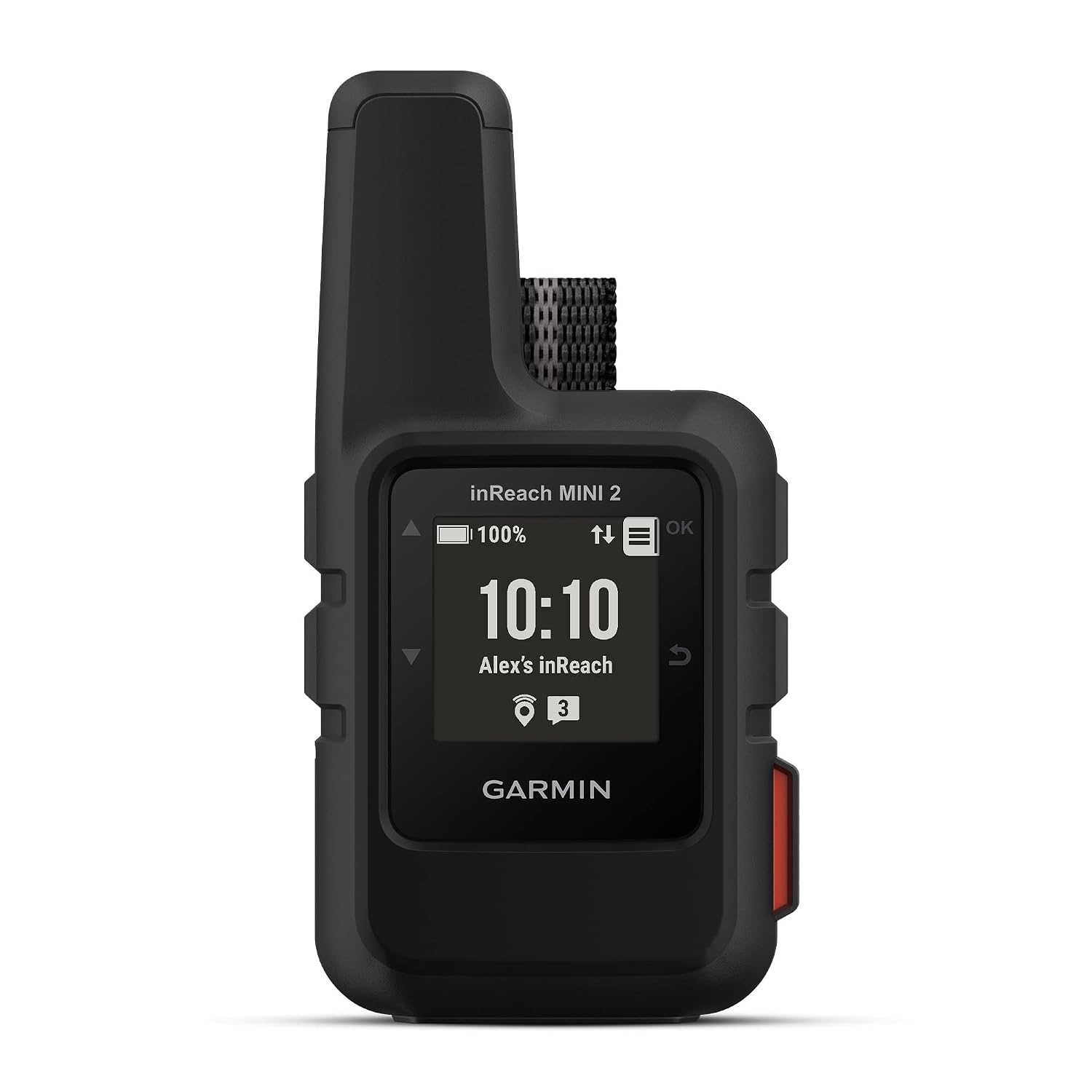
Garmin inReach Mini 2
Best for: Remote hikers who travel beyond reliable cell coverage and carry a clear communication plan.
A satellite communicator for trips where an emergency plan and off-grid check-ins matter.
Before you leave: the route and weather check
- Two-way satellite messaging
- SOS capability through satellite network
- Compact device for remote routes
- You stay on busy local trails with coverage or do not want a subscription device.
The ten essentials, packed and checked
The ten essentials cover navigation, light, sun protection, first aid, knife, fire, shelter, food, water, and extra clothes. Check your pack against the list before every hike, and make sure you can use what you carry. A compass you cannot read is dead weight, and a first aid kit you cannot open with cold hands is useless.
The essentials are not a fixed list of products, but ten categories of need. Your navigation might be a map and a phone, your shelter might be an emergency bivvy, and your fire might be a lighter and a fire starter. What matters is that each category is covered.
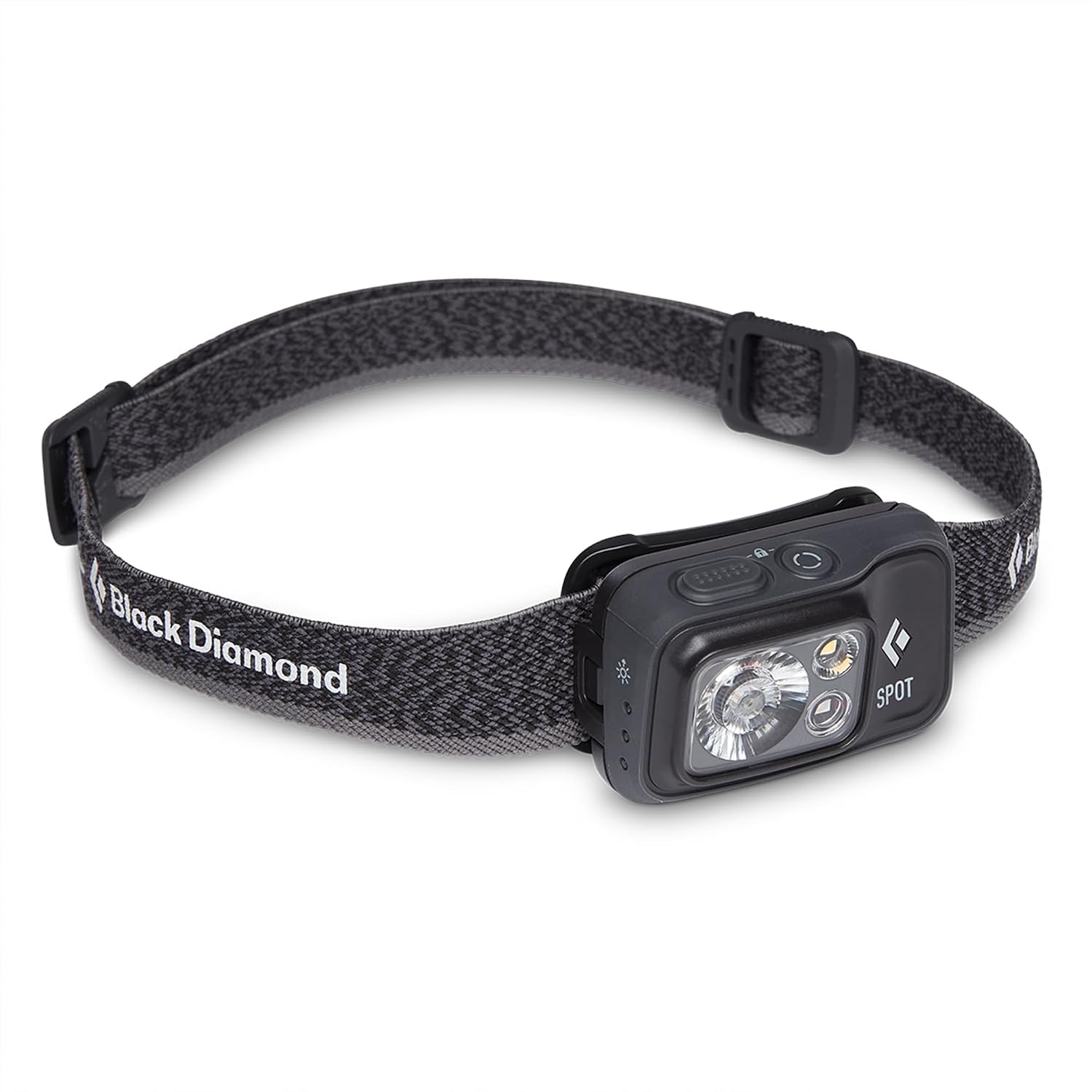
Black Diamond Spot 400
Best for: Every hiker who wants a reliable light with useful brightness and a small pack footprint.
A compact headlamp for early starts, late finishes, camp chores, and emergency visibility.
The ten essentials, packed and checked
- Multiple brightness modes
- Compact trail-ready body
- Useful red-light and emergency modes
- You need a high-output expedition light or a rechargeable-only system.
Turnaround time: deciding before you start
Set your turnaround time before you start, based on sunset, your pace, and the distance. When the time comes, turn around, even if the summit is close. The mountain will still be there next time, and the descent in daylight is worth more than the summit in the dark.
The turnaround decision is the hardest safety decision in hiking, because it means giving up a goal. Make the decision in advance, when you are calm and rational, so you do not have to make it on the trail when you are tired and tempted. A pre-decided turnaround time removes the argument.
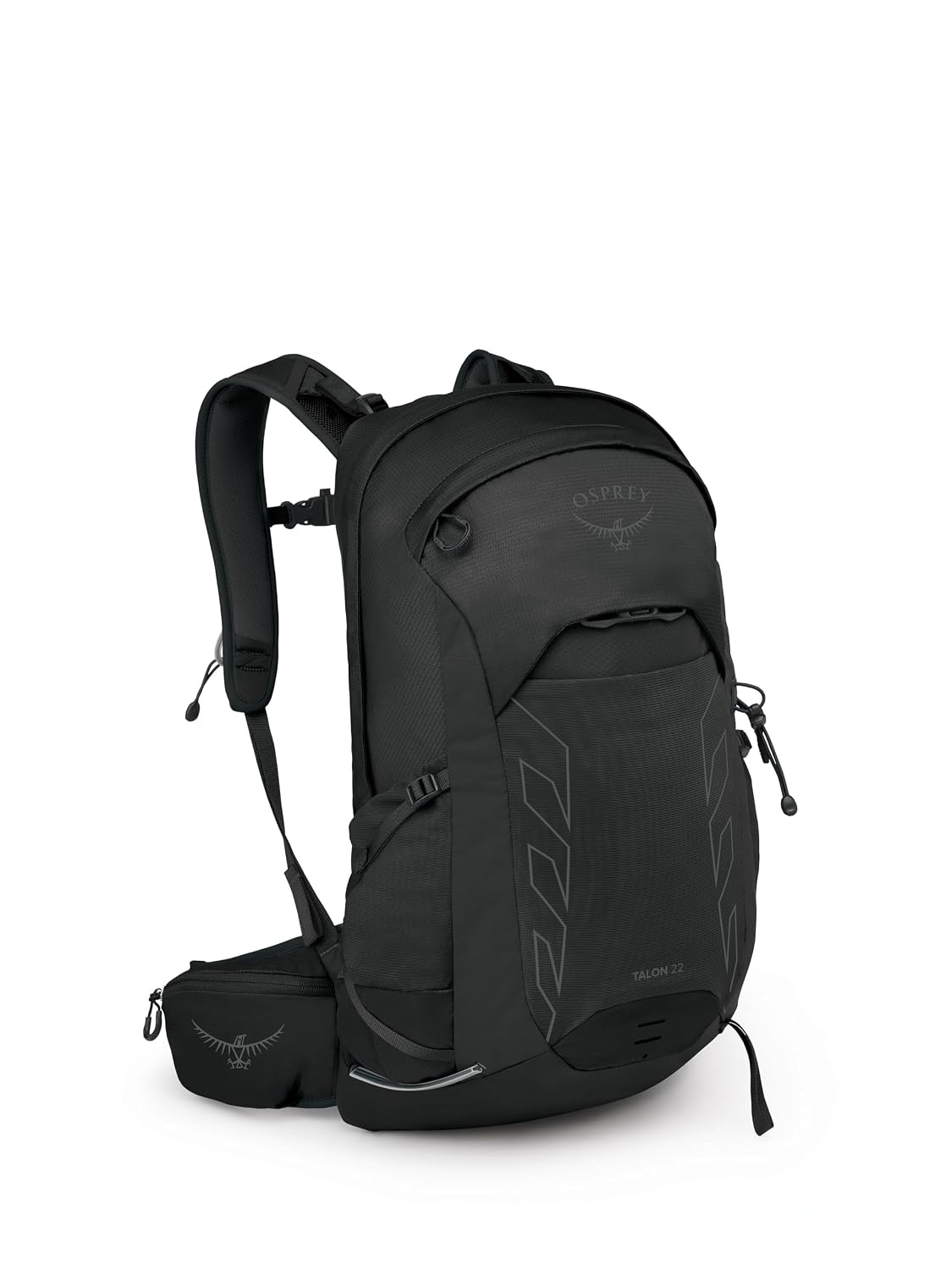
Osprey Talon 22
Best for: Day hikers carrying layers, water, and a light lunch who want a close, flexible fit.
A ventilated daypack for hikers who want a stable carry without turning a short route into an expedition.
Turnaround time: deciding before you start
- 22-liter day-hike format
- Close-to-body harness with adjustable torso
- Useful organization for layers and small essentials
- You need a framed overnight pack, a very minimal summit vest, or a fully waterproof shell.
On the trail: checks at every break
Use every break as a safety check. Check your water supply, your energy, your feet, the weather, and the time. Are you drinking enough? Are your feet developing hot spots? Is the weather changing? Are you on schedule, or falling behind? Small checks catch small problems before they become large ones.
Check the group as well as yourself. Is anyone struggling, quiet, or lagging behind? A group member who stops talking or slows down may be tired, cold, or unwell. Ask, and be ready to adjust the plan. The group's safety depends on its least comfortable member.
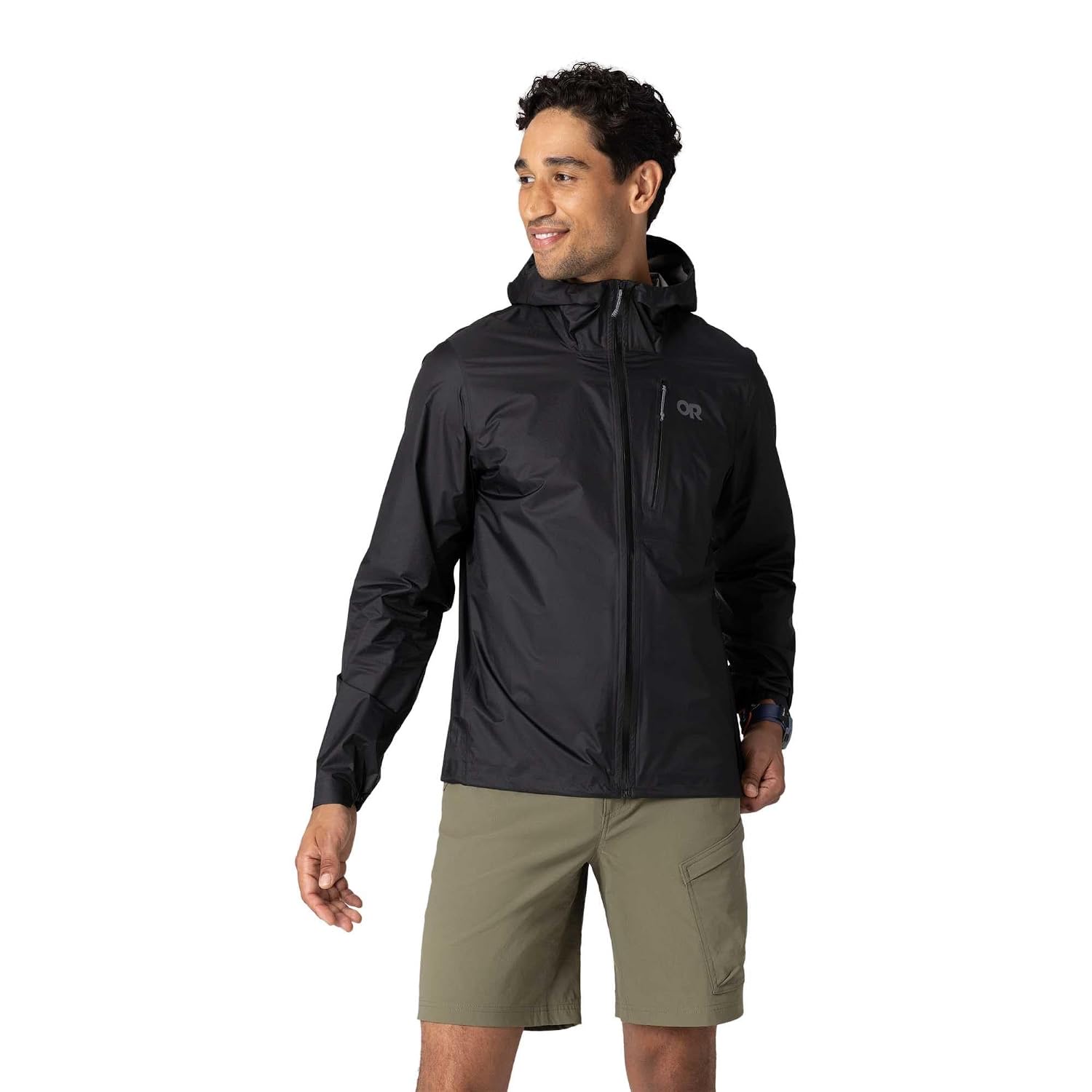
Outdoor Research Men's Helium UL Jacket
Best for: Day hikers and backpackers who want a dependable emergency layer for changing forecasts.
A lightweight rain shell for hikers who need packable weather protection without carrying a bulky hard shell.
On the trail: checks at every break
- Packable waterproof shell format
- Lightweight emergency layer
- Useful for wind and rain protection
- You need a heavy winter shell, maximum abrasion resistance, or a soft casual jacket.
If something goes wrong: the calm response
If something goes wrong, the first step is always the same: stop, assess, and make a calm decision. Panic and rushing make every situation worse, while a few minutes of clear thinking usually reveals the best option. Sit down, eat something, drink water, and think before acting.
For a minor injury, treat it and decide whether to continue or turn back. For a serious injury, keep the person warm and still, call for help if you have signal or a satellite communicator, and send someone for help if you do not. For a wrong turn, stop and use your map and phone to work out where you are. In every case, calm thinking beats fast movement.
A practical decision table
| Safety check | What to confirm | Why it matters |
|---|---|---|
| Route | Distance, terrain, exits, and alternatives | Turns a vague plan into a decision map |
| Weather and daylight | Forecast trend, exposure, sunset, and temperature | Sets a realistic turnaround window |
| Communication | Coverage, device, battery, and contact plan | Makes escalation possible when needed |
| Personal readiness | Fitness, food, water, clothing, and first aid | Matches the route to the person walking it |
Frequently asked questions
What are the ten essentials for hiking?
Navigation, light, sun protection, first aid, knife, fire, shelter, food, water, and extra clothes. The point is to cover ten categories of need, not to carry ten specific products.
What is a turnaround time?
The time by which you must turn back to finish in daylight, set before you start based on sunset and your pace. When the time comes, turn around, even if the summit is close.
Should I tell someone my hiking plan?
Always. Share your route and expected return time with someone at home before every hike. That information guides rescuers to you if something goes wrong.
What should I do if I get lost?
Stop, sit down, eat and drink, and think calmly. Use your map and phone to work out where you are. If you cannot, stay put and make yourself visible.
What should I check at each break on the trail?
Your water supply, energy, feet, the weather, and the time. Small checks catch small problems before they become large ones. Check the group as well as yourself.
What do I do if someone in my group is injured?
Stop, assess calmly, and treat the injury. Keep the person warm and still for a serious injury, call for help if you can, and send someone for help if you cannot. Do not rush.
Useful Sources and Verification
Use these source types to verify current details before buying or publishing a recommendation.
- Current official manufacturer documentation for any product, material, technical limit, or safety instruction mentioned
- Current retailer or service documentation for availability, variant, warranty, returns, subscriptions, or consumables
- Independent review patterns used as context and clearly separated from firsthand testing