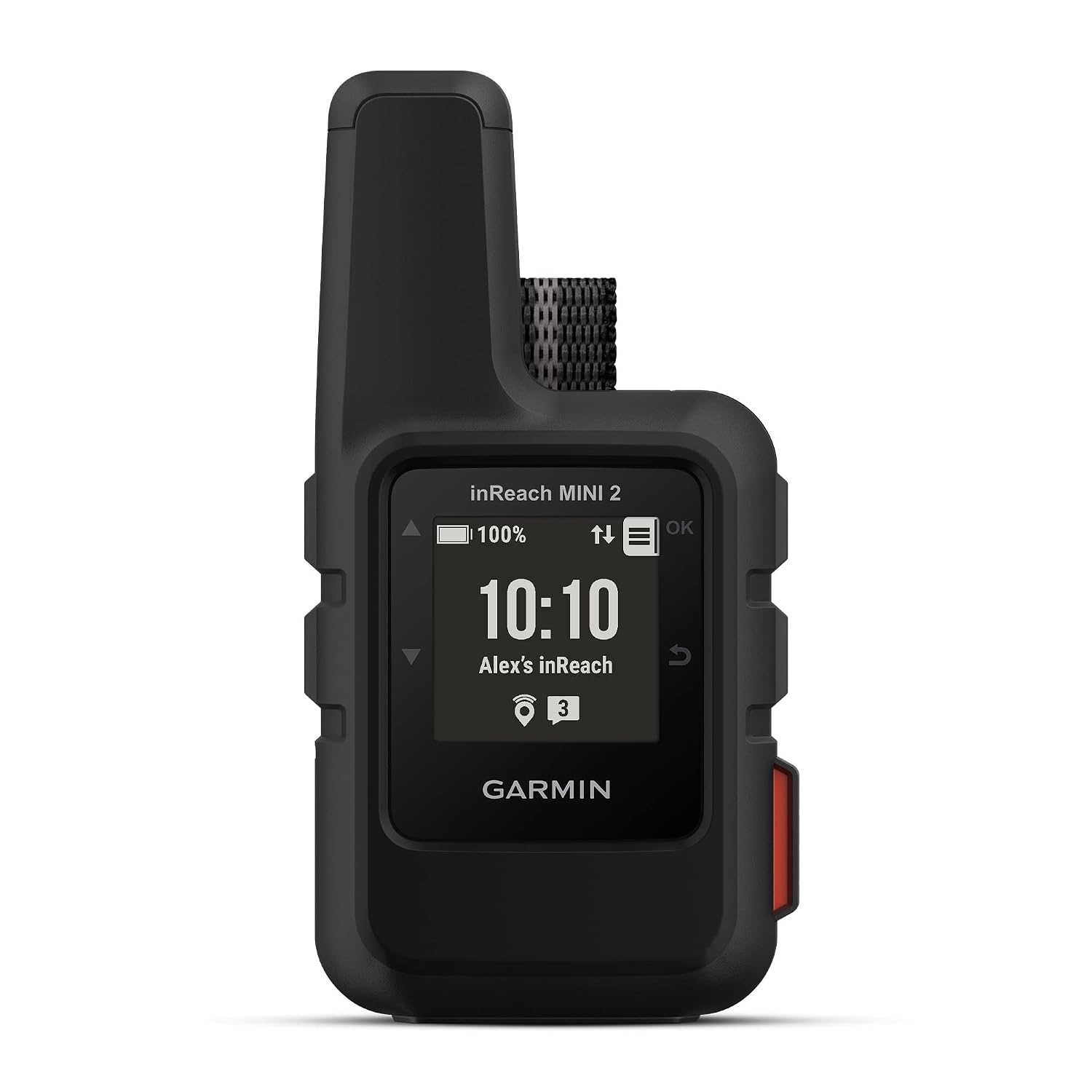
 Product photoGarmin inReach Mini 2
A satellite communicator for trips where an emergency plan and off-grid check-ins matter. This long-form profile explains where the model fits, what to verify, and which trade-offs deserve attention before you buy.
The Garmin inReach Mini 2 is a satellite communicator for hikers who travel beyond reliable cell coverage and want two-way messaging and an SOS option. It sends and receives messages via satellite, works independently of your phone signal, and is small enough to live on a pack strap. It requires a subscription and a clear view of the sky, so check the plan costs and coverage before buying.
Affiliate disclosure: some retailer links may earn a commission. That does not change the evidence labels or the need to verify the exact product, variant, current price, availability, warranty, and returns.
- Two-way satellite messaging
- SOS capability through satellite network
- Compact device for remote routes
- Two-way satellite messaging
- Interactive SOS through Garmin Response
- Subscription and sky-view requirements apply
What retailer reviews can and cannot tell you
Retailer evidence captured on 13 November 2026. Ratings and review themes can change and are not firsthand testing.
What a satellite communicator is actually for
A satellite communicator answers one question: how do I reach help, or reassure home, when there is no cell signal? On remote trails, in deep valleys, and on multi-day routes far from roads, a phone becomes a camera and a map, not a communication device. The inReach Mini 2 fills that gap by sending messages through satellites instead of cell towers.
It is not a replacement for good planning. A communicator cannot fix a bad route choice, a missed weather window, or a lack of fitness, and it should never be the reason you attempt a route you would otherwise avoid. Think of it as a safety layer on top of a solid plan, not as permission to take risks.
Two-way messaging beyond cell coverage
Two-way messaging is what separates a communicator from a simple emergency beacon. You can send a check-in to family, receive a reply, share your location, and adjust plans when conditions change. That conversation matters in real situations: a delayed party can tell home they are fine, and home can warn them about weather or a changed pickup time.
Messages are short and delivery is not instant, since the device needs a clear view of the sky to reach a satellite. In dense forest, deep canyons, or heavy cloud, messages can take longer to send, and the device should be kept where it can see the sky rather than buried in a pack. Test the messaging on a local walk before relying on it remotely.
SOS: what happens when you press the button
The inReach Mini 2 offers interactive SOS through Garmin Response, which means pressing the SOS button alerts a coordination center and opens a two-way exchange about your situation. Rescuers can ask about injuries, group size, and location details, and you can receive updates about the response. That conversation is far more useful than a one-way distress signal, because it lets responders plan the right help.
SOS only works with an active subscription and a clear sky view, and it is not a substitute for self-rescue skills. You should still know how to stop bleeding, keep someone warm, and navigate to safety, because rescue can take hours even after a successful SOS. Practice finding and pressing the button with gloves on, so the action is familiar before you ever need it.
The subscription question, answered honestly
The inReach Mini 2 requires a subscription, and the total cost of ownership includes the device plus the plan. Plans vary by message allowance and features, and some can be paused seasonally, which suits hikers who only need coverage for part of the year. Check the current plan options on Garmin's site before buying, since plan details and prices change.
The honest test is how often you actually leave cell coverage. If your routes stay within signal, a phone and a good offline map already cover your needs, and the subscription buys little. If you regularly hike remote trails, the subscription is the price of a safety layer that no phone can provide. Count your remote days per year before deciding.
Pairing, setup, and the habits that make it useful
The Mini 2 pairs with a companion phone app for easier typing, route planning, and contact management, but it also works standalone for messaging and SOS. Set up your contacts, preset messages, and emergency contacts before the trip, not at the trailhead. Preset check-in messages save time and battery, since they can be sent with a few button presses.
Battery habits matter on multi-day trips. The device lasts for days on a charge with normal use, but frequent tracking and messaging drain it faster, so carry a small power bank and know how to check the battery level. Keep the device on a pack strap or belt where it has a sky view, not at the bottom of the pack.
How it compares: inReach Mini 2 vs a phone, a PLB, and a bigger inReach
Against a phone, the Mini 2 wins wherever there is no signal, and loses everywhere there is one. A phone with offline maps and a messaging app is more capable and cheaper to run on connected routes, so the Mini 2 only earns its place when your routes genuinely leave coverage. Many hikers carry both, using the phone for navigation and the inReach for communication.
Against a personal locator beacon, the Mini 2 offers two-way messaging and check-ins, while a PLB offers only a one-way distress signal with no subscription. A PLB is simpler and has no running cost, which suits hikers who want emergency-only coverage. A larger inReach model adds a bigger screen and on-device mapping, which suits users who want to navigate on the device itself rather than on a phone.
Who does not need one
You do not need a satellite communicator if your hikes stay on busy local trails with reliable cell coverage, or if you never travel beyond a few hours from a road. In those cases a charged phone, an offline map, and a shared trip plan already cover the realistic risks. The subscription would buy reassurance, not capability.
You should also skip it if you are unwilling to maintain a subscription and learn the device. A communicator with an expired plan, dead battery, or unfamiliar controls is dead weight, and it can create false confidence. Buy it only if you will keep it charged, keep the plan active, and practice using it before you need it.
A practical decision table
| Decision point | What to verify | Why it matters |
|---|---|---|
| Role | A satellite communicator for trips where an emergency plan and off-grid check-ins matter. | Satellite messaging works where phones do not |
| Fit and access | Remote hikers who travel beyond reliable cell coverage and carry a clear communication plan. | Setup and subscription habits decide its value |
| Limit | You stay on busy local trails with coverage or do not want a subscription device. | Coverage and cost rule out casual buyers |
| Evidence | Two-way satellite messaging | Plans and features change, so verify current terms |
Frequently asked questions
Does the inReach Mini 2 work without a phone?
Yes. It can send messages, share location, and trigger SOS on its own. Pairing with a phone app makes typing and route planning easier, but the core safety functions do not depend on the phone.
Do I need a subscription to use it?
Yes. Messaging and SOS require an active Garmin subscription plan, and plan details and prices change over time. Check the current plans before buying, and consider whether a seasonal pause option fits your hiking year.
How does SOS work on the inReach Mini 2?
Pressing SOS alerts Garmin Response and opens a two-way exchange about your situation, so responders can ask about injuries and location. SOS needs an active subscription and a clear view of the sky, and rescue can still take hours.
Can I send messages to any phone number?
Yes, within the limits of your plan. You can message phone numbers and email addresses, and recipients can reply. Messages are short, and delivery depends on satellite visibility, so they are not instant.
How long does the battery last?
Battery life depends on how often you track, message, and check in. With moderate use it lasts for days, but heavy tracking drains it faster. Carry a power bank on multi-day trips and check the battery level before each day.
Is it better than a personal locator beacon?
It does more: two-way messaging, check-ins, and location sharing, where a PLB only sends a one-way distress signal. A PLB has no subscription cost, so it suits hikers who want emergency-only coverage without running costs.
Useful Sources and Verification
Use these source types to verify current details before buying or publishing a recommendation.
- The current manufacturer product page and technical documentation for Garmin inReach Mini 2
- The exact retailer listing checked for the model, variant, included components, and commercial terms
- Independent review patterns treated as context rather than a substitute for personal fit or field testing
- Garmin official website for the current product page and technical documentation