
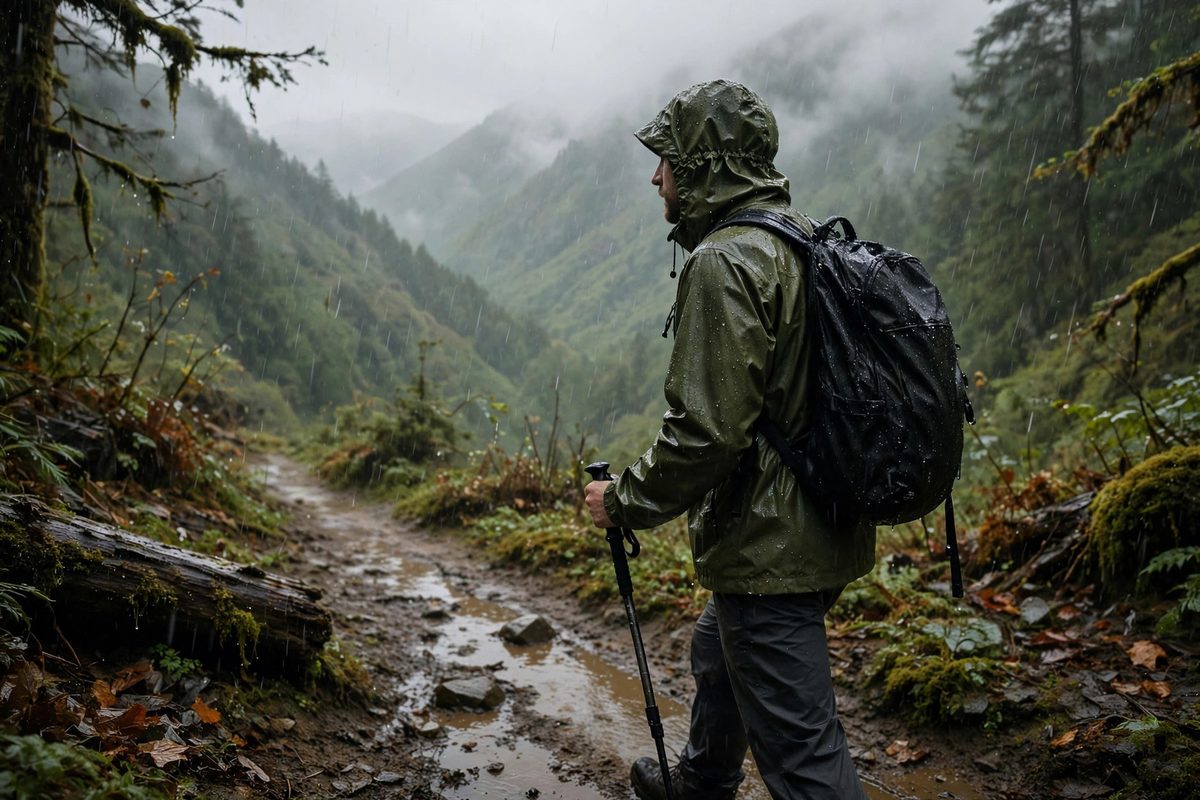
 Featured imageA hiker on a rainy forest trail
Rain does not have to end a hike. With the right shell, a sensible layering system and a plan for wet ground and rising water, hiking in the rain can be comfortable — and even enjoyable. This guide covers the gear, skills and judgement calls that keep you dry, warm and safe.
Hiking in the rain is safe when you prepare for it: wear a waterproof breathable shell over insulating layers, keep your feet and pack dry, slow down on slippery ground, never cross a flooded stream, and turn back at the first signs of hypothermia or lightning. The rain itself is rarely the danger — cold, poor footing and rising water are.
Position and Plan
Position: A practical guide to hiking in the rain for day hikers and backpackers: what to wear, how to move safely on wet trails, and how to judge when the weather says go home.
Plan: Work through the forecast check, the rain-gear system, footing and water crossings, and the warning signs of cold — so your next wet hike ends with dry socks and a hot drink, not a rescue call.
Hiking in the rain at a glance
| Topic | What to do |
|---|---|
| Before you go | Check the forecast, lightning risk and river levels; tell someone your route. |
| Rain shell | Waterproof, breathable jacket with a hood — your most important layer. |
| Layers | Insulation that stays warm when damp; no cotton next to skin. |
| Feet | Waterproof boots or quick-drying trail shoes; short, careful steps on wet rock. |
| Pack | Rain cover plus dry bags inside; keep phone and insulation dry. |
| Water | Treat rain as a hazard at crossings: never wade a flooded stream. |
| Warmth | Watch for shivering and clumsiness — early signs of hypothermia. |
| Turn back | Lightning, rising water or uncontrolled shivering means go home. |
1. Check the forecast — and plan for rain before you go
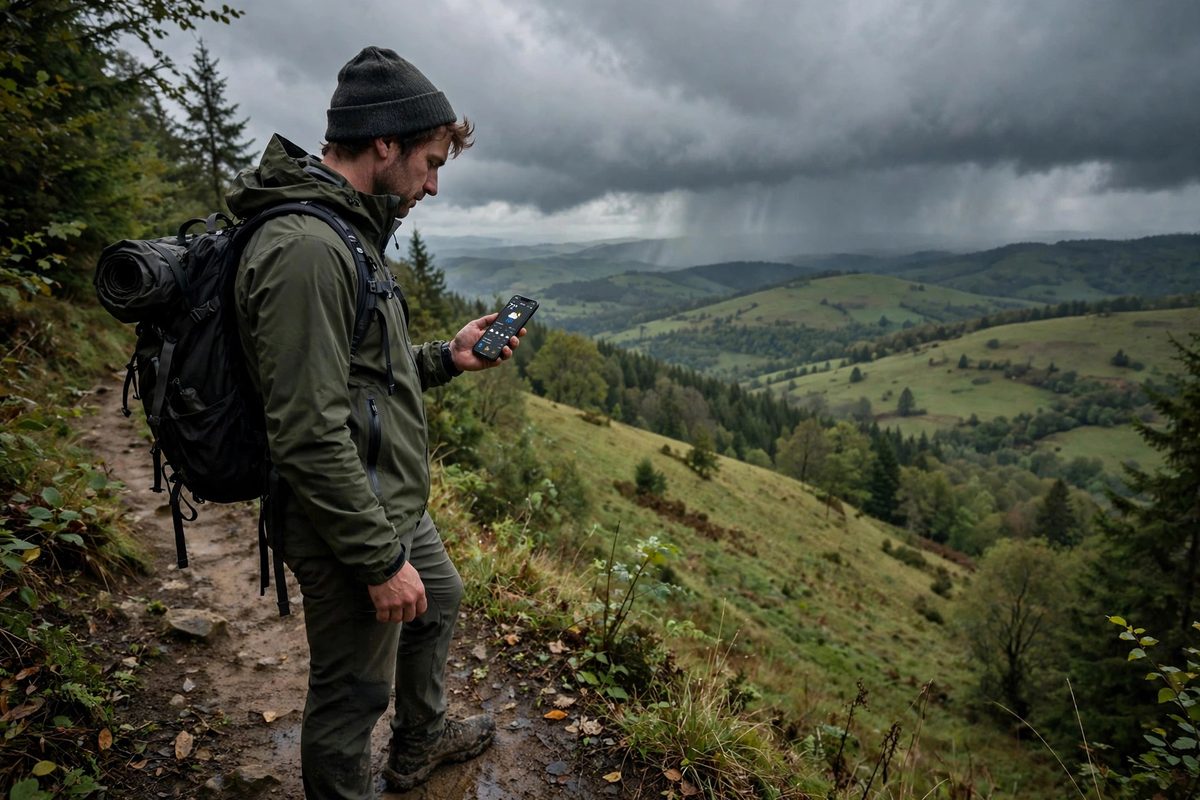
Hiking in the rain starts the day before, not on the trail. Check the forecast the evening before and again in the morning, and look at the rainfall radar as well as the headline: a 40% chance of light showers is a different day from hours of steady rain with a thunderstorm risk. Pay attention to lightning forecasts in particular — rain you can manage, lightning you cannot.
Check river and stream levels if your route crosses water, and read recent trail reports for washouts, fallen trees and flooded sections. Tell someone your route and expected return time, pack an extra warm layer and extra food, and build in a turnaround time before dark. Our hiking safety checklist covers the full pre-trail check.
2. A rain jacket that actually keeps you dry
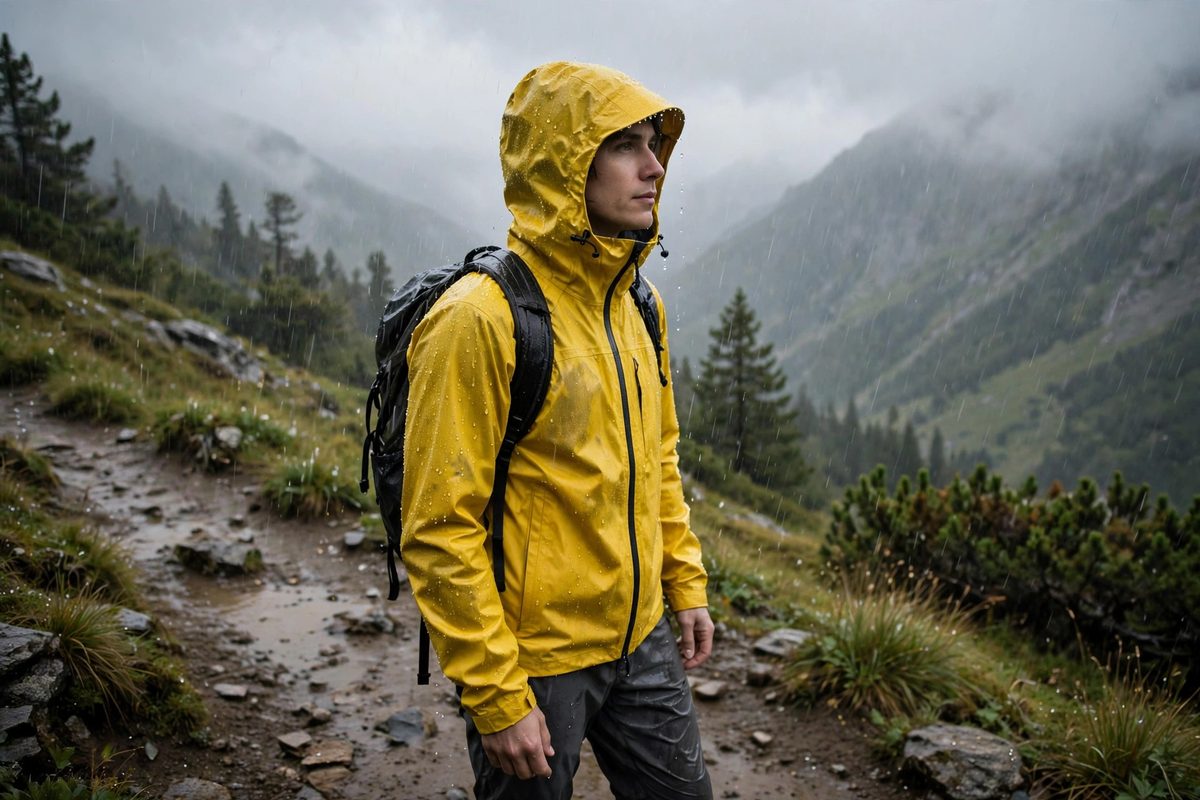
The single most important piece of rain gear is a waterproof, breathable shell with a proper hood. Waterproof means the fabric keeps rain out; breathable means sweat vapour can escape, so you do not get soaked from the inside. A cheap poncho or a water-resistant windbreaker will wet through in steady rain — look for a jacket with sealed seams, a storm flap over the zip and an adjustable hood that moves with your head.
Fit matters: the jacket should close over your insulating layers without restricting your arms, and the hem should cover your waist when you reach for a handhold. Pit zips are worth having — they let you vent heat on a climb without taking the shell off. Pack the shell at the top of your pack, not buried at the bottom, so it is on in seconds when the rain starts.
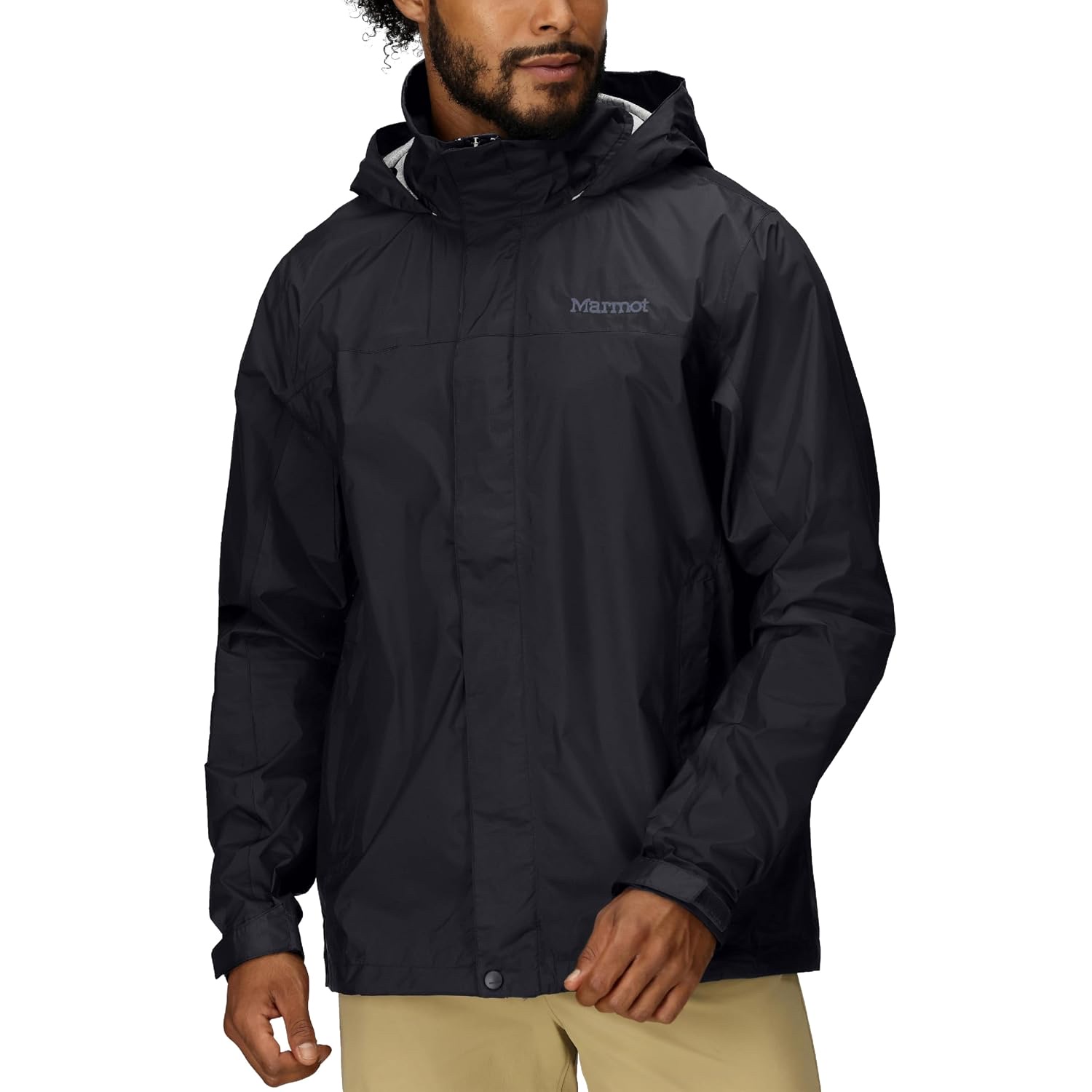
Marmot Men's PreCip Eco Rain Jacket
Best for: Hikers who want a light, packable waterproof shell for rainy day hikes.
A lightweight waterproof rain jacket with a full hood, pit zips and a packable design — a proven shell for hiking in the rain.
Rain gear: waterproof shells
- Light and packable — fits in a daypack lid
- Full hood and pit zips for ventilation
- Good value for a waterproof shell
- You need a heavier storm shell for multi-day mountain weather.
3. Layering for wet weather
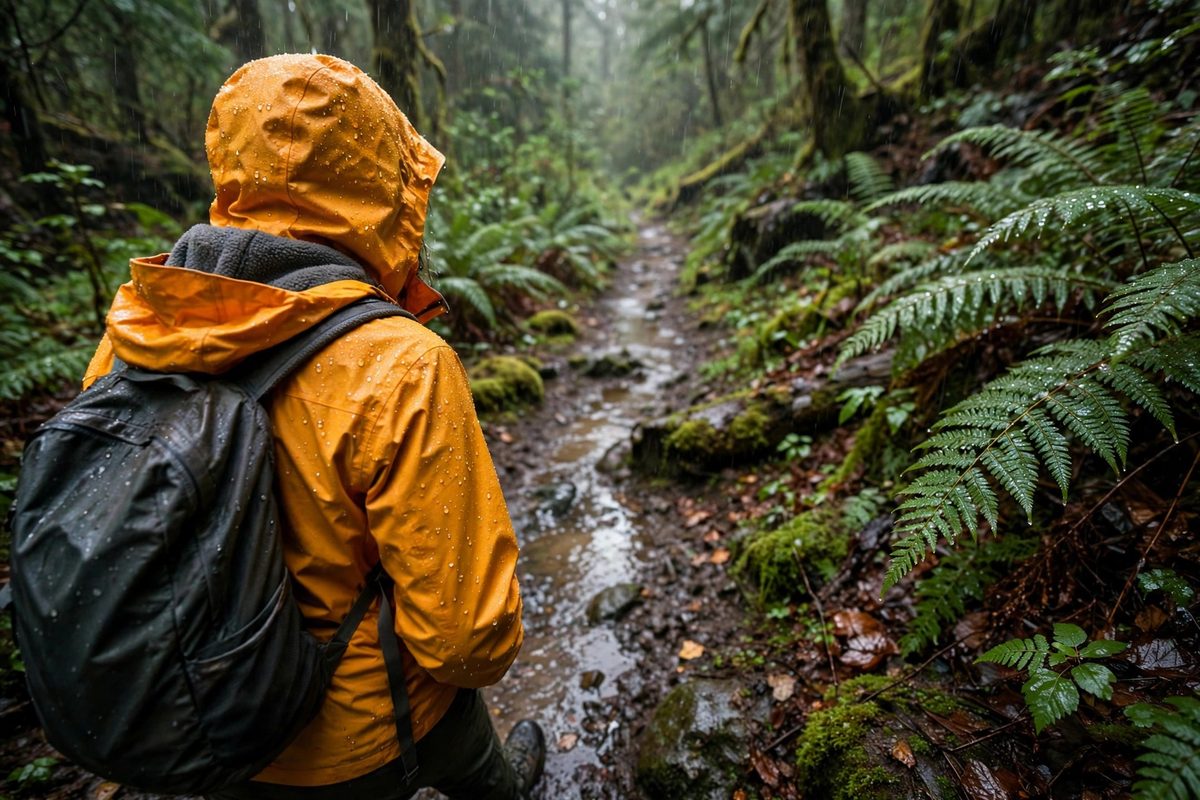
Staying warm in the rain is about managing moisture from both sides: rain outside, sweat inside. Start with a base layer that wicks sweat away from the skin — synthetic or merino wool, never cotton, which loses its insulation when wet and dries slowly. Add a fleece or light insulated mid-layer for warmth, then the waterproof shell on top.
Vent before you overheat: open pit zips, push sleeves up on climbs and take the shell off on sheltered uphill stretches if the rain eases. Sweat soaked into your layers cools you fast when you stop, so pace yourself and keep a dry spare layer sealed in a dry bag for breaks and the end of the day. Our guide to the layering system for hiking explains the full setup.
4. Rain pants, gaiters and dry legs
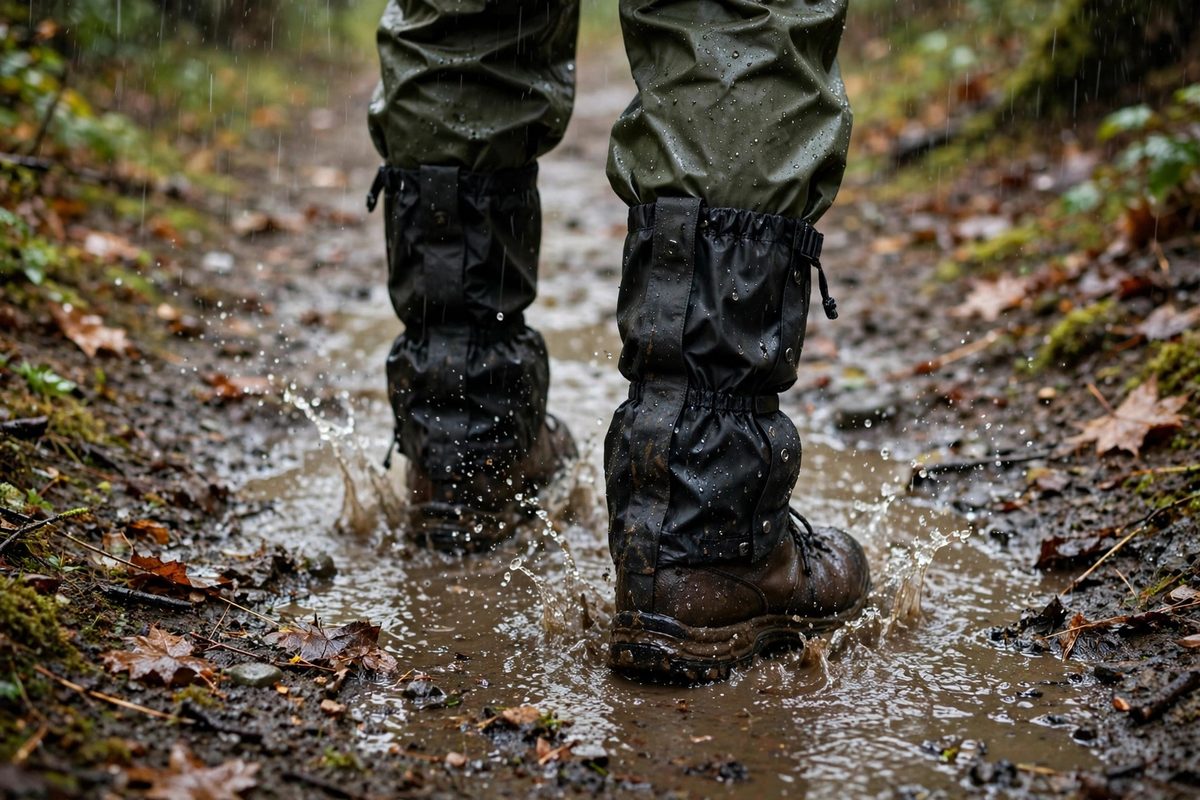
Rain pants are worth packing on long or exposed routes, and on any hike where the temperature is low enough that wet legs mean cold legs. Lightweight waterproof over-trousers pull on over your hiking trousers without removing your boots, and full-length side zips make that much easier. On short, warm summer hikes, quick-drying trousers and accepting wet legs is often the more comfortable choice.
Gaiters keep rain, mud and grit out of your boots and stop your socks soaking through from the top — a small, cheap addition that makes a big difference on wet, muddy trails. At camp, change into dry socks and trousers immediately: dry legs recover warmth far faster than damp ones.
5. Footwear and footing on wet trails
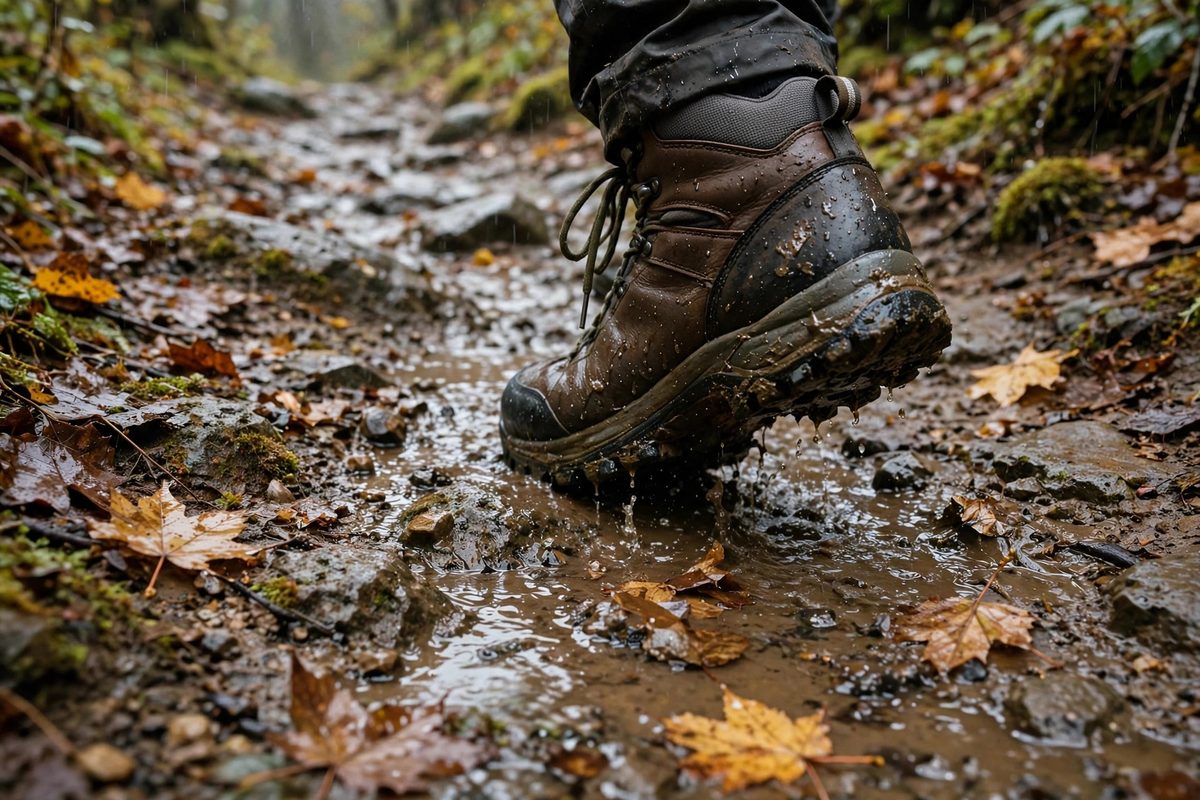
Wet rock, roots and wooden boardwalks are slippery in a way dry trail never is — most rain-hiking falls happen on descents, not climbs. Shorten your stride, place your whole foot flat instead of on the edge, and test every step before committing your weight. Trekking poles add two extra points of contact and are at their most useful in the rain; our guide to the best trekking poles for hiking covers what to look for.
For footwear, waterproof boots keep feet dry in puddles and mud, but they also hold sweat in — on warm, rainy days, quick-drying trail shoes with good grip can be the better call, as long as you carry dry socks. Whatever you wear, check the fit when wet: our hiking boot fit guide explains how boots should fit with real hiking socks.
6. Keeping your pack and gear dry
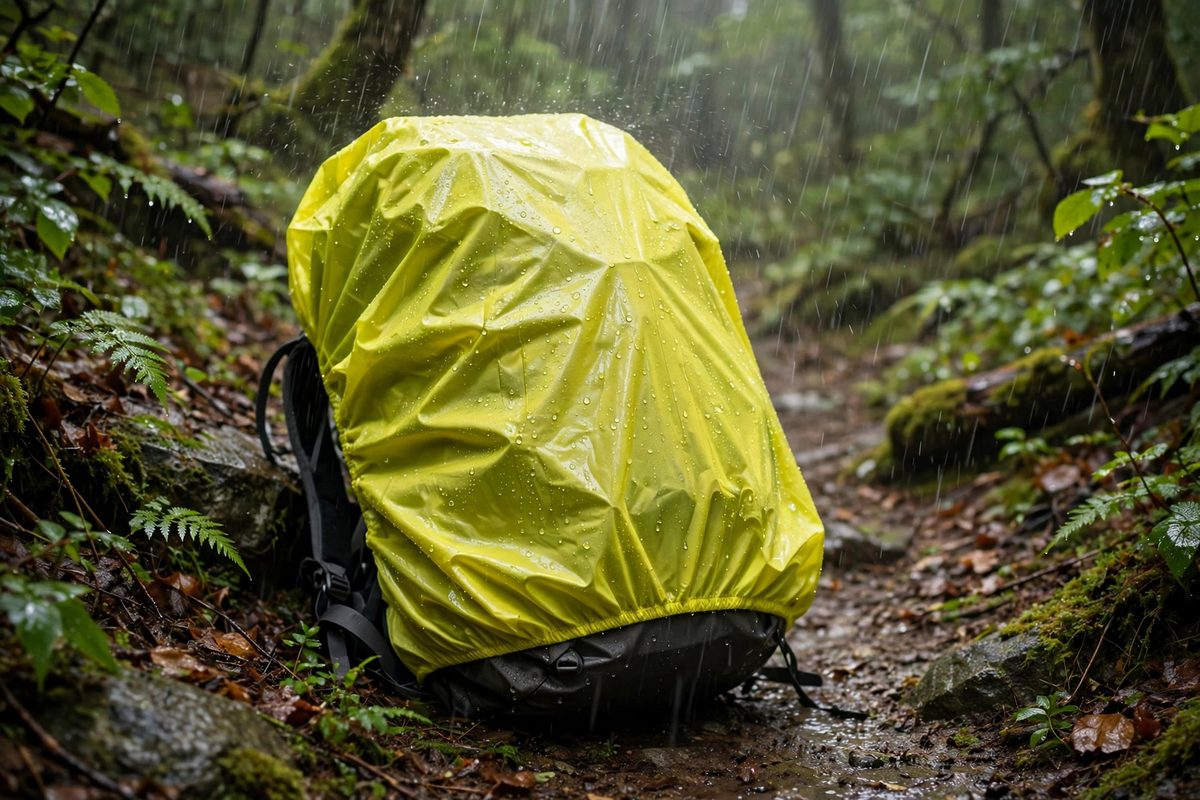
A pack rain cover helps, but it is not a waterproof guarantee: rain runs down your back and into the gap between cover and pack, and the cover does nothing for the side facing your body. The reliable system is dry bags or zip-seal bags inside the pack — one for spare clothes, one for electronics and one for food. A pack liner, a large tough bag that lines the whole inside of your pack, is the simplest version of the same idea.
Keep your phone in a waterproof pouch you can still use through, and your map in a zip bag. Put the rain shell, a snack and the first-aid kit where you can reach them without opening the main compartment in the rain. How to pick the right size and fit is covered in our guide to how to choose a daypack.
7. River crossings and flooded trails
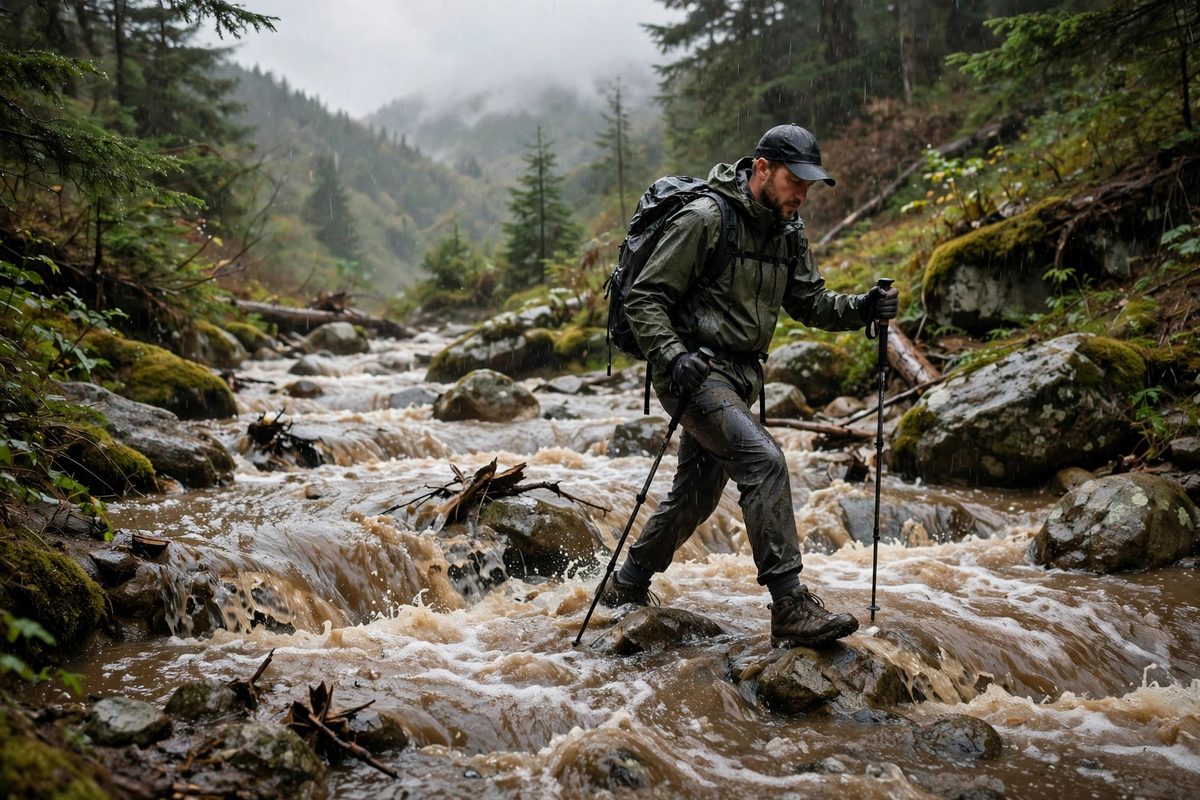
Rain turns small streams into serious hazards fast, and a crossing that was easy in the morning can be dangerous by the afternoon. Never cross a flooded stream: if the water is above your knees, moving fast enough to push you off balance, or you cannot see the bottom, turn back and find a bridge or another route. Flooded trails that look shallow can hide washed-out sections and strong currents.
If you must cross a calm, shallow stream, unbuckle your pack’s waist and chest straps so you can drop it if you fall, face upstream, use trekking poles for balance and cross as a group if you are not alone. Keep your boots on — bare feet slip on rocks and cut easily. Water that looks clear after rain still needs treating: see our guide to water treatment basics for hiking.
8. Hypothermia: the signs to watch for
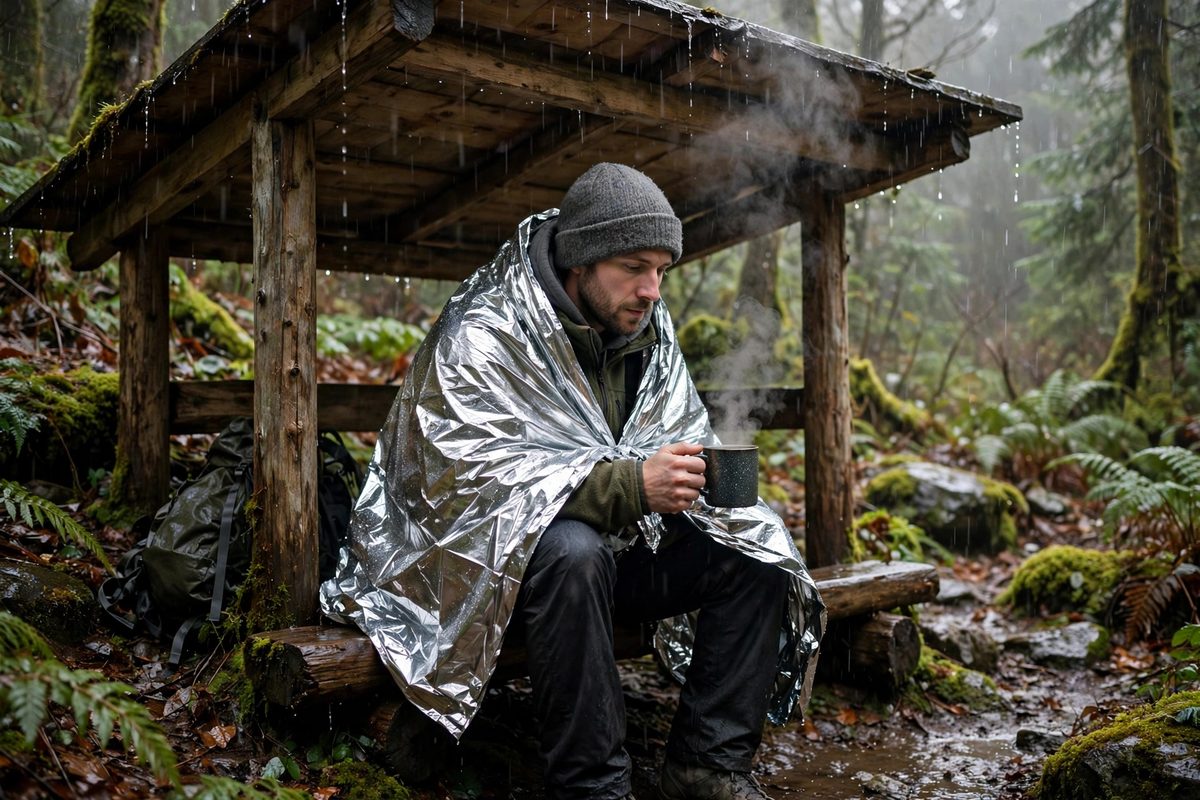
Hypothermia is the real danger of hiking in the rain. It does not need freezing temperatures — wind, wet clothes and exhaustion can cool the body dangerously even on a mild day. Early signs are uncontrolled shivering, cold hands that fumble with zips and laces, and a tired, clumsy feeling. Later signs are confusion, slurred speech, poor decisions and shivering that stops — that is an emergency.
If someone shows early signs, act immediately: get them out of the wind and rain, change them into dry layers, add insulation and a waterproof shell, give warm sweet drinks if they can swallow safely, and keep them moving gently or sheltered and warm. Do not give alcohol. If symptoms worsen or the person becomes confused, call for help and keep them warm until it arrives. Prevention is the same checklist as the rest of this guide — dry layers, food, shelter from wind — and our hiking safety checklist is worth running through before every wet hike.
9. When to turn back — and drying out afterwards
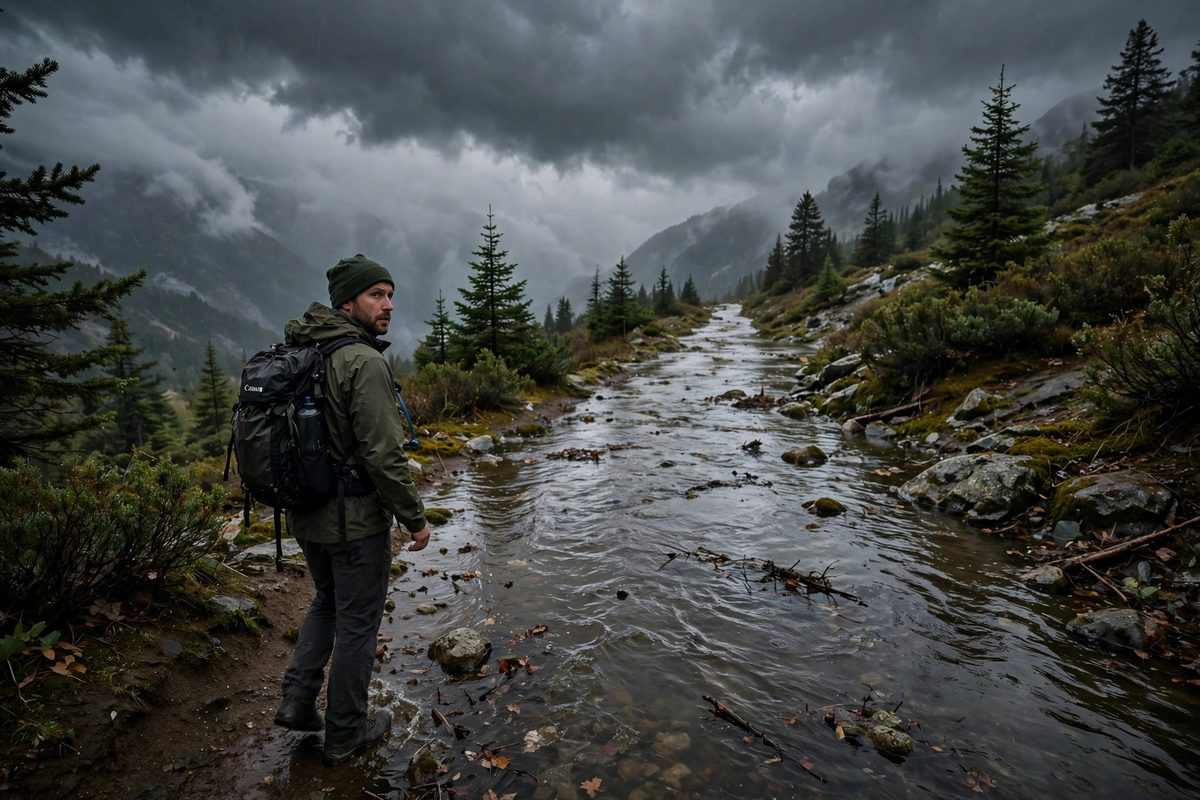
Turning back is a skill, not a failure. Turn around for lightning, for water rising at a crossing, for uncontrolled shivering, or when the light is fading faster than your route allows. Set a turnaround time before you start and stick to it — in rain, everything takes longer and daylight feels shorter.
Back at home or camp, dry everything properly: hang the shell and layers to air, empty and dry the pack, wash mud off boots and dry them away from direct heat, and reproof the shell when water stops beading on the fabric. A jacket that wets out is not broken — it usually just needs a wash and a fresh waterproofing treatment.
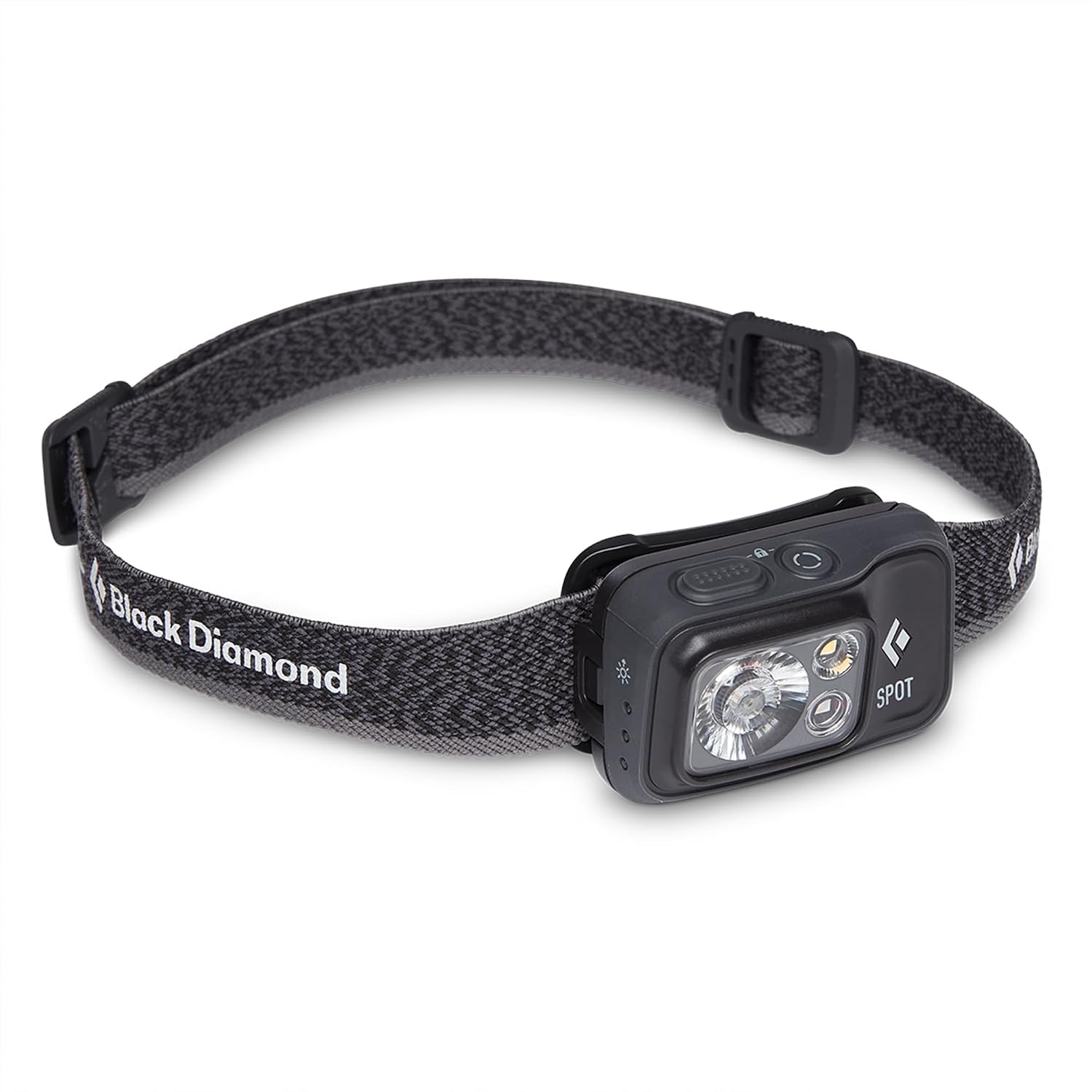
Black Diamond Spot 400
Best for: Hikers who want a bright, reliable headlamp when rain and low cloud cut the daylight short.
A compact headlamp with a bright beam for dark trails, early starts and late finishes in bad weather.
Safety: light for low visibility
- Bright beam for dark, rainy trails
- Light and compact — easy to carry just in case
- Useful beyond rain: dawn starts and late finishes
- You need a headlamp with a separate battery pack for multi-day trips.
Frequently asked questions
Can you hike in the rain safely?
Yes, with preparation. A waterproof shell, warm layers, good footing and a plan for water crossings make rain hiking safe for most hikers. Turn back for lightning, flooded streams or signs of hypothermia.
What should I wear for hiking in the rain?
A waterproof, breathable rain jacket with a hood, a wicking base layer, an insulating mid-layer, and quick-drying or waterproof trousers. Avoid cotton — it loses insulation when wet and dries very slowly.
Do I need waterproof boots for hiking in the rain?
Not always. Waterproof boots keep feet dry in puddles and mud, but on warm days quick-drying trail shoes with good grip and dry spare socks can be more comfortable. Fit and grip matter more than the waterproof label.
How do I keep my phone and gear dry in the rain?
Use dry bags or zip-seal bags inside your pack for clothes, food and electronics, a pack liner for the whole load, and a waterproof pouch for your phone. A pack rain cover helps but is not enough on its own.
Is it safe to cross a stream after heavy rain?
Often not. If the water is above your knees, fast-moving, rising or murky enough that you cannot see the bottom, do not cross — find a bridge or turn back. A crossing that was easy in the morning can be dangerous by the afternoon.
What are the first signs of hypothermia on a hike?
Uncontrolled shivering, cold hands that fumble with zips, clumsiness and unusual tiredness. Get the person dry, warm and sheltered straight away; confusion or shivering that stops is an emergency — call for help.
When should I cancel or turn back from a rainy hike?
Cancel for forecast lightning or severe storms. Turn back for lightning nearby, rising water at a crossing, uncontrolled shivering, or when you will not reach the end before dark. A missed hike is always better than a rescue.
Useful Sources and Verification
Use these source types to check current details for the area you plan to visit.
- Current weather, river-level and trail-condition information from the land manager or park authority for the area you plan to visit
- Manufacturer guidance for the exact rain gear named in this guide, including waterproof ratings, care and reproofing
- Hypothermia and lightning safety guidance from national outdoor and mountain safety organisations