
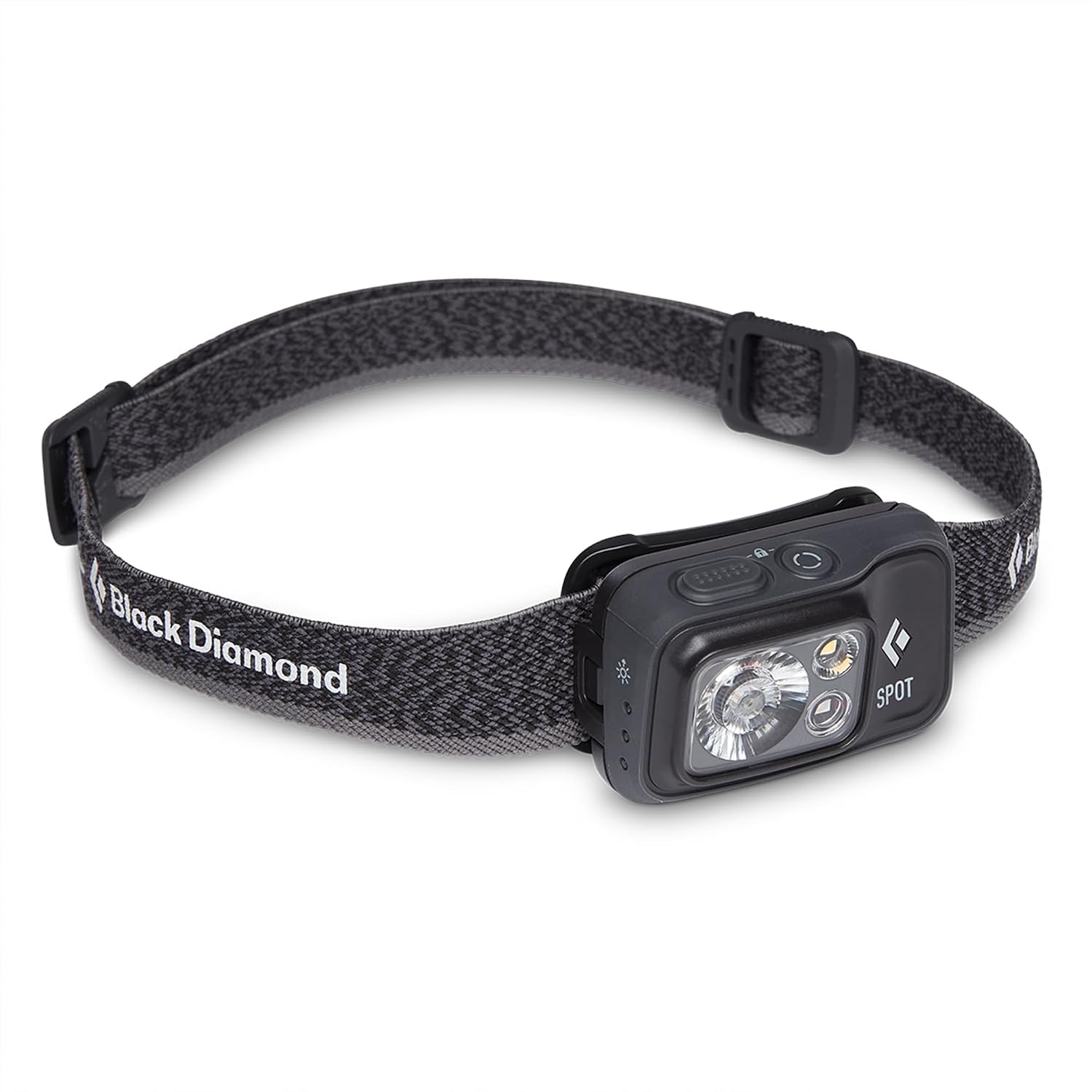
 Product photoBlack Diamond Spot 400
A compact headlamp for early starts, late finishes, camp chores, and emergency visibility. This long-form profile explains where the model fits, what to verify, and which trade-offs deserve attention before you buy.
The Black Diamond Spot 400 is a compact headlamp for hikers who need reliable light for early starts, late finishes, camp chores, and emergencies without carrying a bulky torch. Its 400-lumen maximum output covers trail use after dark, and the choice between AAA cells and a rechargeable battery pack lets you match the power source to your trip. It is not a high-output expedition light, so check the mode layout and battery plan before buying.
Affiliate disclosure: some retailer links may earn a commission. That does not change the evidence labels or the need to verify the exact product, variant, current price, availability, warranty, and returns.
- Multiple brightness modes
- Compact trail-ready body
- Useful red-light and emergency modes
- 400-lumen maximum output
- IPX8 water-resistance rating
- AAA or BD 1500 rechargeable battery options
What retailer reviews can and cannot tell you
No exact-variant review signal is used until the listing is confirmed.
Retailer evidence captured on 13 November 2026. Ratings and review themes can change and are not firsthand testing.
A headlamp's real job: the last hour and the first hour
Most hiking light is used at the edges of the day: a pre-dawn start, a finish that runs past sunset, or a camp task after dark. The Spot 400 is built for those moments, with enough output to read a rocky trail and a small body that disappears into a hipbelt pocket. A headlamp that is always in the pack is worth more than a brighter light left at home.
The emergency case matters too. A twisted ankle, a wrong turn, or a slower-than-expected group can turn a day hike into a night hike without warning. Carrying a compact headlamp with fresh power is one of the cheapest safety habits in hiking, and it is the reason experienced hikers treat a headlamp as a ten-essentials item rather than an accessory.
Brightness modes and when each one earns its place
The 400-lumen maximum output is for route-finding and rough ground, where you need to see ahead and pick out trail markers. For camp chores, reading, and moving around a tent, a low mode is more useful: it preserves night vision, avoids blinding tentmates, and stretches battery life across several nights. Learning which mode fits which task is more valuable than always running the lamp at full power.
The red-light mode is for situations where white light would be a problem, such as checking a map without losing dark adaptation or moving around a shared camp late at night. The emergency modes, including a strobe-style signal, are for attracting attention if you need help. These are features you may never use, but they cost nothing to carry and are the reason a dedicated headlamp beats a phone flashlight.
Power choices: AAA cells or the rechargeable pack
The Spot 400 runs on AAA batteries or the optional BD 1500 rechargeable battery, and the right choice depends on how you hike. AAA cells are easy to replace in any town and simple to carry as spares, which suits longer trips and remote routes. The rechargeable pack reduces waste and long-term cost, and suits hikers who charge gear between outings.
Whatever you choose, carry a backup plan. A spare set of cells weighs almost nothing, and a headlamp with dead batteries is just a headband. Check the battery level before every trip, and remember that cold weather shortens battery life, so keep spares in a pocket rather than in a cold pack lid.
Fit, controls, and using it with cold hands
A headlamp has to sit still on your forehead while you move, and the strap adjustment decides whether it does. Try the lamp with the hat or beanie you actually wear, and check that the strap stays put when you look down at steep ground. A lamp that slides onto your nose halfway down a descent is a distraction you do not need.
Controls matter most when conditions are poor. Can you switch modes and lock the lamp with gloves on? Can you tell by feel whether the lamp is on, and can you lock it so it does not switch on inside your pack and drain the battery? These small handling details decide whether the lamp is dependable or merely bright.
Water, drops, and the IPX8 rating in plain terms
The IPX8 water-resistance rating means the lamp is built to survive immersion, not just rain. In practice, that means a downpour, a dropped lamp in a stream crossing, or a night in a wet jacket pocket should not end the trip. It does not mean the lamp is indestructible, and the lens and seals still deserve the same care you would give any electronic device.
Durability also includes the strap, the hinge, and the battery door. These are the parts that fail first on most headlamps, usually from grit, repeated bending, or a battery door forced open with cold fingers. A quick rinse after a muddy trip and a check of the seal before storage will do more for the lamp's life than any specification.
How it compares: this lamp vs a bigger light vs your phone
Against a high-output expedition headlamp, the Spot 400 gives up raw brightness and beam distance in exchange for a smaller body and a lower price. Expedition lights suit night navigation on unmarked terrain and search-style use, while the Spot 400 covers the walking, camping, and emergency jobs most hikers actually have. If your routes never leave marked trails, the extra output is weight and cost you will rarely use.
Against a phone flashlight, any dedicated headlamp wins on hands-free use, battery life, and beam control. A phone light drains the same battery you need for navigation and emergency calls, and holding it means one hand is never free for balance or poles. Keep the phone for maps and messages, and let the headlamp do the lighting.
Who should look elsewhere
Skip the Spot 400 if you regularly navigate off-trail at night, run technical terrain in the dark, or need a beam that reaches far down a route. Those jobs need a higher-output lamp with a larger battery and a more powerful beam. Also skip it if you want a rechargeable-only system with no disposable-battery option, since this lamp's flexibility comes from supporting both.
Trail runners who want the lightest possible lamp may also prefer a smaller, simpler model, and cavers or canyoneers need a lamp rated for their specific environment. For everyone else, the honest test is whether the lamp's modes, power options, and size match the trips you actually take, rather than the trips you imagine.
A practical decision table
| Decision point | What to verify | Why it matters |
|---|---|---|
| Role | A compact headlamp for early starts, late finishes, camp chores, and emergency visibility. | Light covers the risky hours at the edges of the day |
| Fit and access | Every hiker who wants a reliable light with useful brightness and a small pack footprint. | Modes and power options decide whether it gets used |
| Limit | You need a high-output expedition light or a rechargeable-only system. | Output and battery style rule out some buyers |
| Evidence | 400-lumen maximum output | Output and battery options vary by listing |
Frequently asked questions
Is 400 lumens bright enough for night hiking?
For marked trails and camp use, yes. The maximum output is meant for route-finding and rough ground, while lower modes cover camp chores and reading. Off-trail navigation in the dark or technical running may need a higher-output lamp.
Should I use AAA batteries or the rechargeable battery?
AAA cells are easier to replace on long or remote trips, since spares are available anywhere. The rechargeable pack suits hikers who charge gear between outings and want to reduce waste. Either way, carry a spare power source.
What is the red-light mode for?
Red light preserves your night vision and is less disruptive in a shared camp. Use it for map checks, late-night movement around camp, and any task where white light would blind you or others.
Can the Spot 400 survive heavy rain?
Yes. Its IPX8 water-resistance rating means it is built to handle immersion, so rain and splashes are well within its limits. Rinse off mud and grit after a wet trip and check the battery door seal before storage.
How do I stop the headlamp turning on inside my pack?
Use the lock function if the lamp has one, and store it with the lens facing inward or in a small pouch. Removing the batteries for long storage also prevents accidental drain.
Is a headlamp better than a phone flashlight on the trail?
Yes, for trail use. A headlamp leaves both hands free, preserves your phone battery for navigation and emergencies, and offers proper beam control and a red-light mode. A phone light is a backup, not a plan.
Useful Sources and Verification
Use these source types to verify current details before buying or publishing a recommendation.
- The current manufacturer product page and technical documentation for Black Diamond Spot 400
- The exact retailer listing checked for the model, variant, included components, and commercial terms
- Independent review patterns treated as context rather than a substitute for personal fit or field testing
- Black Diamond official website for the current product page and technical documentation