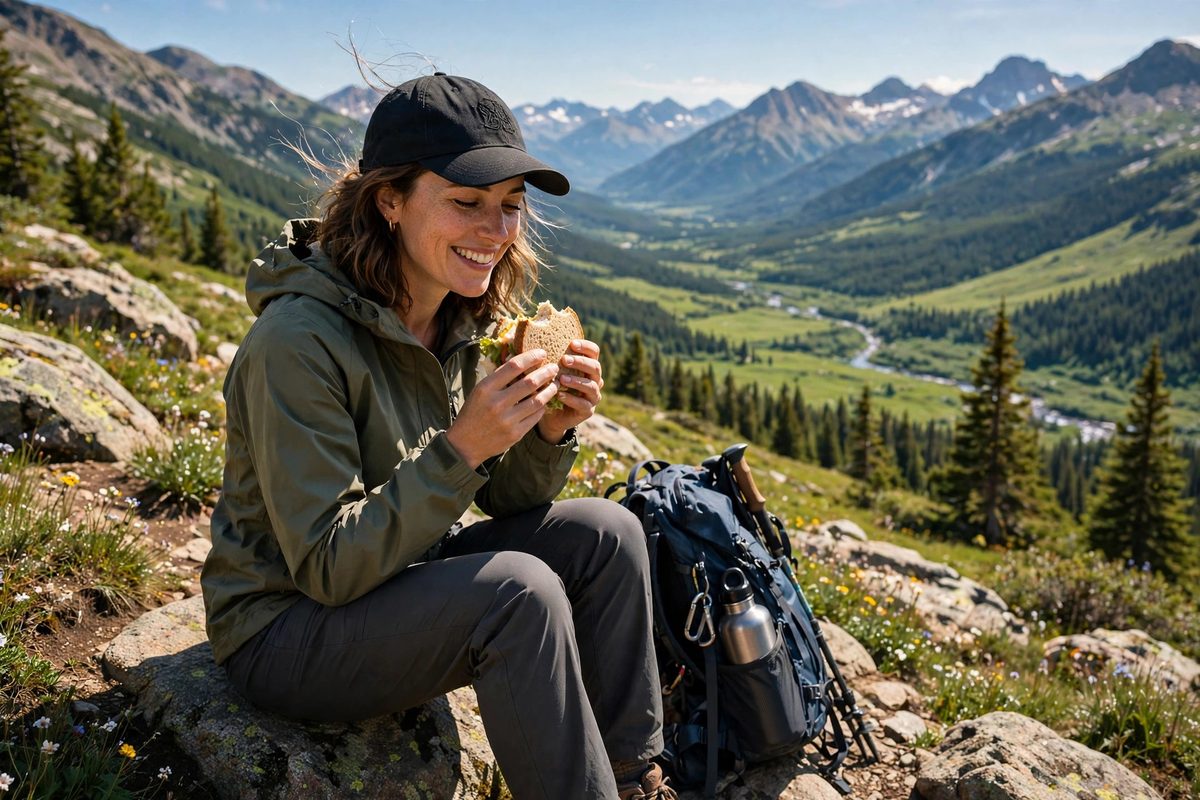
 Featured imageA hiker eating lunch with a mountain view
Food is fuel on the trail: eat too little and your legs go flat, your mood drops and your decisions get worse. This guide covers how much to eat, what to eat at breakfast, lunch and dinner, the snacks that actually work, and how to carry it all without the weight.
Eat 200 to 300 calories an hour while hiking, mostly carbs with some salt, and drink about half a litre an hour. Breakfast slow and filling, lunch you can eat walking, snacks every hour, and a hot dinner at camp — and carry food you actually like, because food you won't eat weighs the same as no food.
Position and Plan
Position: A practical guide to trail food and nutrition for day hikers and backpackers: how much to eat, what to eat at every meal, and how to pack it.
Plan: Work through calories, breakfast, lunch, snacks, dinner, hydration, cold-weather food and packing — then build a food bag that is light, tasty and enough.
Trail food at a glance
| Topic | What to do |
|---|---|
| Calories | 200–300 per hour on the trail; 2,500–4,000 a day on big days. |
| Breakfast | Slow carbs + protein: oats, eggs, bread and nut butter. |
| Lunch | Wraps, sandwiches and cheese — food you can eat walking. |
| Snacks | Every hour: bars, nuts, dried fruit, chocolate. |
| Dinner | One-pot hot meals at camp: noodles, rice, dried meals. |
| Hydration | About half a litre an hour, plus electrolytes on hot days. |
| Cold weather | Hot food and drinks; keep snacks where they won't freeze. |
| Packing | Bear canister or hang where required; pack out all waste. |
| Special diets | Vegan, gluten-free, allergies — plan ahead and test at home. |
1. How many calories does hiking really burn?
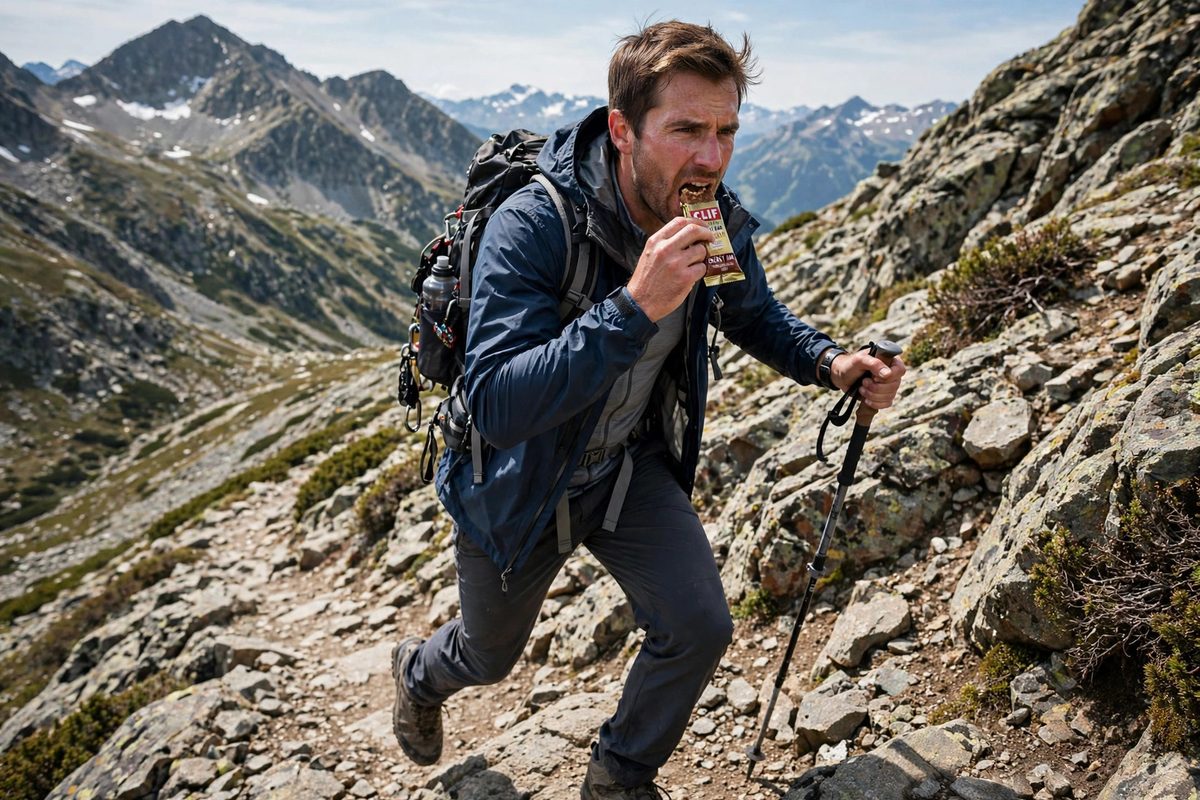
Hiking burns far more than most people expect: a fit hiker on a hilly trail with a pack burns roughly 400 to 600 calories an hour, and a hard mountain day can pass 3,500 to 4,000 calories. That is why the classic hiker's mistake is under-eating — you feel fine at noon, then your legs go flat, your mood crashes and your decisions get sloppy by mid-afternoon. The fix is simple: eat before you feel hungry, and eat often.
The practical rule is 200 to 300 calories an hour while moving, mostly carbohydrate with a little protein and salt. That is roughly one energy bar, a big handful of trail mix, or two slices of bread with nut butter per hour. On a multi-day trip, add a hot breakfast and a hot dinner on top — see our first overnight packing list for how food fits into the whole kit.
2. Breakfast before the trailhead
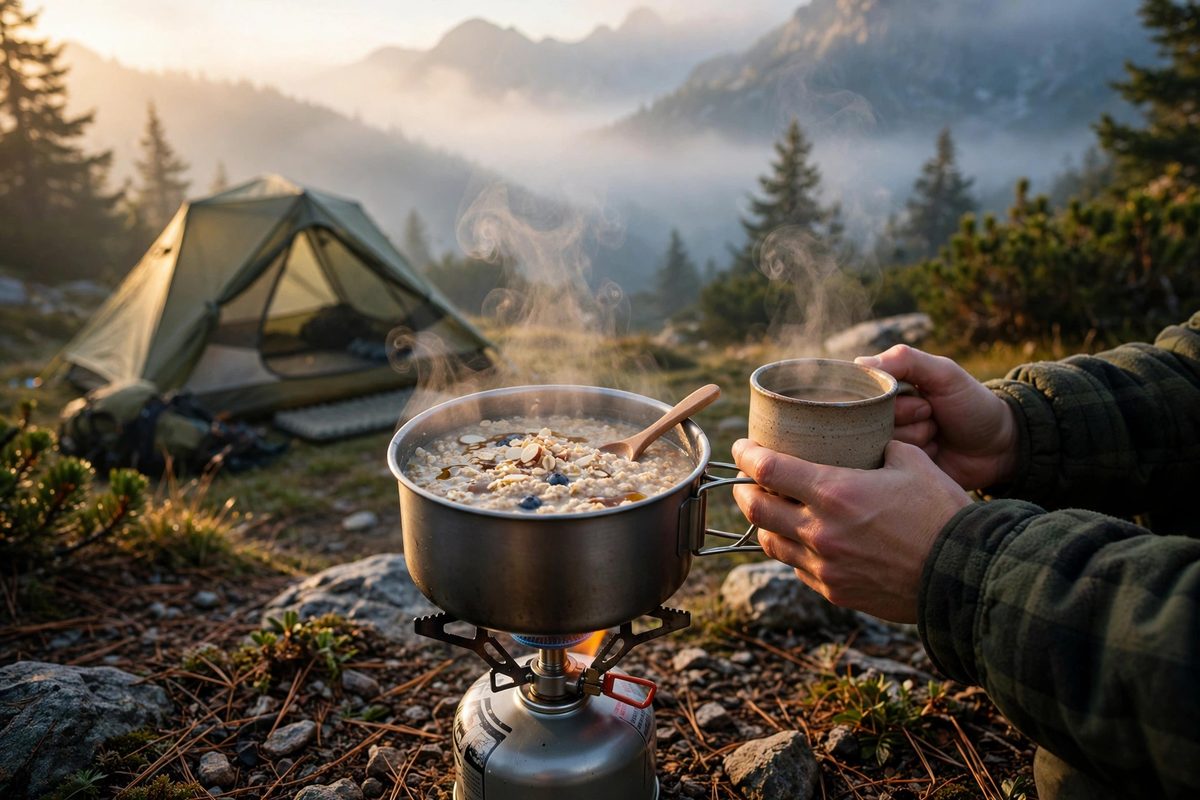
Breakfast is the meal that decides your morning: eat slow carbs with protein and you hike steady until lunch; eat sugar alone and you crash by 10 a.m. Oats are the trail classic for a reason — cheap, light, filling, and they cook in minutes with a little dried fruit and nuts. Bread with peanut butter, instant eggs, or a breakfast burrito work just as well.
Eat at camp before you walk, not on the first climb: a full stomach and a steep hill do not mix. If you are driving to the trailhead, eat a real breakfast at home and carry a second breakfast — a bar and a banana — for the first stop. Coffee counts as breakfast fuel too, but it is not food: drink it with something, not instead of it.
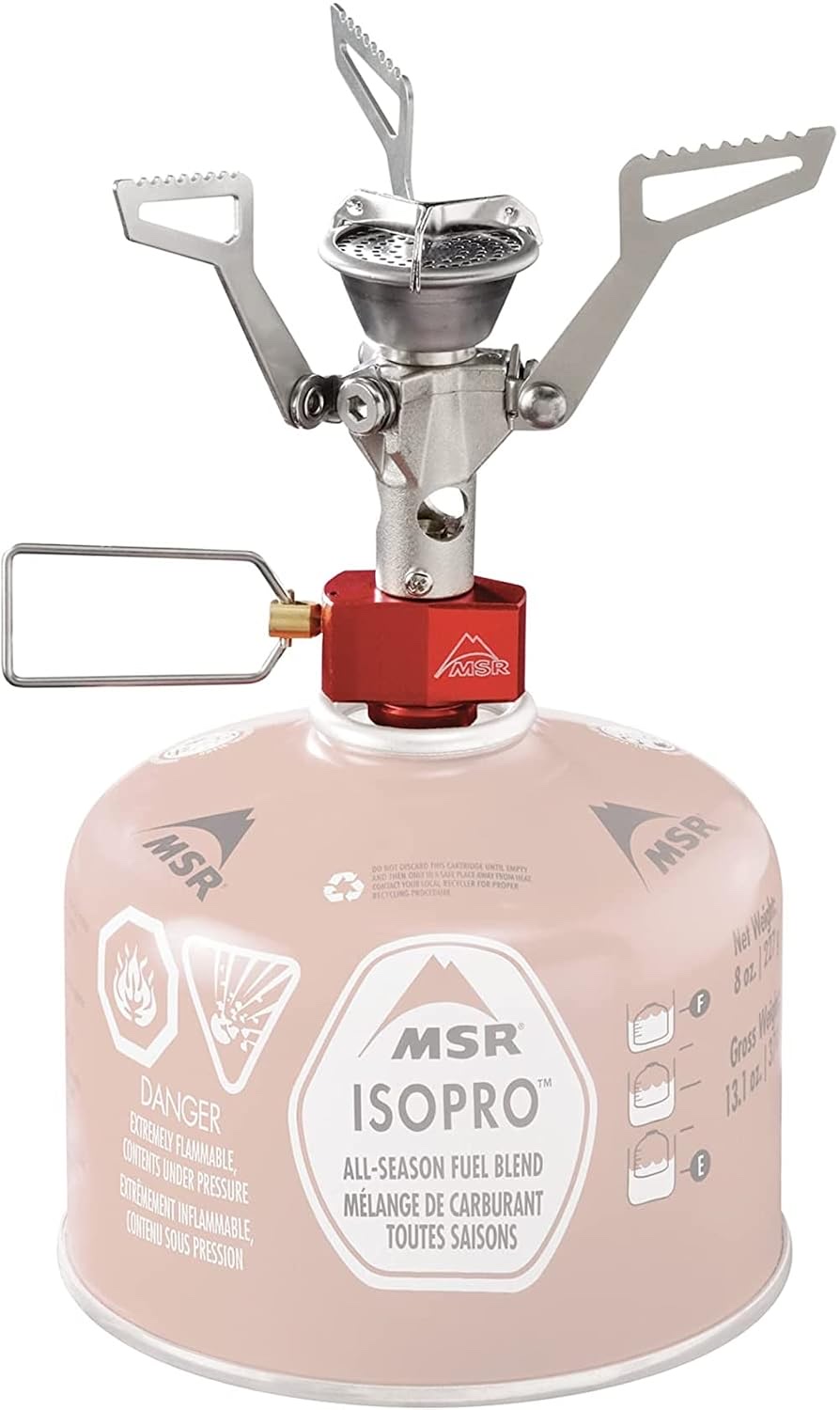
MSR PocketRocket 2
Best for: Backpackers who want a tiny stove that boils water fast.
A pocket-size canister stove that boils water quickly for meals and hot drinks.
Trail cooking: a stove that boils breakfast fast
- Tiny and very light
- Fast boil for its size
- Simple to use
- You want to simmer gourmet meals or cook for a group.
3. Lunch you can eat while walking
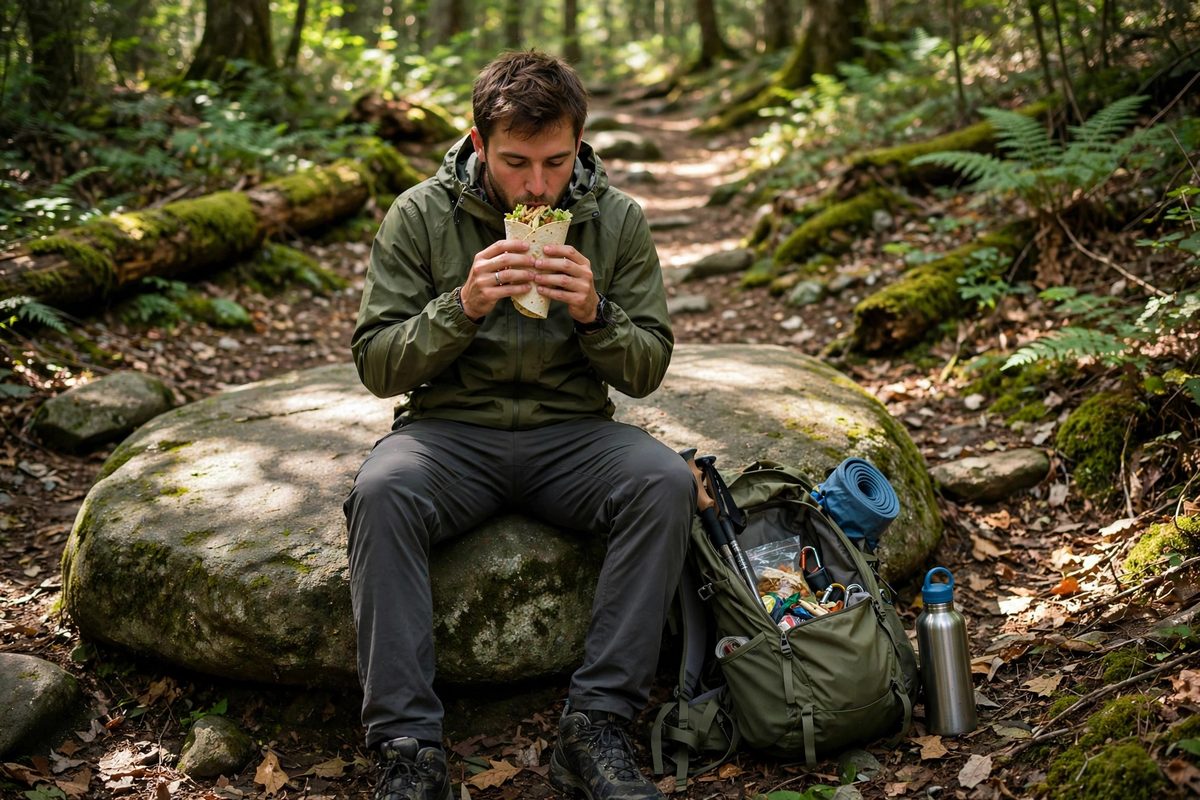
The best trail lunch is one you can eat without stopping for long: a wrap or sandwich you hold in one hand, a chunk of hard cheese, salami, or a peanut butter and honey sandwich. Wraps beat bread on the trail — they pack flat, don't crush, and hold fillings that would fall out of a sandwich. Pack lunch in a top pocket or hip-belt pocket so you reach it without unpacking.
Avoid the long lunch stop on a big day: sitting for an hour cools your muscles and makes the afternoon start stiff. Eat while you walk, or take two short snack stops instead of one long one. Keep it salty as well as sweet — you lose salt in sweat, and a salty lunch helps you hold the water you drink. Our guide to choosing a daypack shows where food fits best in the pack.
4. Snacks that actually keep you going
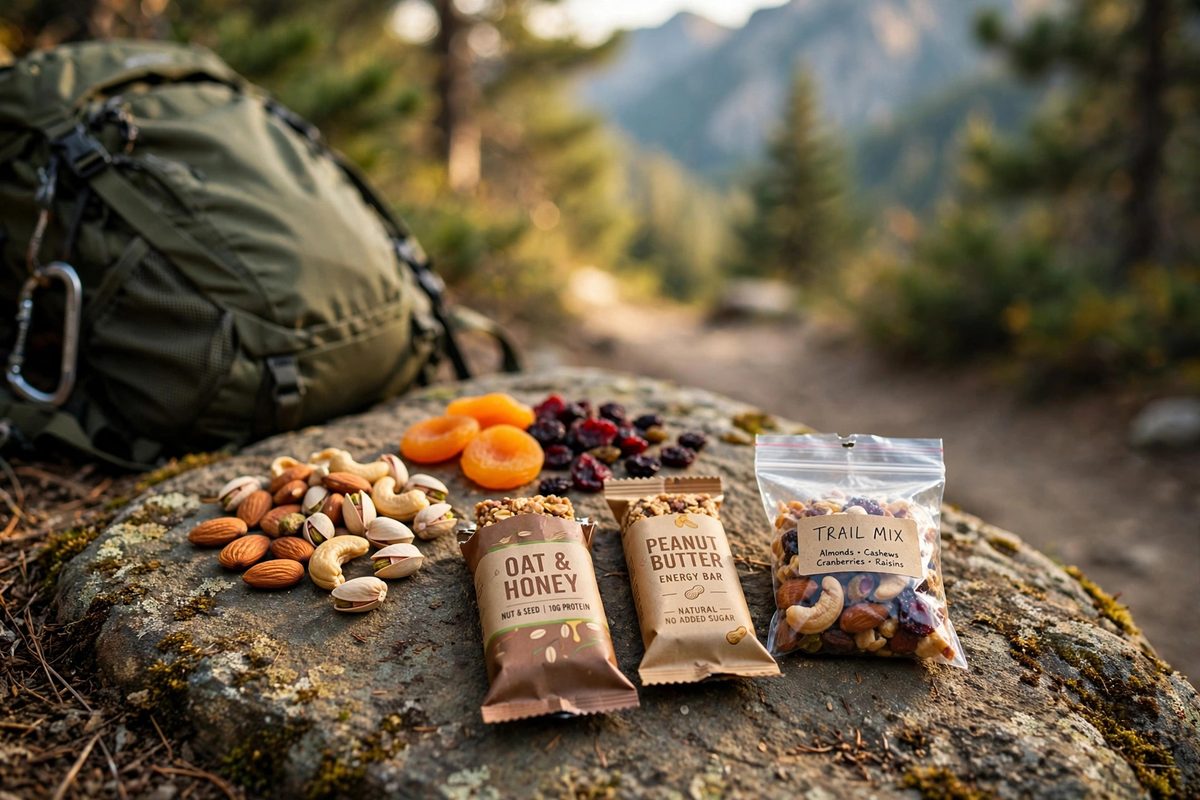
Snacks are the real fuel of a hiking day, not meals: you eat them every hour, on the move, and they are what keeps your energy flat instead of spiky. The best trail snacks mix fast carbs with fat and salt — trail mix with nuts and dried fruit, energy bars, chocolate, dried mango, jerky. Variety matters more than perfection: after six hours, the snack you are sick of is the snack you won't eat.
Pack snacks where you can reach them without stopping — hip-belt pockets, shoulder-strap pockets, or a chest pouch. Repack everything into small zip bags before the trip: one bag per day, or one per two-hour block, so you can see at a glance whether you are eating enough. And carry one emergency bar you never touch unless things go wrong: it is your reserve, not your lunch.
5. Trail dinner after a long day
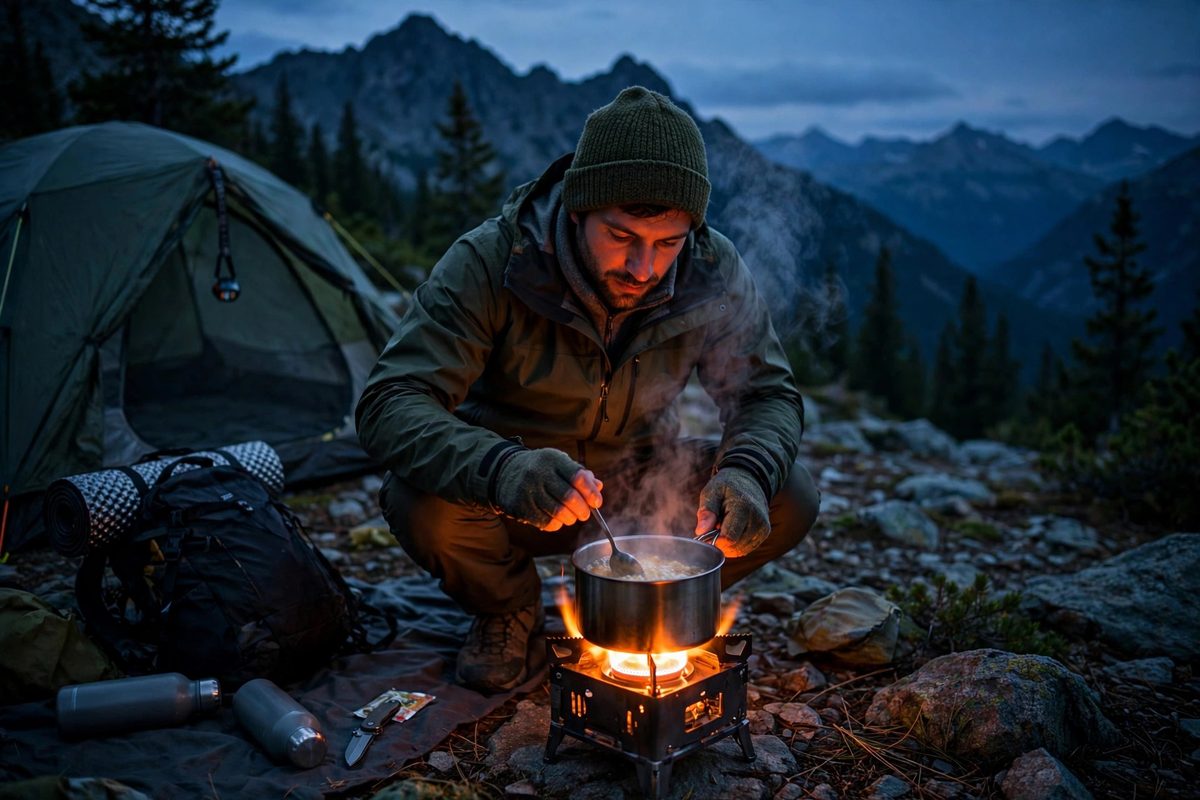
Dinner is the reward and the recovery: after eight hours on the trail your body wants hot food, salt and a lot of it. One-pot meals rule at camp — noodles, rice, couscous or a dried meal with boiling water — because they cook fast, use one pot, and clean up is a rinse. Add olive oil or butter for cheap calories: a spoonful of oil in dinner adds 100 calories for almost no weight.
Keep the cooking simple and the eating generous: cook once, eat well, and save the fancy meals for home. A hot drink with dinner — tea, cocoa, or a soup — warms you from the inside and replaces the fluids of the day. Read our water treatment basics before you cook with stream water, and always eat dinner before dark so you are not cooking by headlamp.
6. Hydration and electrolytes
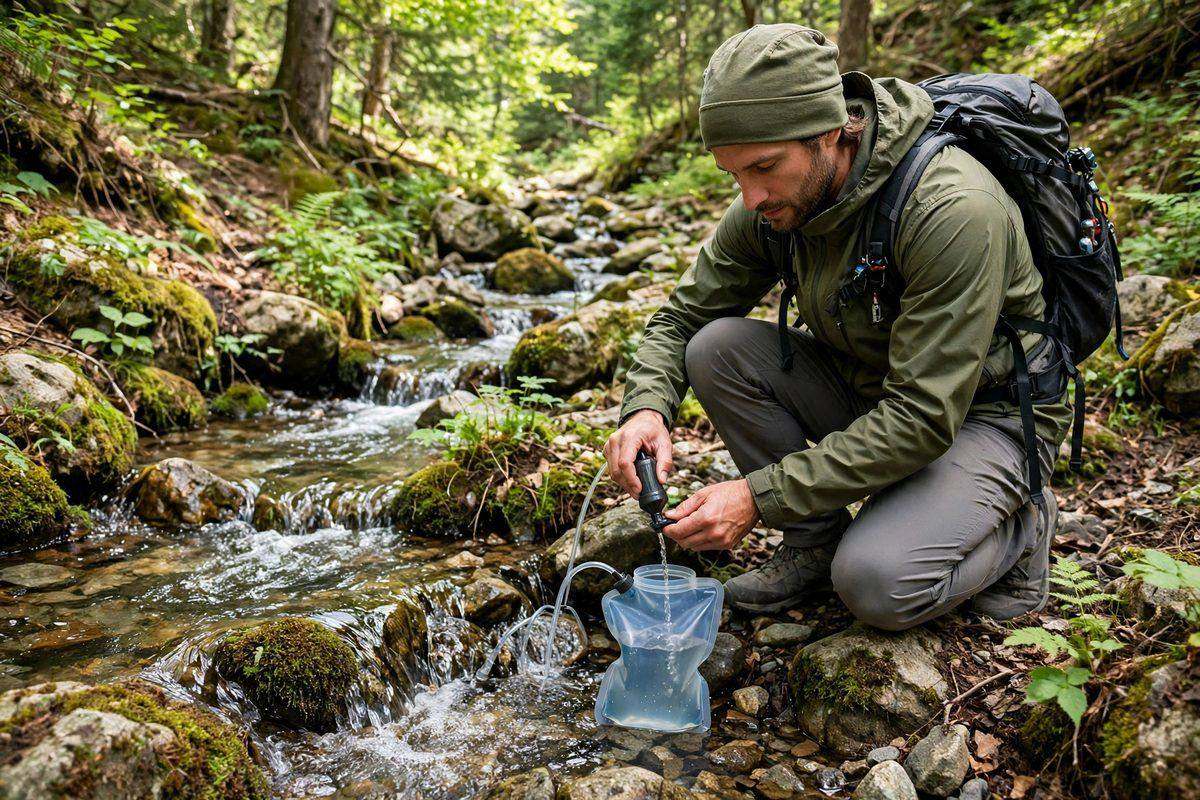
You lose water faster than you think: on a warm day you can sweat a litre an hour, and by the time you feel thirsty you are already dehydrated. Drink about half a litre an hour on a normal day and more when it is hot or steep — little and often beats big gulps at stops. Check your urine: pale yellow means you are drinking enough; dark yellow means drink now.
Water alone is not enough on a long hot day: sweat carries salt out, and replacing only water dilutes your blood salt and causes cramps and nausea. Add electrolytes — a pinch of salt in your bottle, an electrolyte tablet, or salty snacks — on any day over four hours or in real heat. Carry a filter so you can refill from streams instead of hauling litres: see our water treatment basics.
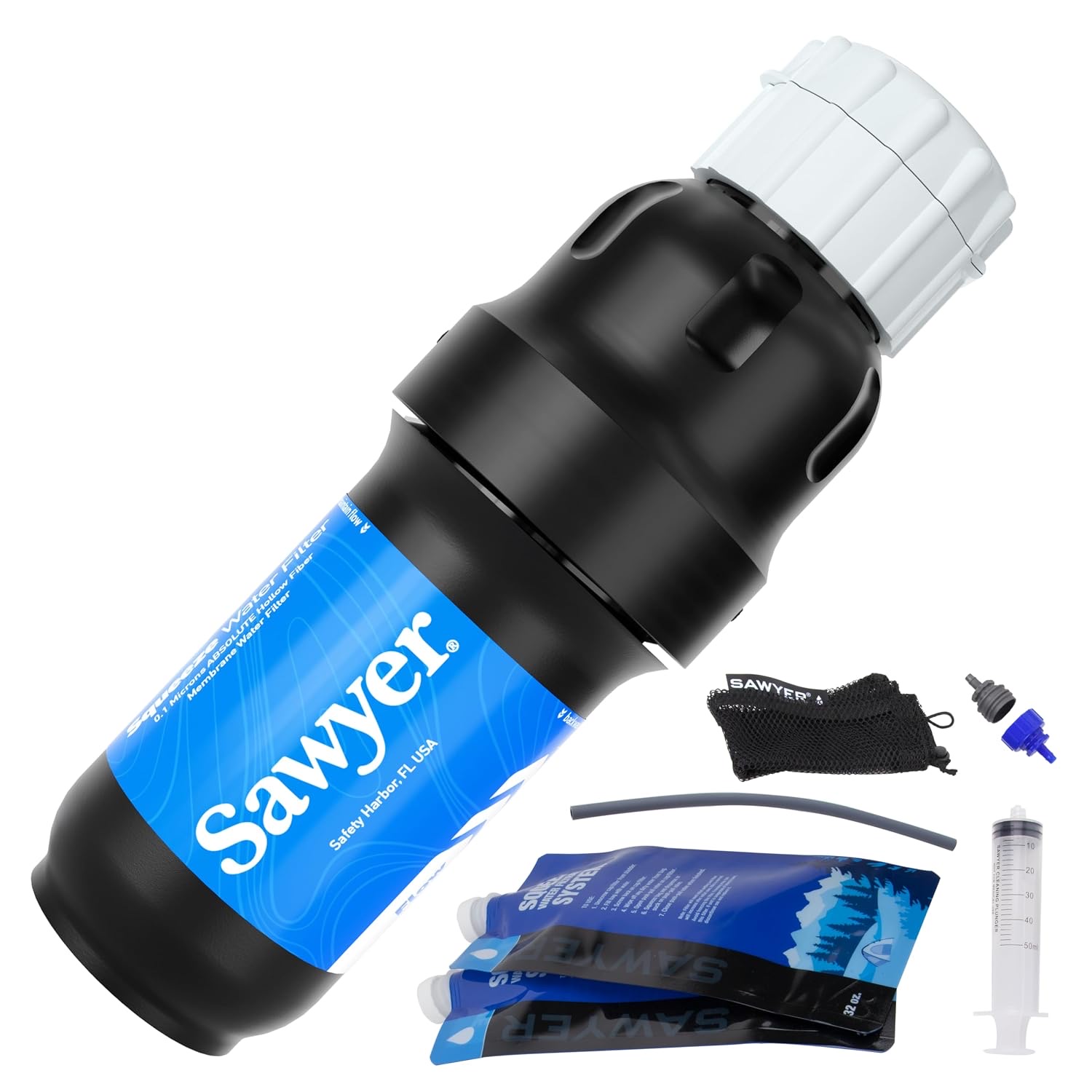
Sawyer Squeeze
Best for: Hikers who want a simple, light filter for streams and lakes.
A compact squeeze filter that treats water on the move with no pumping.
Trail water: filter on the trail and carry less
- Very light and simple to use
- No pumping or batteries
- Fits standard bottles and pouches
- You want to filter large volumes at camp or muddy water.
7. Food for cold-weather hikes
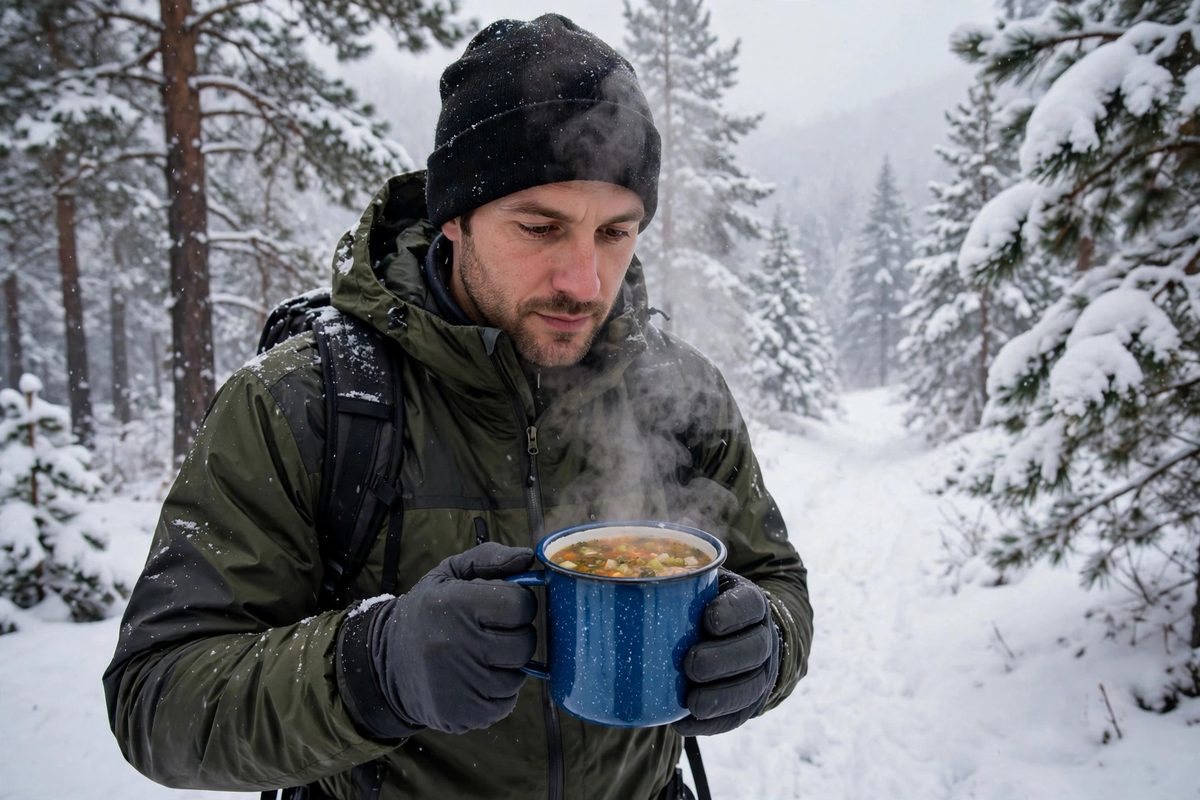
Cold changes what works: energy bars turn to bricks, chocolate snaps, and water bottles freeze. In winter, choose food that stays edible in the cold — soft bars, nut butter packets, cheese, salami, and dried fruit — and keep snacks in a pocket close to your body so they stay warm enough to chew. Hot food matters more too: a flask of soup or a hot drink at lunch is worth its weight in warmth.
Eat more in the cold, not less: your body burns extra calories just staying warm — roughly a third more than in summer. Plan a hot breakfast and a hot dinner, and carry a thermos of sweet tea or cocoa for the trail. Our layering system keeps you warm; food keeps the furnace fed.
8. Packing food: weight, waste and bears
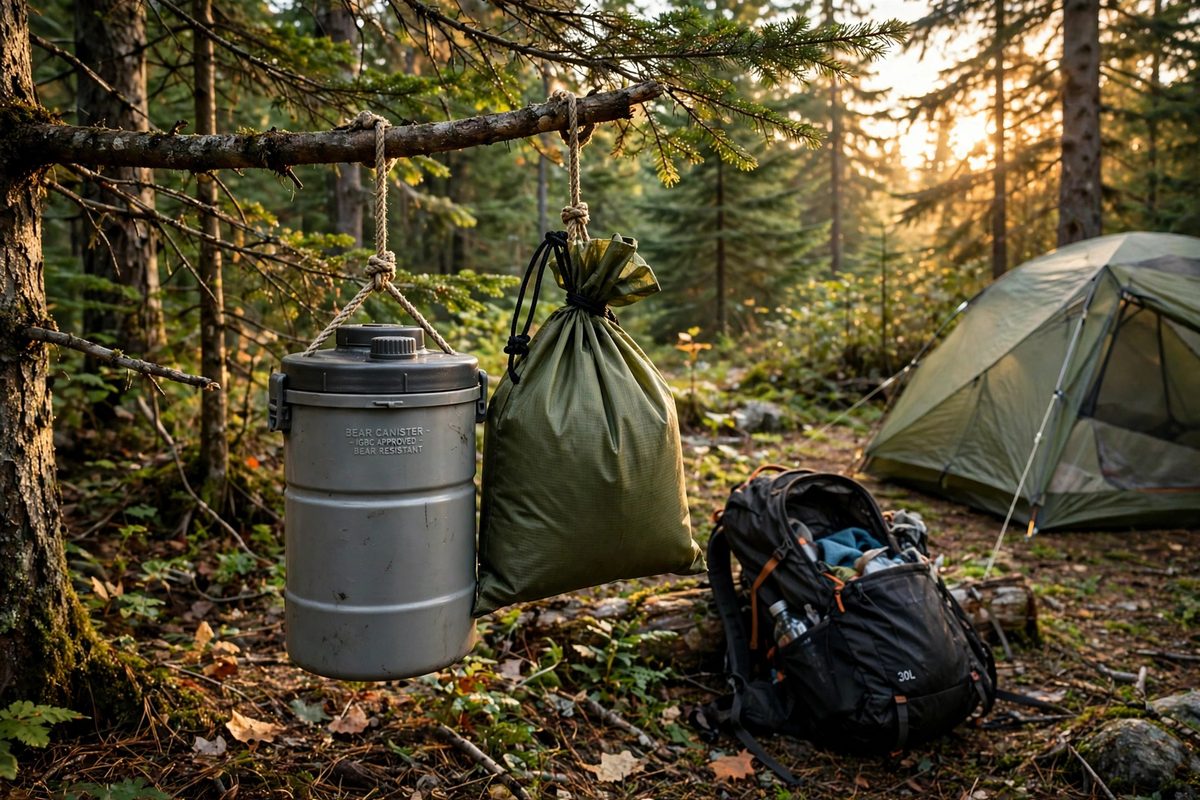
Food is the heaviest variable in your pack, so pack it like gear: repackage everything out of boxes and jars into zip bags, portion it by day, and throw away the packaging at home. A day's food weighs about 700 to 900 grams per person — lighter if you choose calorie-dense food like nuts, oil, cheese and dried meals, heavier if you carry fresh fruit and tins. Weigh your food bag once and you will never overpack again.
In bear country, food storage is not optional: use a bear canister or hang your food where the rules require it, cook and eat away from your tent, and never keep snacks in the tent — not even the wrapper. Pack out every scrap: orange peel, nut shells and tea bags do not belong on the trail. Leave no trace applies to food too — see Leave No Trace: seven principles for hikers.
9. Special diets on the trail
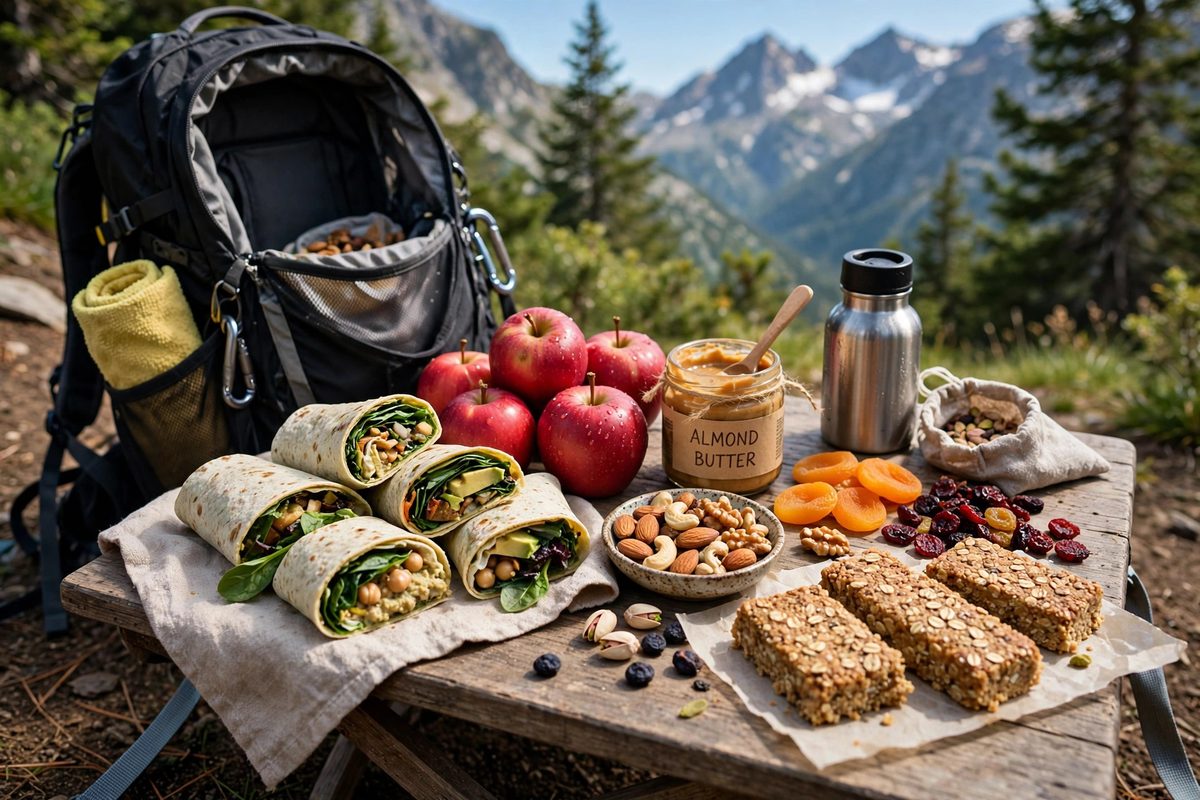
Vegan, gluten-free or allergy-safe trail food takes planning, but it is entirely doable: the trail pantry is already mostly plants — oats, rice, noodles, nuts, dried fruit, beans and nut butter are all vegan by default, and rice noodles and corn tortillas are naturally gluten-free. The hard part is protein and variety over many days, so plan each day's meals at home and test them there first: a new food that upsets your stomach on day one of a five-day trip is a problem.
For allergies, the rule is simple: never trust a trail mix or a shared bag. Pack your own food in labelled bags, carry your medication, and tell your hiking partners what you cannot eat. For vegans, carry a protein source every day — nut butter, lentils, tofu jerky or a protein powder — and a little extra salt and B12 if you hike for weeks. The food you plan at home is the food you will actually enjoy on the trail.
Frequently asked questions
How much food should I bring on a day hike?
Plan 200 to 300 calories an hour while moving, plus breakfast and a spare snack — for a six-hour hike that is roughly 1,500 to 1,800 calories of trail food, or about 400 to 500 grams. Always carry one extra bar beyond what you plan to eat: it is your reserve.
What is the best trail snack?
The one you will actually eat every hour: trail mix, energy bars, dried fruit and nuts are the classics because they mix fast carbs with fat and salt and need no preparation. Carry two or three different snacks — variety is what keeps you eating on hour six.
How much water should I drink while hiking?
About half a litre an hour on a normal day, more when it is hot or steep. Drink little and often, and add electrolytes on days over four hours. Pale yellow urine means you are drinking enough; dark yellow means drink now.
Can I eat the same food every day on a long hike?
You can, but you will stop eating it: appetite fatigue is real, and by day three the same bar tastes like cardboard. Rotate at least three different breakfasts, lunches and dinners, and pack one luxury item per day — chocolate, a spice mix, a favourite snack — to look forward to.
What food should I avoid on a hike?
Heavy, wet and perishable food: tins, glass jars, fresh meat, and anything that needs a fridge. Avoid very spicy or very fatty meals the night before a big day, and never try a brand-new food on the trail — test it at home first.
Do I need electrolyte drinks when hiking?
On short cool hikes, no — water and salty snacks are enough. On days over four hours, in heat, or on steep climbs, yes: sweat carries salt out, and replacing only water can cause cramps and nausea. A pinch of salt in your bottle or an electrolyte tablet does the job.
How do I keep food safe from bears?
Use a bear canister or hang your food where the rules require it, cook and eat at least 60 metres from your tent, and store everything scented — food, wrappers, toothpaste — with the food, never in the tent. In grizzly country, follow the local rules exactly: they are written from real incidents.
Useful Sources and Verification
Use these source types to check current details for the area you plan to visit.
- Current weather, river-level and trail-condition information from the land manager or park authority for the area you plan to visit
- Manufacturer guidance for the exact rain gear named in this guide, including waterproof ratings, care and reproofing
- Hypothermia and lightning safety guidance from national outdoor and mountain safety organisations
Affiliate disclosure: Hiking Gear Shop participates in the Amazon Associates program. If you buy through a link on this page, we may earn a commission at no extra cost to you. Prices and availability can change — check the listing before you buy.