
Choosing between hiking boots or trail runners for backpacking matters more than most gear decisions, because your feet carry every mile of the trip. Boots offer support, protection, and durability, while trail runners offer lightness, speed, and faster drying. This guide compares both honestly by pack weight, terrain, weather, and distance so you can match footwear to your actual trip instead of following habit.
For most backpacking on established trails with a light to moderate pack, trail runners are lighter, dry faster, and cause fewer blisters, while hiking boots suit heavy loads, rough off-trail terrain, and snow. Match footwear to your pack weight, route, and weather rather than habit.
Position and Plan
Position: An honest comparison of hiking boots or trail runners for backpacking: how pack weight, ankle support, terrain, wet weather, durability, blisters, speed, and snow should decide which footwear you carry into the backcountry.
Plan: Start with your pack weight and route, then read the sections that match your trip conditions. Use the summary table as a quick checklist, and finish with the decision section before you commit to either boots or trail runners.
Hiking boots or trail runners at a glance
| Topic | What to do |
|---|---|
| Pack weight | Trail runners suit light packs; boots suit heavy loads better. |
| Ankle support | Boots brace the ankle; runners rely on strength and balance. |
| Terrain | Boots handle rough off-trail ground; runners excel on trails. |
| Wet weather | Runners drain and dry fast; boots keep light rain out longer. |
| Durability | Boots usually last longer; runners wear out sooner. |
| Blisters | Runners often blister less; fit and moisture decide most cases. |
| Speed | Runners suit fastpacking; boots suit slower, heavier travel. |
| Snow and cold | Boots handle snow and cold; runners suit brief, mild snow. |
| Your trip | Match footwear to load, route, weather, and your feet. |
1. How does pack weight decide between hiking boots or trail runners?
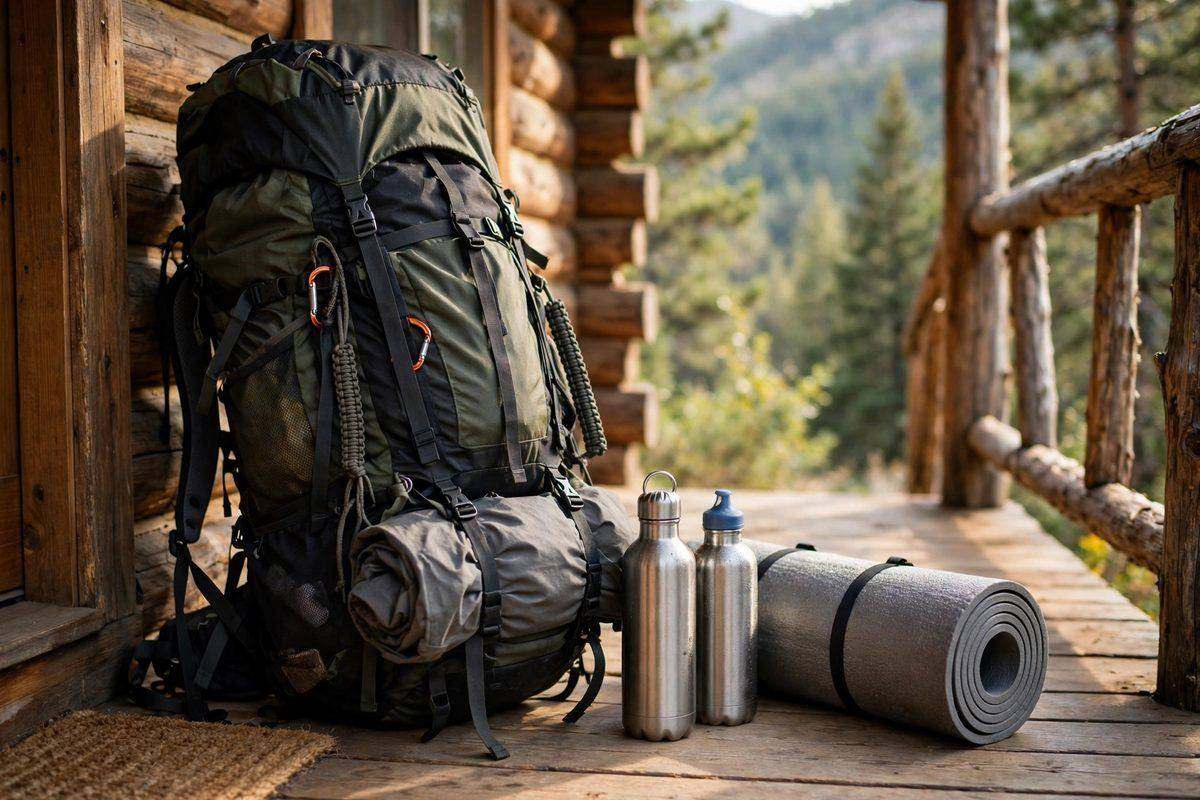
Pack weight is the strongest single factor: the heavier your load, the more hiking boots earn their extra weight, while light packs favour trail runners. A heavy pack shifts your balance, increases foot fatigue, and makes every misstep harder to recover from, so a stiffer sole and firmer ankle support help. With a light pack on a clear trail, that same stiffness mostly adds weight your legs must lift thousands of times. Many experienced backpackers therefore choose footwear after weighing their loaded pack, not before. Honest pack weight, including food and water, predicts comfort better than trip length alone.
Weigh your pack fully loaded for your longest carry between resupplies, because that peak load is what your feet must handle. If you are working to lighten your kit, our guide to the best lightweight hiking gear helps you cut weight where it matters most. A well-fitted pack also changes the equation: our hiking backpack size guide explains how pack fit affects balance and fatigue. Lighter, better-carried loads make trail runners viable on more routes, while heavy or poorly carried loads push the choice back toward boots. Decide load first, then footwear.
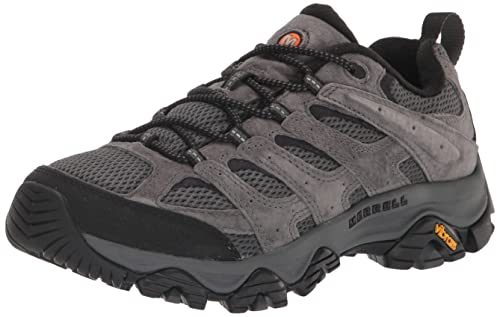
Merrell Moab 3 Hiking Shoe
Best for: Hikers who want a breathable low shoe for dry trails.
The low-cut Moab 3 is a suede-and-mesh hiking shoe with a Vibram outsole and Merrell's Air Cushion heel. Light and breathable, it is the easy choice for dry day hikes and everyday trail walking.
A supportive hiking shoe like this suits moderate packs when a full boot feels like more than the trail needs.
- Light and breathable on warm days
- Comfortable with no break-in
- Great value everyday hiker
- No waterproofing for wet trails
- No ankle support
- Mesh wears faster than leather
2. Do hiking boots really give better ankle support than trail runners?
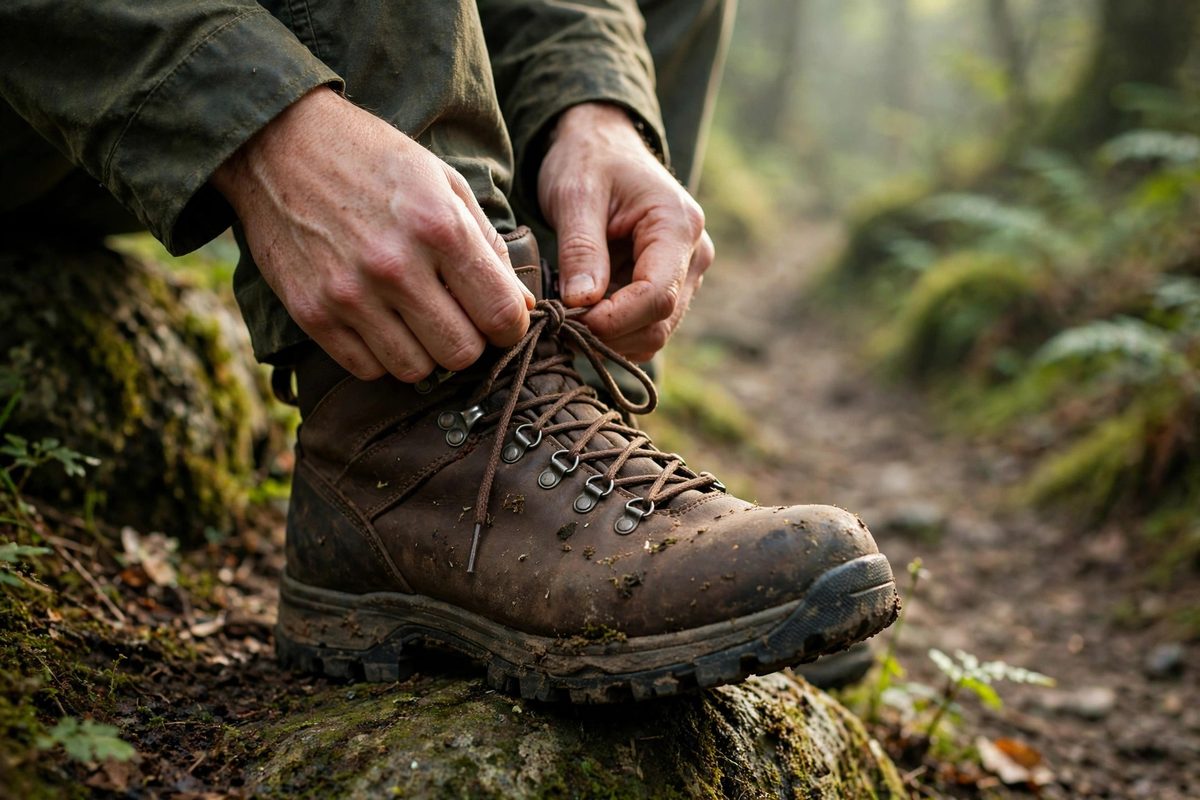
Hiking boots do brace the ankle more than trail runners, but ankle support alone does not prevent every sprain, and strong ankles matter as much as stiff collars. A high, firm boot limits how far the ankle rolls and gives confidence on loose, uneven ground, especially under a heavy pack. Trail runners leave the ankle free, which lets your foot adapt to the trail and can build strength over time, but a tired misstep has less protection. Hikers with a history of ankle sprains often prefer boots for that extra bracing. Neither choice removes the need for careful foot placement.
Support also comes from fit and lacing, not collar height alone: a boot that lets your heel lift will not protect you well. Our guide to hiking boots vs shoes: how to choose explains how support, weight, and terrain interact. Trekking poles add stability for both footwear types on descents and stream crossings. If you switch from boots to runners, build ankle strength gradually on shorter hikes before a long trip. Judge support by your injury history, pack weight, and terrain together, rather than assuming taller always means safer on every trail.
3. How does terrain and off-trail travel change the choice?
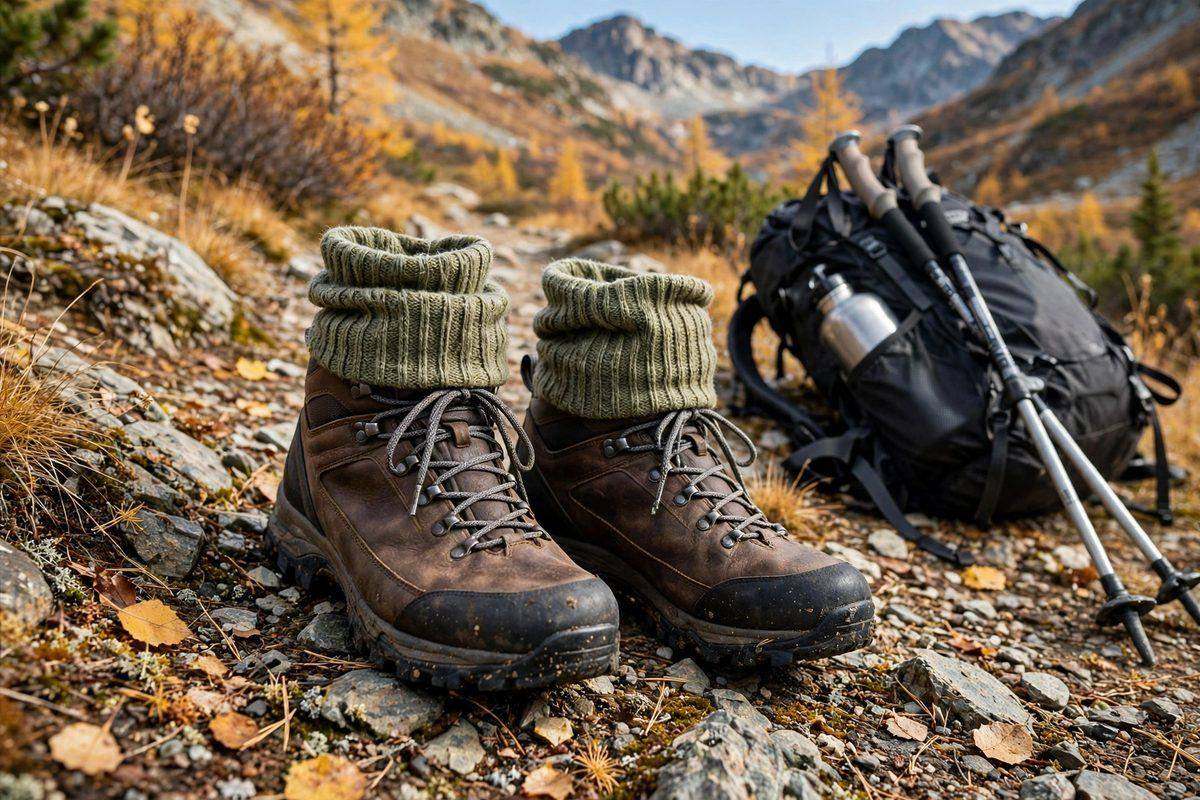
Rough, off-trail terrain favours hiking boots, while established trails favour trail runners for most backpackers. Boots protect feet from sharp rock, scree, brush, and side-hill traverses where a stiff sole edges more securely and a tough upper resists abrasion. On maintained trails with clear tread, runners grip well, feel nimble, and reduce leg fatigue over long days. The rougher and less defined your route, the more protection and stiffness pay off. Be honest about your route: a mostly-trail trip with one rough mile differs from days of cross-country travel over rock and talus.
Look at your route description for talus, scree, river crossings, and off-trail navigation before deciding. If your trip is mostly trail, compare our picks for the best hiking shoes, which balance lightness and protection for trail backpacking. For genuinely rough routes, our guide to the best hiking boots covers sturdier options built for that ground. Footwear should match the hardest sustained terrain you will actually cross, not the easiest miles. Choosing for real terrain prevents both overbuilt boots on easy trails and fragile runners on punishing rock.
4. Which handles wet weather and stream crossings better?
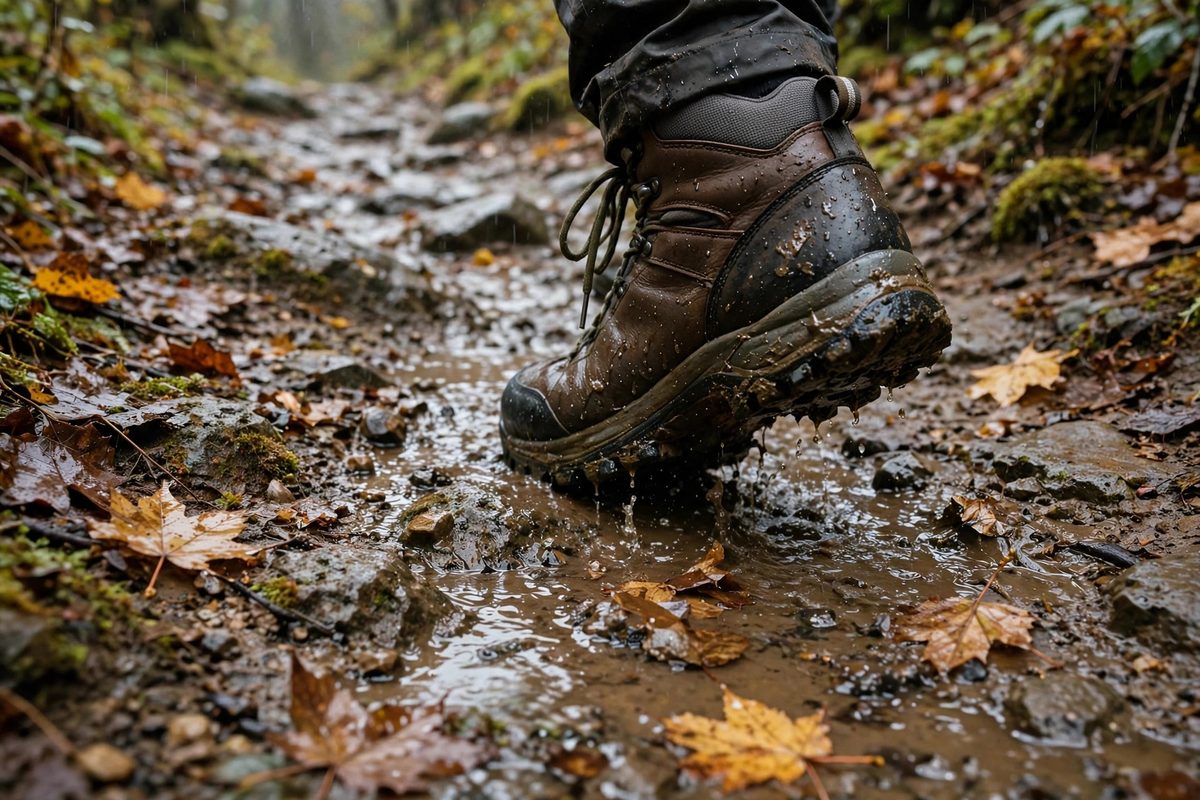
Trail runners usually handle stream crossings and sustained rain better because they drain and dry quickly, while boots keep light rain out longer but dry slowly once wet inside. Water often enters boots over the collar in crossings and heavy rain, after which thick materials hold moisture for hours or days. Breathable runners let water escape and dry while you walk, which many backpackers prefer on wet multi-day trips. In cold rain with no deep crossings, waterproof boots can keep feet drier and warmer for a while. The wettest expected conditions, not average weather, should guide this part of the choice.
Plan for the crossings and storms your route actually includes, and think about drying time at camp each night. Wet feet raise blister risk in any footwear, so dry socks for camp and careful foot care matter on wet trips. Gaiters can keep debris and some water out of both boots and runners. If your trip mixes cold rain, mud, and shallow crossings, boots may feel more protective despite slower drying. If crossings are frequent and temperatures are mild, quick-drying runners are usually the practical choice. Match the footwear to your water exposure and your ability to dry feet overnight.
5. How long do boots and trail runners last on long trips?
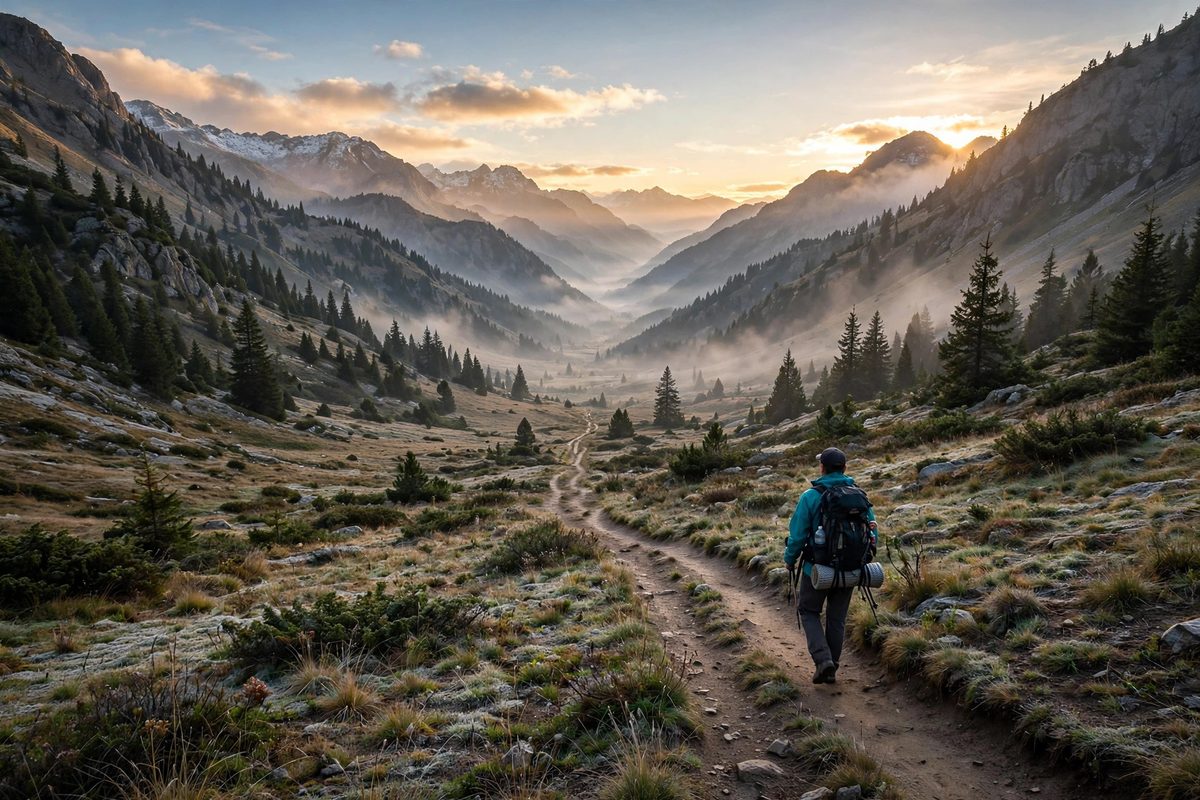
Hiking boots generally last longer than trail runners, because tougher uppers, stiffer soles, and more durable materials withstand more miles of abrasion. Trail runners use lighter foams and fabrics that compress and tear sooner, especially on rocky trails, so long-distance hikers often replace them more frequently. That shorter life is a real cost and planning factor on thru-hikes and long section hikes. Boots cost more upfront in weight, but may cover more trips before replacement. Durability matters most when resupply options are limited and a footwear failure would end your trip far from a town.
Inspect footwear before long trips: check sole wear, upper tears, and whether cushioning still protects your feet on rocky ground. On very long routes, plan replacement timing around towns rather than hoping worn runners survive another stretch. Rotating footwear is rarely possible on a backpacking trip, so start with enough life remaining for the whole route. If durability is your priority, sturdier boots or durable hiking shoes reduce mid-trip replacement worries. If lightness is your priority, accept more frequent replacement as part of the trade. Either way, starting a long trip on nearly worn-out footwear invites painful, trip-ending problems.
6. Which causes fewer blisters as feet swell on long days?
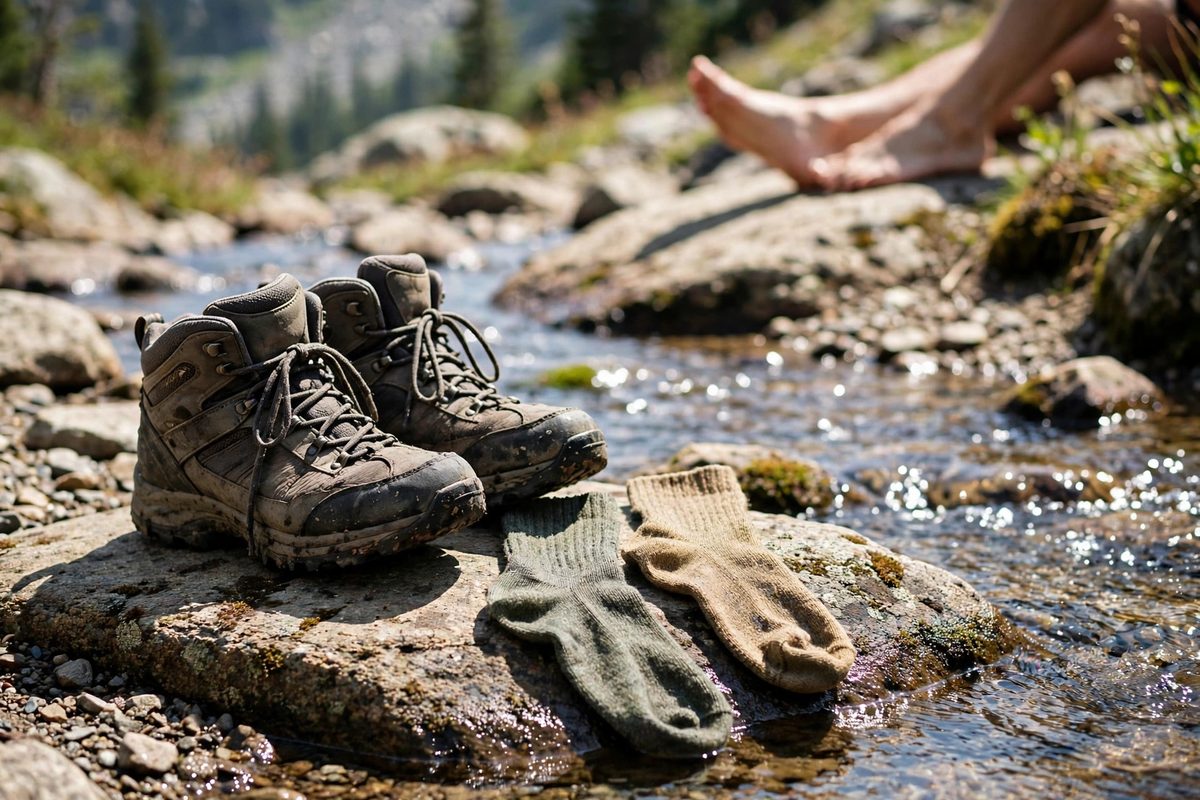
Trail runners often cause fewer blisters than stiff boots because they flex with the foot, need little break-in, and dry faster, but fit and moisture management decide most blister outcomes. Feet swell over long days, so footwear that fits in the morning can rub by afternoon in either boots or runners. Boots that are too stiff or poorly fitted create heel rub and toe pressure, especially before they are broken in. Runners with a roomy toe box and secure heel usually reduce friction points. No footwear type guarantees blister-free feet without good socks, fit, and early hot-spot care.
Choose footwear with toe room for swelling, test it on progressively longer hikes, and stop early to treat hot spots before they become blisters. Our guide on how to prevent blisters on long hikes covers socks, fit, taping, and moisture control in detail. Keep feet as dry as conditions allow, change into dry camp socks at night, and carry basic foot care on every trip. Break in boots well before a long trip, and never debut new footwear on your longest day. Comfort over swelling feet matters more than any single blister claim for boots or runners.
7. When do trail runners win for speed and fastpacking?

Trail runners win when speed, distance, and light packs define the trip, because lighter footwear reduces leg fatigue and lets you move efficiently over long trail days. Fastpackers and thru-hikers covering big daily miles on established trails commonly choose runners for that efficiency and comfort. Lighter feet also mean quicker, more precise steps on runnable terrain and less energy spent lifting footwear with every stride. If your goal is covering ground quickly with a light kit, runners match that style. Boots remain better when the trip is slower, heavier, or rougher, where protection outweighs pace.
Speed only helps if your pack, fitness, and route support it: a light pack and trail fitness make runners shine, while a heavy pack erases much of their advantage. Our guide on how to choose trail running shoes explains fit, grip, and cushioning for long trail days. Build distance gradually in runners before committing to fastpacking mileage, so feet and ankles adapt. Carry a realistic pace plan and turnaround options, because speed never replaces preparation. Choose runners for fast, light trail travel, and boots when the trip demands carrying more through harder country.
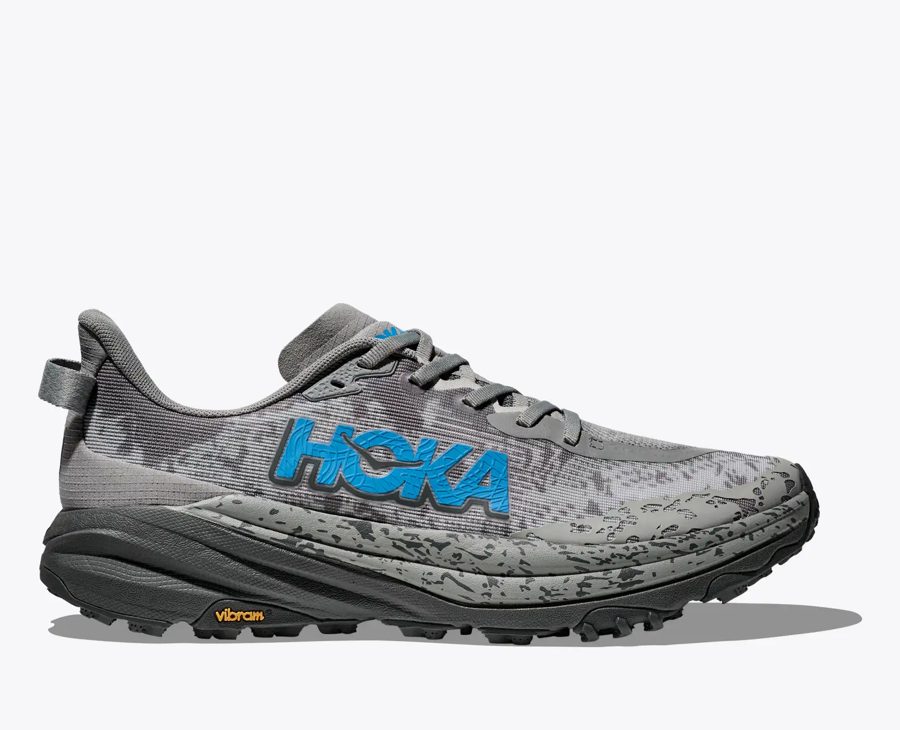
Hoka Speedgoat 6
Best for: Hikers who want maximum cushioning and grip for long, technical days.
A cushioned trail shoe with a Vibram Megagrip outsole, 5 mm lugs and a high CMEVA stack that softens long miles on technical terrain. Built for covering big distances without beating up your legs.
A cushioned trail runner suits fastpacking and long, runnable trail days with a light pack.
- Excellent grip on wet rock and loose terrain
- Cushioned yet light for its stack height
- Protective on technical trails
- Snug midfoot for wide feet
- Firmer ride than the previous version
- Standard version is not waterproof
8. What about snow, ice, and cold conditions?
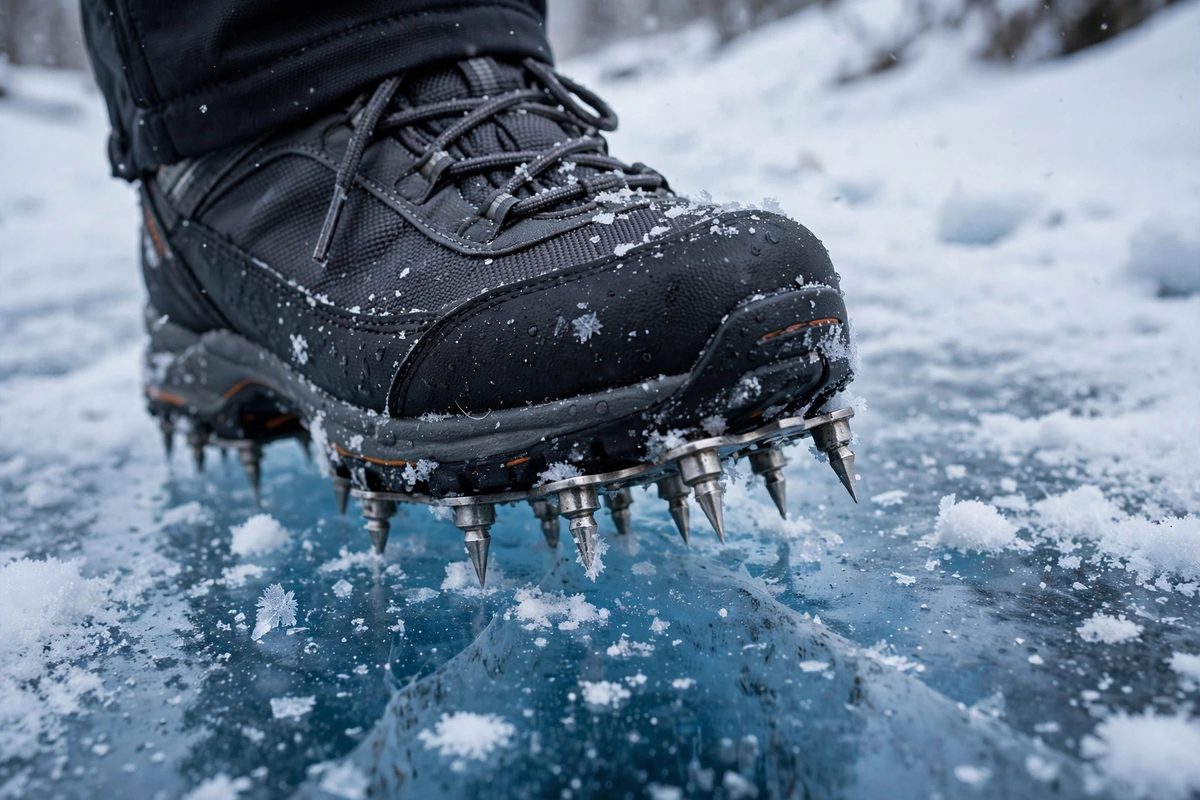
Snow, ice, and sustained cold favour hiking boots, because they accept traction devices more securely, keep feet warmer, and protect against deep snow better than trail runners. Boots work with microspikes and crampons more reliably, and their stiffer soles kick steps in firm snow. Runners can handle brief, mild snow patches on otherwise clear trails, especially with traction, but cold wet feet become a safety problem quickly in sustained winter conditions. Deep snow also enters low runners easily, even with gaiters. If your route includes real winter travel, boots are the safer default for most backpackers.
Check snow depth, ice, and overnight temperatures for your route and season before deciding, not just the forecast for your start town. Carry traction that fits your chosen footwear and test the combination before the trip. Warm, dry camp socks and a plan for drying footwear matter as much as the footwear itself in cold conditions. Shoulder-season trips with short snowfields differ from full winter routes, so match footwear to the coldest sustained section. When cold and snow dominate, accept boot weight for warmth, traction, and protection. When snow is brief and mild, runners with traction may still serve well.
9. How should you decide for your specific trip?
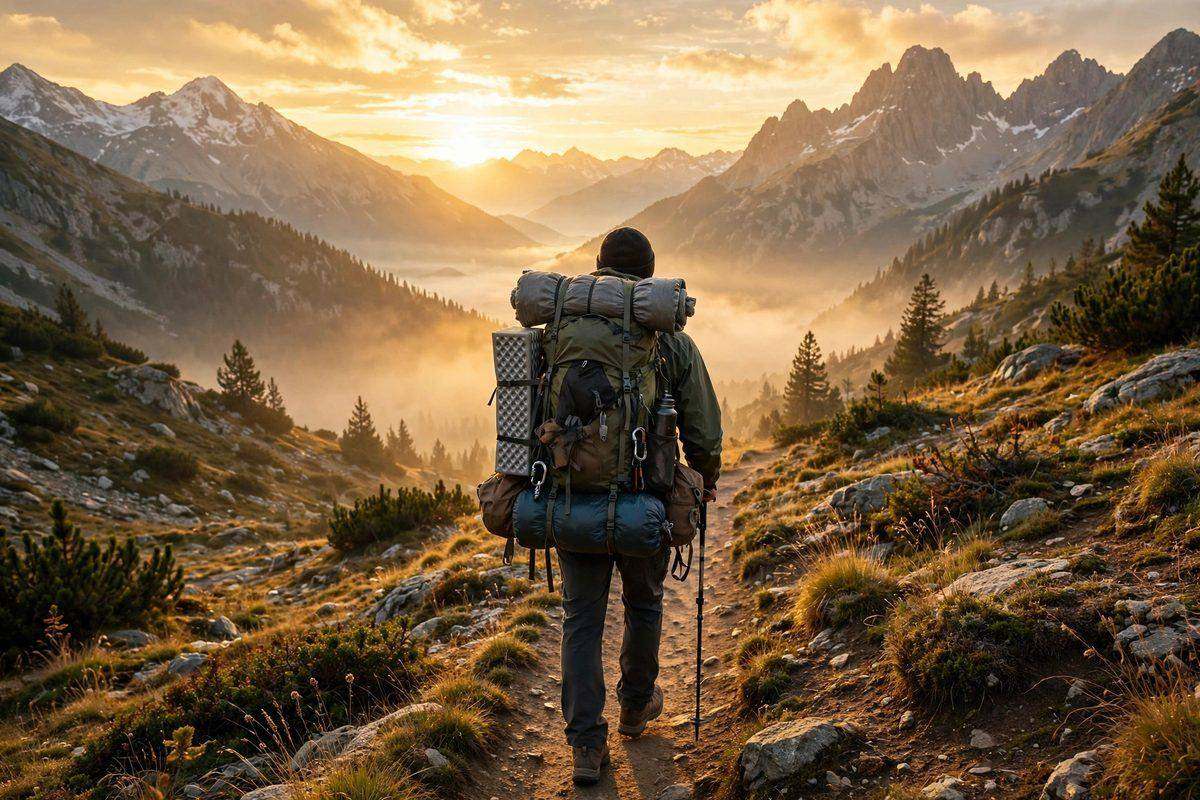
Decide by scoring your actual trip: pack weight, terrain, weather, distance, and your own feet together point to boots or trail runners more reliably than any general rule. Light packs on established trails in mild weather point to runners; heavy loads, rough off-trail routes, and snow point to boots. Your injury history, foot shape, and past blister experience break ties that gear lists cannot. Write down your peak pack weight, hardest terrain, wettest day, and coldest night, then choose footwear that handles all four. A short checklist beats copying another hiker whose trip differs from yours.
Before committing, test your choice on a loaded training hike that mimics your trip's distance and terrain, and fix fit or sock problems while changes are still easy. Pack your bag as you will carry it using our guide on how to pack a hiking backpack, so the test reflects real load and balance. If the test hike leaves hot spots, sore ankles, or unstable footing, change footwear or lighten the load before the real trip. Many backpackers own both options and choose per trip, which is often the wisest answer. Match footwear to this trip, and your feet will thank you every mile.
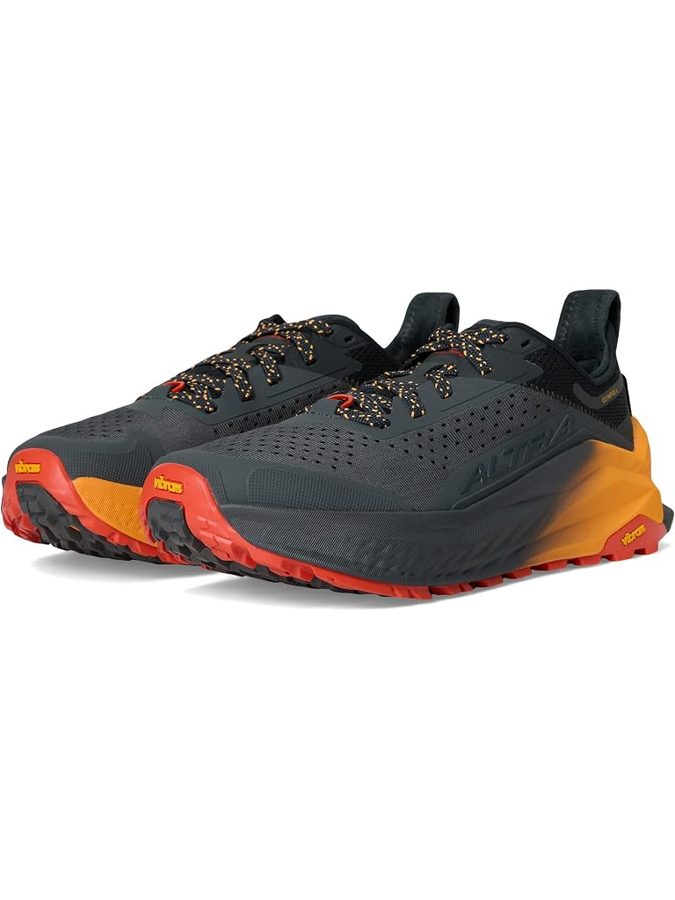
Altra Olympus 6
Best for: Hikers with wide feet who want maximum cushioning for long days.
Altra's plushest trail shoe: a 33 mm zero-drop stack, a roomy FootShape toe box and a Vibram Megagrip outsole. Built to swallow rocks and roots on long days without wrecking your legs.
A maximum-cushion trail shoe is worth trying if you lean toward runners for multi-day comfort.
- Maximum cushioning for long days
- Roomy toe box for natural toe spread
- Sticky Megagrip traction
- Heavy for a trail shoe
- 3.5 mm lugs give limited mud grip
- Zero drop needs adaptation
Frequently asked questions
Are trail runners good for backpacking?
Yes, trail runners work well for backpacking with light to moderate packs on established trails, and many thru-hikers use them. They are lighter, dry faster, and often cause fewer blisters than boots, but they wear out sooner and protect less on rough off-trail terrain.
When should I choose hiking boots instead of trail runners?
Choose hiking boots for heavy packs, rough or off-trail terrain, sustained snow and cold, or a history of ankle sprains. Boots give more support, protection, and durability, at the cost of extra weight and slower drying once wet.
Do trail runners cause fewer blisters than boots?
Often yes, because runners flex with the foot, need little break-in, and dry faster. Fit, toe room for swelling, socks, and early hot-spot care still decide most outcomes, so poorly fitted runners can blister too.
How long do trail runners last for backpacking?
Trail runners last until cushioning compresses, lugs wear smooth, or uppers tear, which happens sooner than with most boots, especially on rocky trails. On long trips, plan replacements around resupply towns instead of starting with nearly worn-out shoes.
Can I backpack in snow with trail runners?
Brief, mild snow patches can work in runners with traction, but sustained snow, ice, and cold favour boots. Boots accept traction more securely, kick steps better, and keep feet warmer and drier in deep snow.
What pack weight is too heavy for trail runners?
There is no single limit, but heavier loads steadily favour boots because balance, foot fatigue, and misstep recovery get harder. Weigh your peak load with food and water, test it on a loaded training hike, and choose boots if ankles or feet struggle.
Should I bring both boots and trail runners?
Carrying both usually adds weight without enough benefit on most trips. Most backpackers pick one pair per trip based on load, terrain, and weather, and may own both options at home for different routes.
Useful Sources and Verification
Use these source types to check current details for the area you plan to visit.
- Current weather, river-level and trail-condition information from the land manager or park authority for the area you plan to visit
- Manufacturer guidance for the exact rain gear named in this guide, including waterproof ratings, care and reproofing
- Hypothermia and lightning safety guidance from national outdoor and mountain safety organisations
Affiliate disclosure: Hiking Gear Shop participates in the Amazon Associates program. If you buy through a link on this page, we may earn a commission at no extra cost to you. Prices and availability can change — check the listing before you buy.