
Choosing trekking poles is easier when you decide in the right order: how you will use them, which grip and shaft suit your hands and terrain, and how they adjust, lock, and pack down. This chooser guide walks through each decision so you can compare pairs with confidence instead of guessing from a product list.
Choose trekking poles by starting with use: cork or foam grips for comfort, carbon for light weight or aluminum for durability, lever locks for easy adjustment, and a length range that fits your height with a 90-degree elbow bend. Then match baskets, tips, and folding style to your terrain.
Position and Plan
Position: An informative chooser guide to buying trekking poles: the decisions that matter most, from grips, shaft materials, locks and length to folding designs, baskets, tips, weight, sizing for height, and everyday care.
Plan: Work through the sections in order and note your choice at each step: grip, shaft, length, lock and folding style, then baskets and tips. Use the summary table to compare pairs side by side before you buy.
Trekking pole choices at a glance
| Topic | What to do |
|---|---|
| First decision | Start with terrain and trip type, not with a specific model. |
| Grips | Cork and foam feel warm and absorb sweat; rubber suits cold, wet use. |
| Carbon shafts | Lighter and damp vibration, but cost more and dislike sharp impacts. |
| Aluminum shafts | Tougher, usually cheaper, and bend rather than snap under load. |
| Length | Pick a range that gives a 90-degree elbow bend at your height. |
| Locks | Lever locks adjust fast; twist locks are slim but need care. |
| Folding vs telescopic | Folding poles pack smaller; telescopic poles adjust over a wider range. |
| Baskets and tips | Match basket size to snow or mud and tips to rock or pavement. |
| Care | Dry, clean, and store poles loosely locked to keep sections moving. |
1. What should you decide first when buying trekking poles?
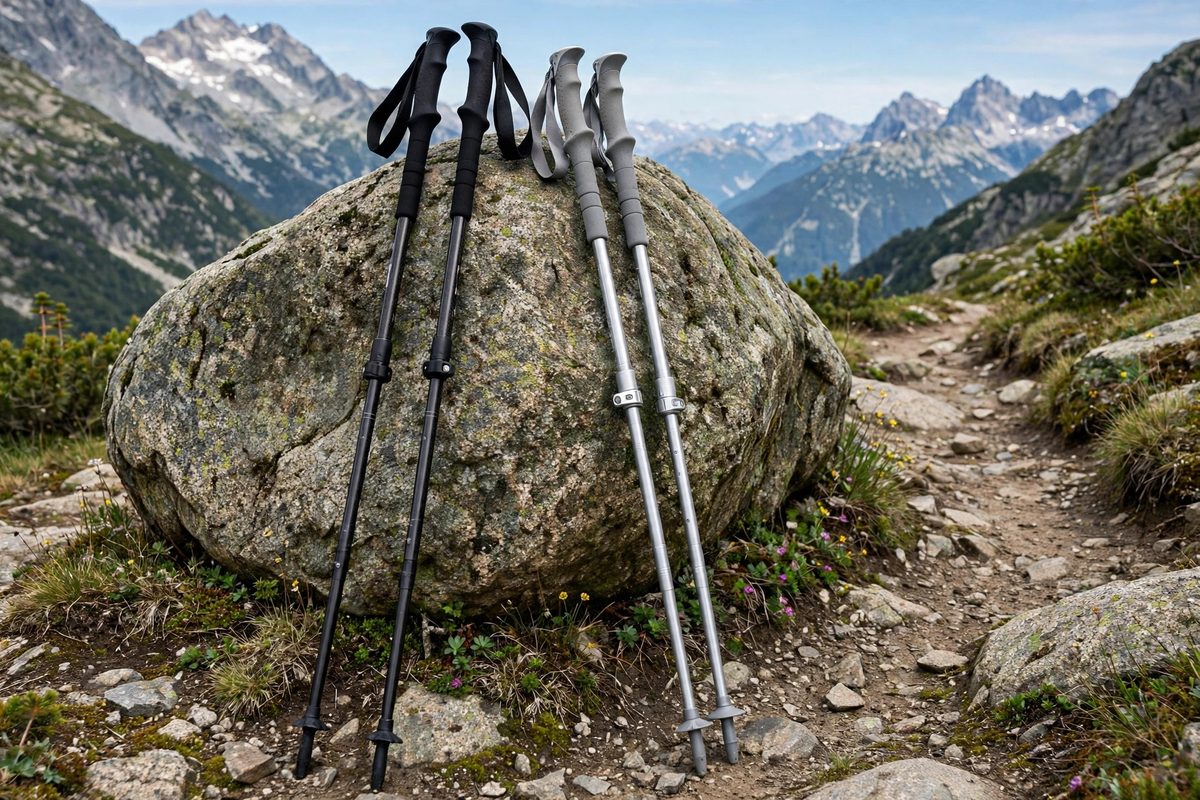
Decide first how and where you will use the poles, because terrain, trip length, and pack weight drive every later choice. Day hikes on maintained trails ask less of a pole than steep, rocky routes or multi-day trips with a heavy pack. Think about whether you hike in snow, cross streams, travel by air, or need poles that stow inside a pack. Once you know your typical use, grip, shaft, lock, and length choices become much clearer and you can ignore features you will never need.
A practical order is: use case first, then grip comfort, shaft material, length range, lock type, and finally baskets and tips. This sequence keeps you from paying for ultralight carbon when durable aluminum would serve better, or buying folding poles when simple telescopic ones fit your storage. If you want ready-made recommendations after choosing your criteria, our guide to the best trekking poles for hiking lists current pairs by use. This guide, by contrast, helps you judge any pair you meet in a shop or online listing.
2. Which grip material should you choose?
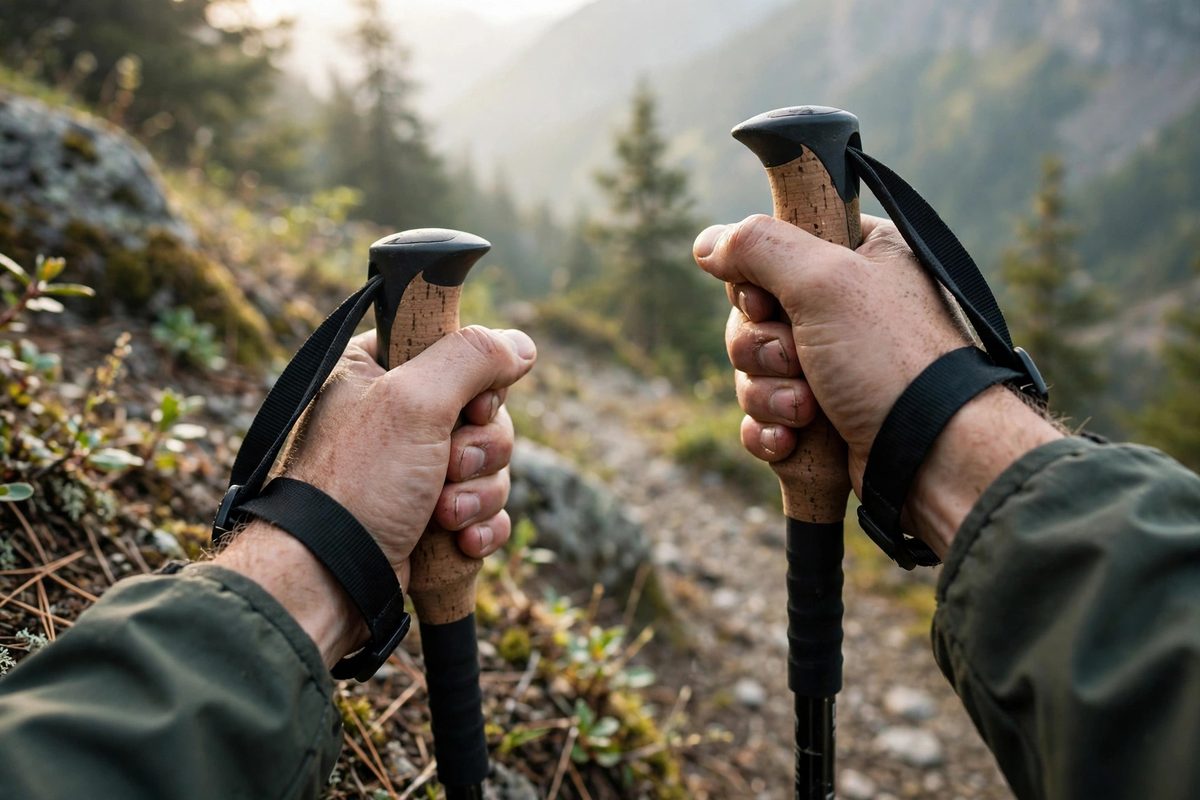
Choose cork or foam grips for most hiking, because both feel comfortable over long days and manage sweat better than plain rubber. Cork moulds slightly to your hand over time and feels warm in cool weather, while foam is soft, light, and often extends down the shaft for a lower grip on climbs. Rubber grips suit cold, wet conditions and gloved hands, but they can feel hot and cause blisters on warm days. Grip shape matters too: an ergonomic shape that fills your palm reduces squeezing.
Look for an extended grip or a lower foam section if you hike steep trails, since gripping lower on traverses saves you from constant length changes. Check the strap as well: a padded, adjustable strap lets your hand rest on the strap instead of clutching the handle, which prevents forearm fatigue. Try grips with the gloves you actually hike in, if any, because thick winter gloves need more room. A grip that feels merely acceptable in the shop can become sore after hours, so favour comfort over small weight savings.
3. When does a carbon shaft make sense?
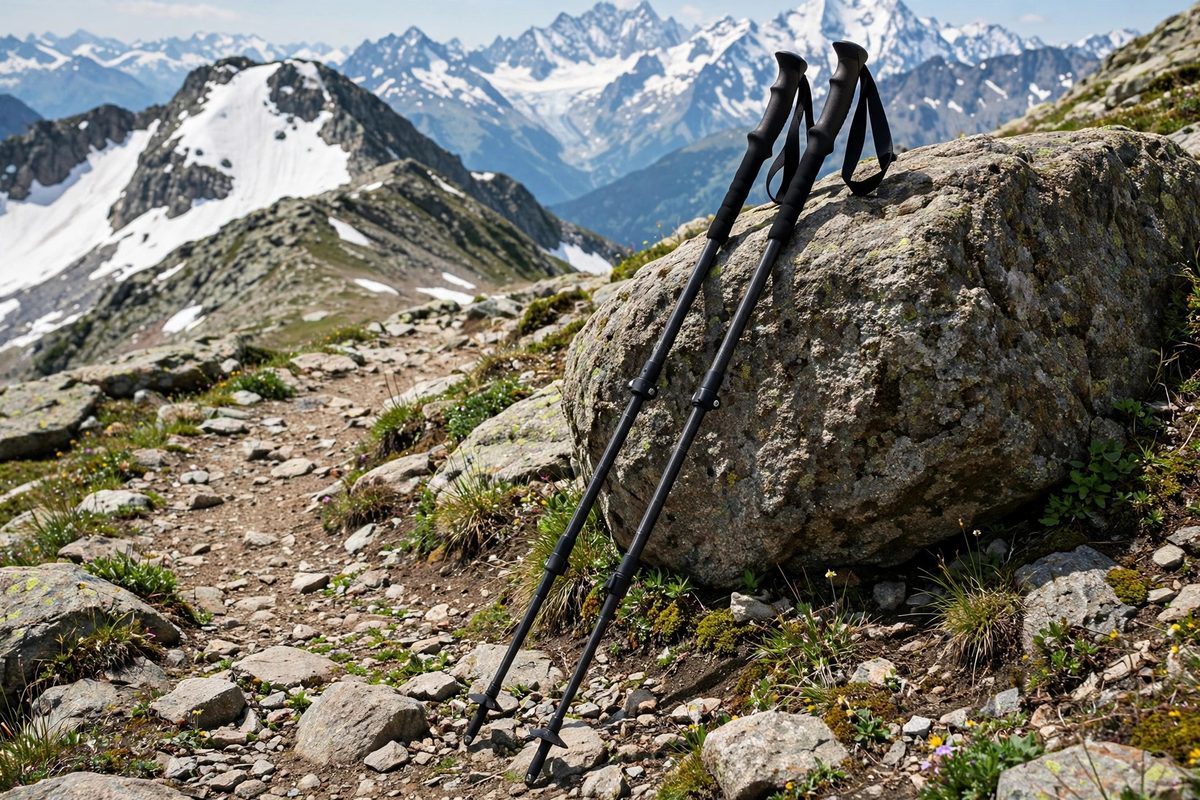
A carbon shaft makes sense when low weight and vibration damping matter most, such as on long-distance trails, fast day hikes, and trips where you carry poles in your pack for part of the route. Carbon poles feel noticeably lighter in the hand and transmit less shock from hard ground, which many hikers appreciate over a full day. They also tend to be quieter on rock. The trade-offs are higher cost and less tolerance for sharp side impacts, such as a pole trapped between rocks.
Carbon suits hikers who plant poles with reasonable care and value saving weight on every step. If you often lever poles against boulders, hike very rocky scrambles, or lend gear to beginners, carbon's brittleness under side loads is a real consideration. Many carbon poles use composite blends that balance weight and toughness, so read the shaft description rather than assuming all carbon is equal. For a direct material comparison, see our guide to carbon vs aluminum trekking poles before deciding which trade-off fits your trails and budget.
4. When is aluminum the better shaft choice?
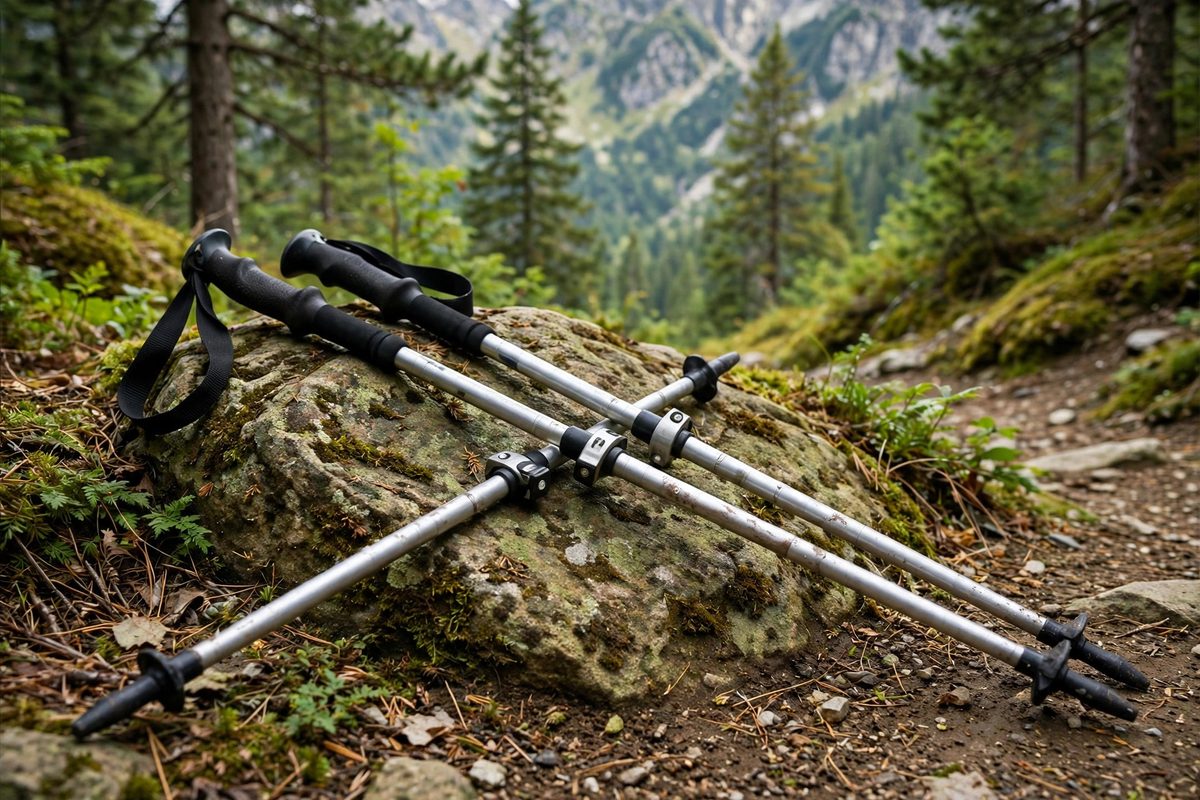
Aluminum is the better shaft choice when durability and value matter more than the lightest possible weight. Aluminum poles bend under heavy side loads rather than snapping, which makes them forgiving on rocky trails, in winter conditions, and for hikers who are hard on gear. They usually cost less than comparable carbon poles, so they are a sensible first pair or a reliable spare. The penalty is some extra weight in the hand and slightly more vibration on hard surfaces during long descents.
Most aluminum poles use strong alloys that handle years of regular hiking without drama, and a bent section can sometimes be straightened enough to finish a trip. Aluminum also tolerates being strapped to a pack, checked in luggage, or used for shelter support better than fragile shafts. If your hiking mixes forest paths, alpine rock, and travel, aluminum's toughness often outweighs carbon's weight saving. Choose aluminum when you want one dependable pair for almost everything and would rather spend the savings on boots, a pack, or your next trip.
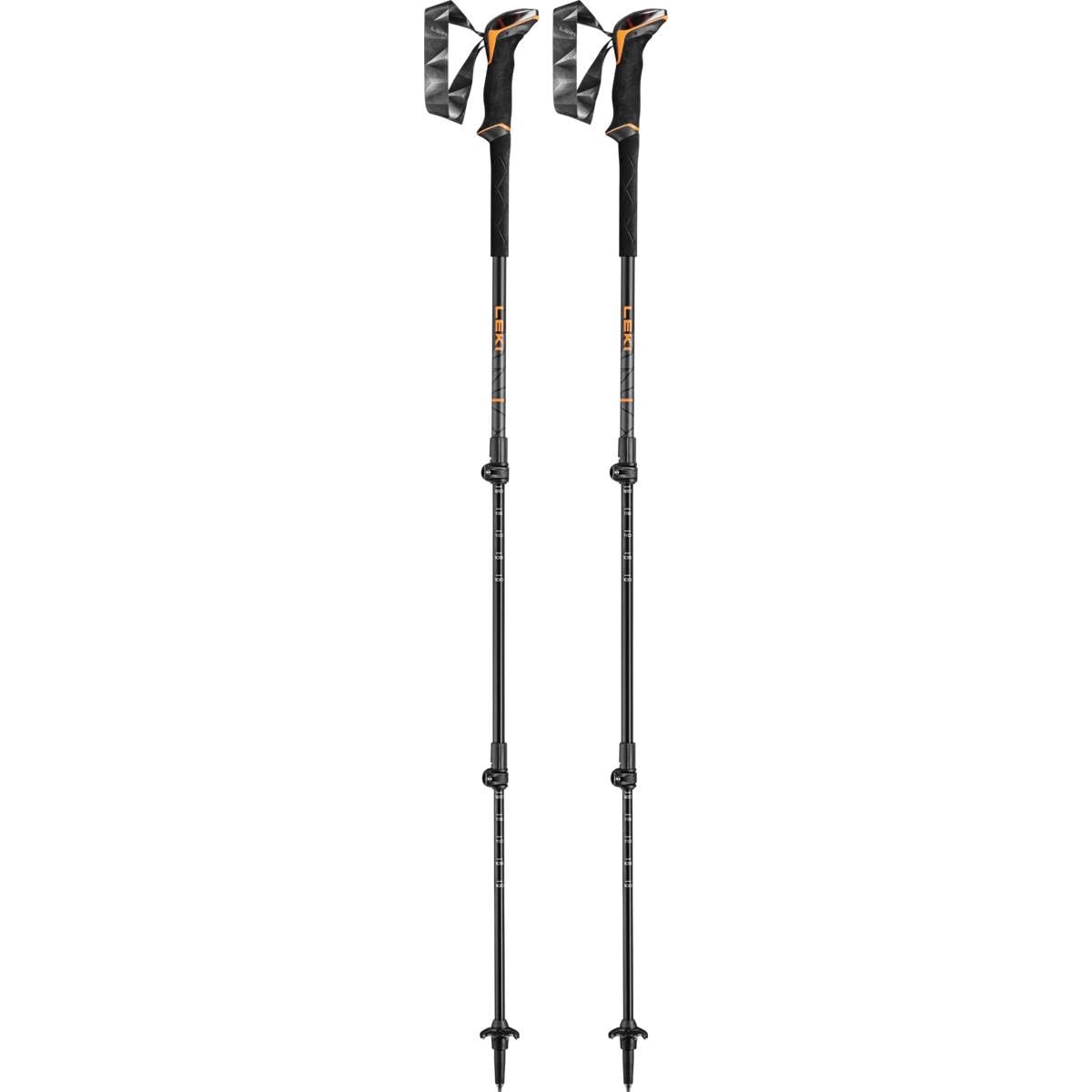
LEKI Makalu Lite
Best for: Hikers who want a light, proven pole for long-distance trails.
A lightweight aluminium pole pair with a reliable locking system for multi-day routes.
A proven aluminum pair whose toughness and value suit rocky trails and hikers who want dependable poles without carbon prices.
- Light for an aluminium pole
- Reliable locking system
- Comfortable grip
- You want a carbon pole or a pole that folds for travel.
5. How do you size trekking poles for your height?
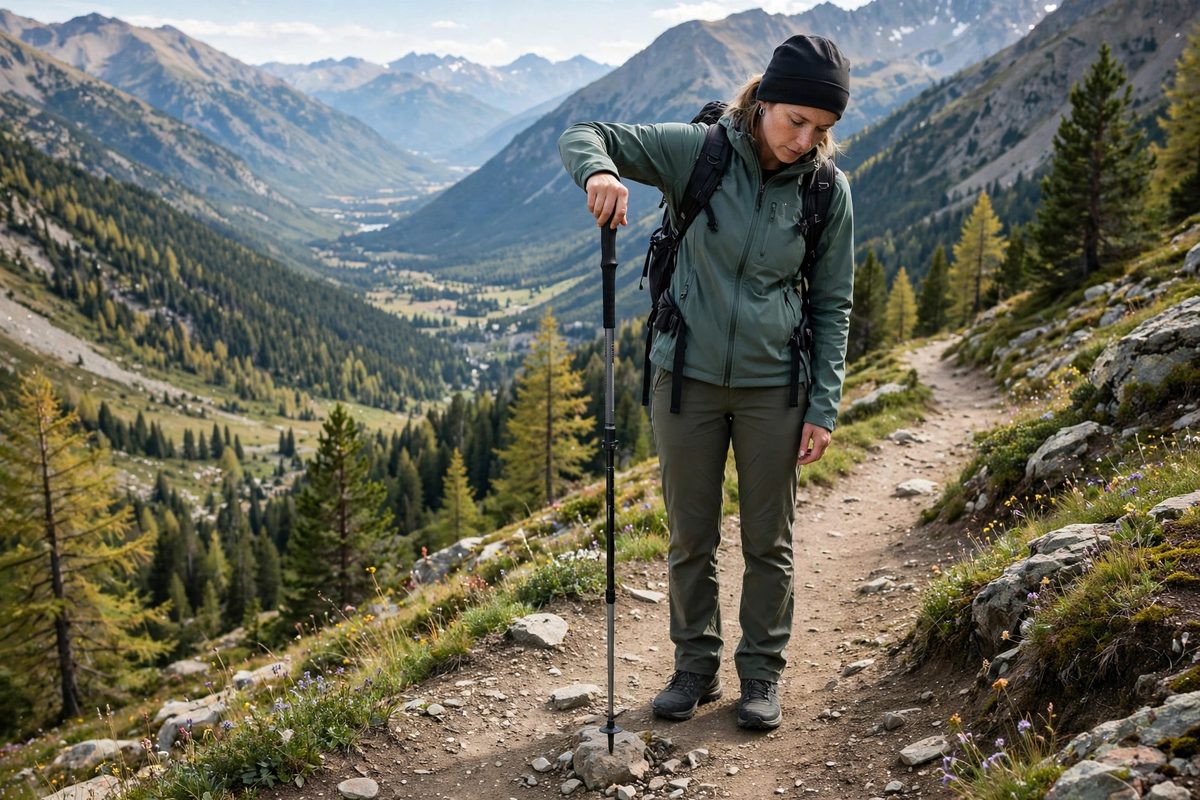
Size poles so that, standing in hiking shoes with the tip on flat ground beside your foot, your elbow bends at about 90 degrees with your forearm roughly level. Adjustable poles make this easy: pick a length range that includes your 90-degree setting with room to shorten for climbs and lengthen for descents. Fixed-length poles demand more care, since the size must match your height and arm length from the start. If you fall between sizes, adjustable poles remove the guesswork entirely.
Check the adjustment range, not just the headline length, and confirm the maximum marked length is a safe working length rather than the point where sections barely overlap. Taller hikers and people who hike steep descents benefit from extra range, while shorter hikers should ensure the minimum length is short enough for uphill use. After buying, learn to fine-tune length on the trail with our guide on how to use trekking poles correctly. Correct sizing prevents shrugged shoulders, hunched posture, and sore wrists on long days outside.
6. Should you choose folding or telescopic poles?
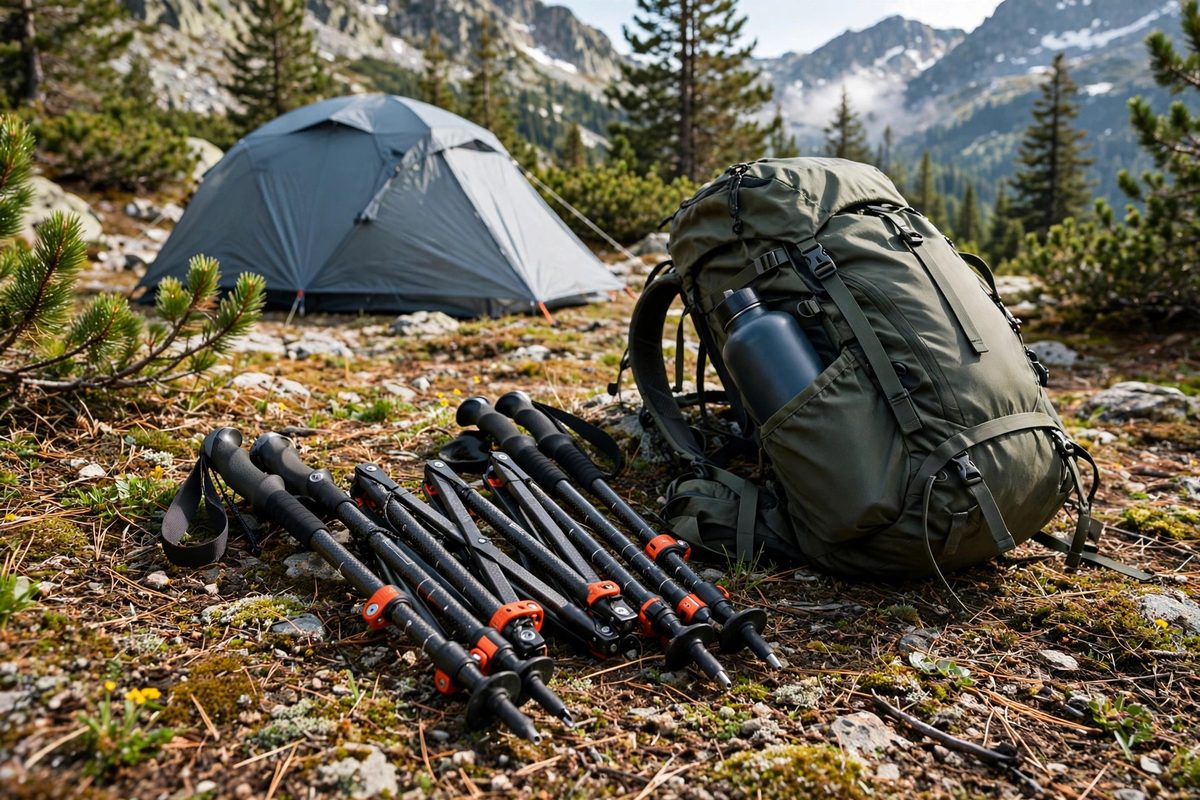
Choose folding poles if packed size matters most, and telescopic poles if easy length adjustment matters most. Folding poles collapse into short sections joined by a cord, so they fit inside many packs and suit travel and trail running. Telescopic poles slide into two or three sections and offer a wide adjustment range, which helps on varied terrain. Telescopic designs also tend to feel stiffer and are simpler to repair, while folding poles add cord and joints that need occasional checks.
Whichever style you pick, examine the locks. External lever locks clamp quickly, work well with gloves, and show at a glance whether they are closed, which suits hikers who adjust length often. Internal twist locks keep a slim profile but can slip if grit gets inside or the mechanism is not tightened enough. Test locks in the shop: extend, lock, and lean on the pole firmly. A lock that creeps under body weight in the shop will not improve on a wet descent, so treat smooth, solid clamping as a buying requirement.
7. Which baskets and tips do you need?
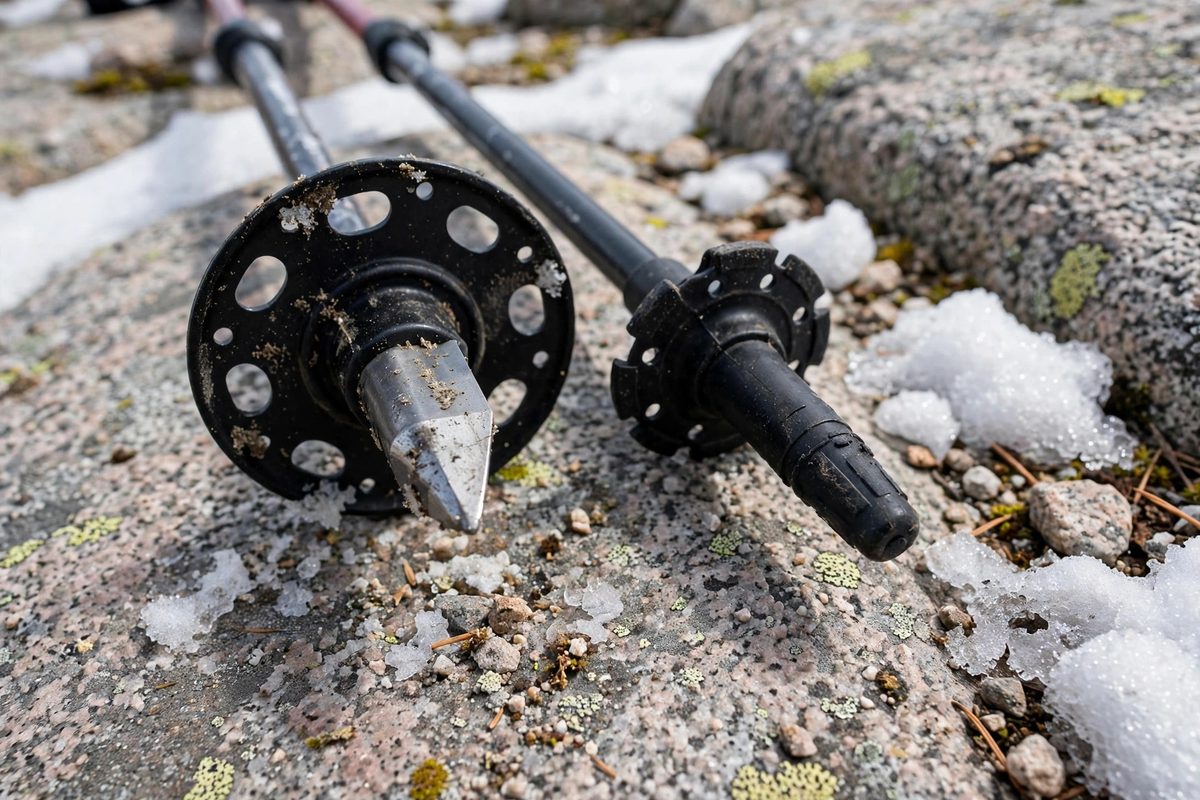
You need small trekking baskets for most trails and wider snow baskets if you hike on snow, plus carbide tips for grip on rock and dirt. Baskets stop poles sinking too deeply into mud, soft soil, and snow, and they protect the tip area from damage between rocks. Carbide tips bite well on stone, ice, and hard earth, while removable rubber tips quiet the poles on pavement and protect floors indoors. Many poles include both basket sizes or sell snow baskets separately.
Check that baskets screw on firmly and can be swapped without tools you would not carry, and ask whether replacement tips and baskets are easy to buy later. Worn carbide tips eventually lose their bite, so replaceable tips extend a pole's life. If your hiking mixes rocky ridges with snowy passes, carrying the wider baskets in winter is a small weight for a large gain in support. Match tips to the surface too: rubber tips on polished rock can skate, while bare carbide on pavement is noisy and wears faster.
8. How much does pole weight really matter?
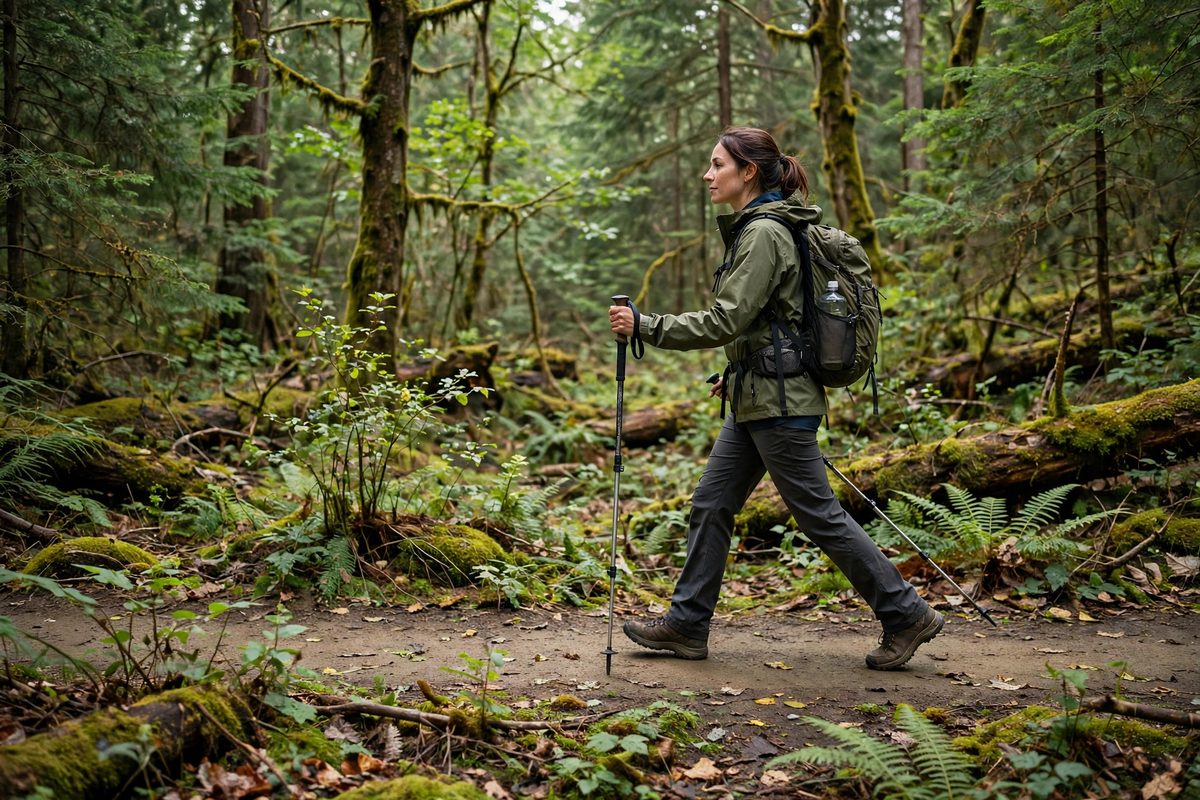
Pole weight matters most on long days and when poles spend time strapped to your pack, but comfort and reliability usually matter more for everyday hiking. Lighter poles swing more easily and tire the arms less over thousands of steps, which fast and long-distance hikers notice. However, the lightest designs sometimes use thinner shafts, smaller grips, or lighter locks that demand gentler handling. A moderate-weight pair that fits your hands and locks solidly will serve most hikers better than a fragile ultralight pair.
Judge weight together with balance: a pole that feels nose-heavy can seem tiring even if the scale number looks good. Swing each candidate in the shop and notice whether it moves naturally with your stride. Remember that total carried weight includes your pack, so pairing sensible poles with a well-fitted load helps most; our guide on how to fit a hiking backpack covers the load side. Choose the lightest pair that still feels sturdy for your terrain, not simply the lightest pair on the shelf.
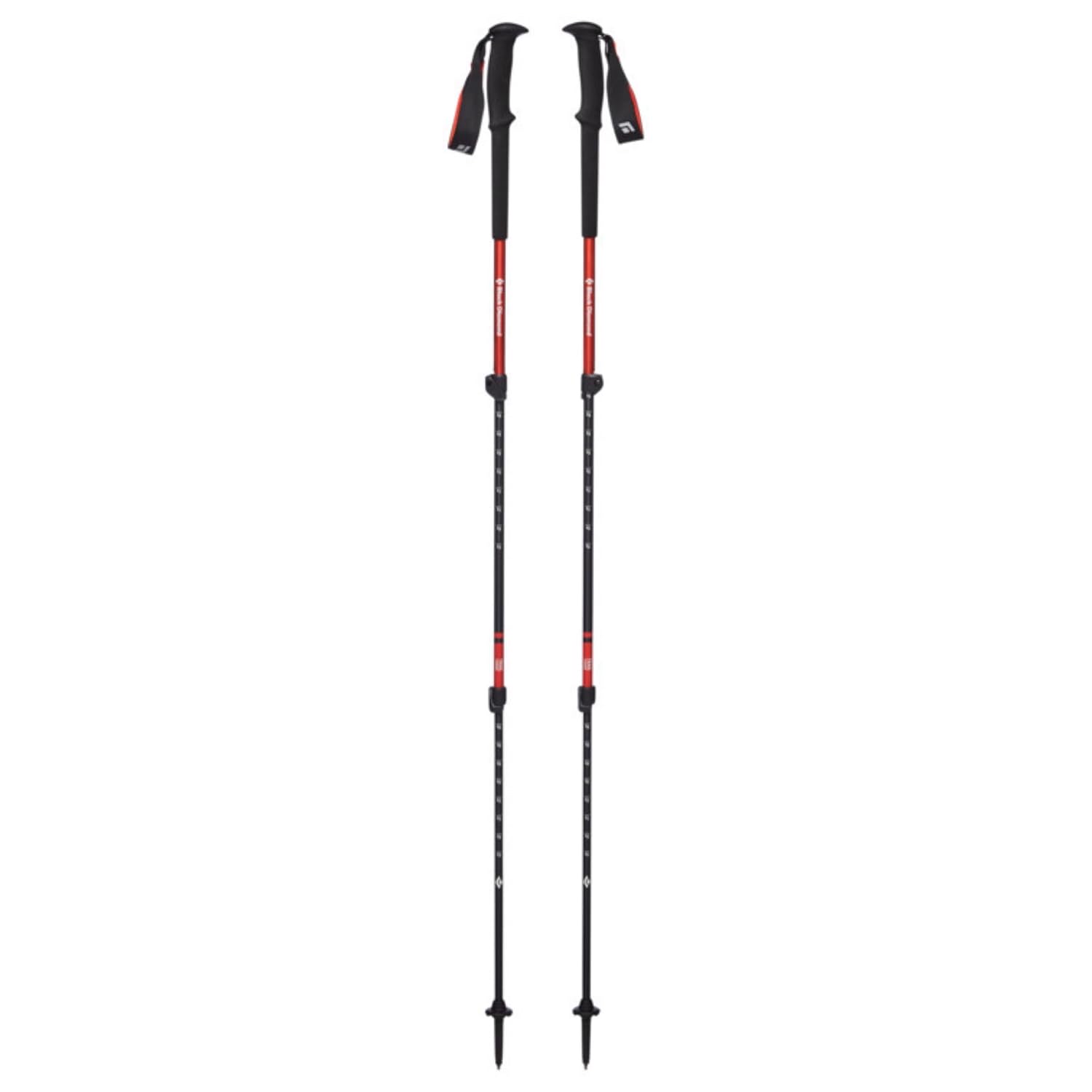
BLACK DIAMOND Trail Trekking Poles
Best for: Hikers who want sturdy poles that save knees on descents.
A durable pair of trekking poles with a comfortable grip for long days on uneven ground.
A dependable everyday pair for regular forest and mountain day hikes where comfort and reliability matter more than shaving grams.
- Sturdy on rough ground
- Comfortable grips for long days
- Easy length adjustment
- You want the lightest carbon poles or a folding travel pair.
9. How do you care for trekking poles so they last?
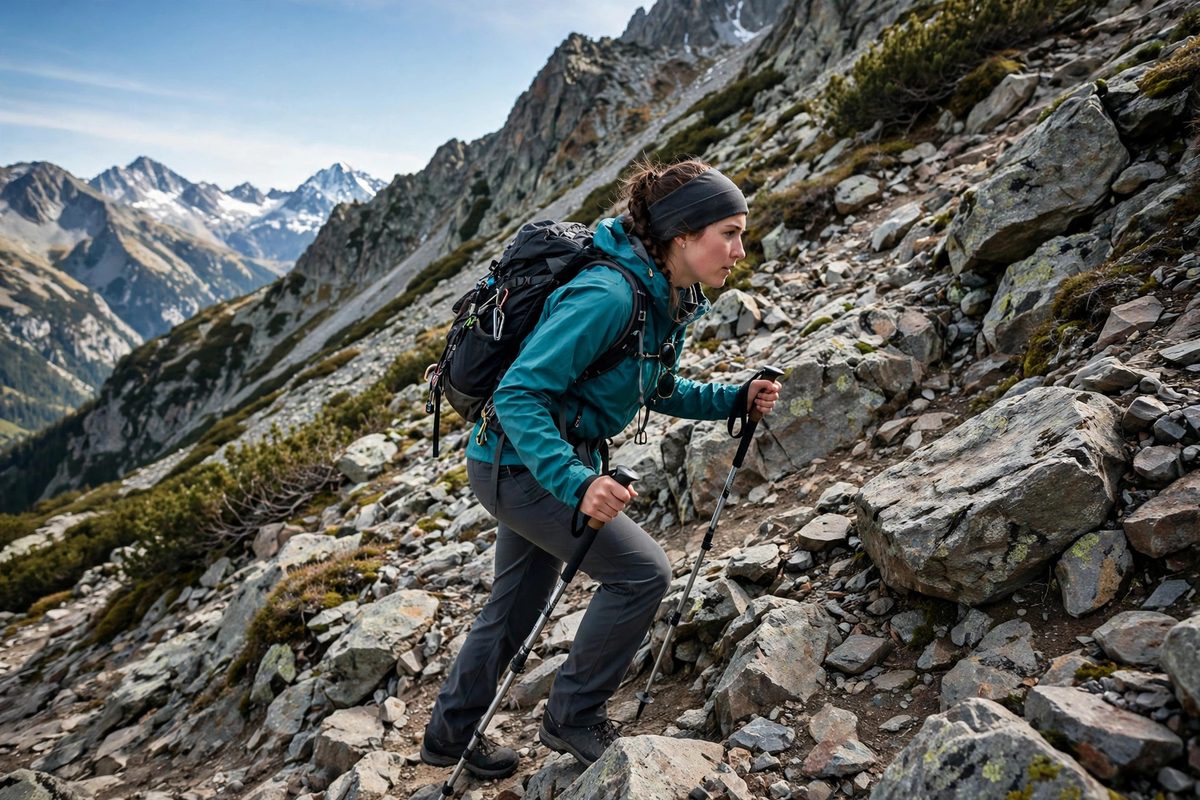
Care for poles by cleaning and drying them after wet or muddy hikes, storing sections slightly loose, and checking locks, tips, and baskets before big trips. Wipe grit from telescopic sections so they slide smoothly, and never store poles fully collapsed while wet, since trapped moisture encourages corrosion and stuck sections. Rinse mud from baskets and straps, let everything dry at room temperature, and inspect carbon shafts for cracks after any hard impact. Small habits prevent most failures.
Replace worn rubber tips and cracked baskets promptly, and tighten lever locks if a section begins to creep. On steep ground, plant poles deliberately rather than levering them sideways between rocks, which is how shafts bend or break. Good footwear also reduces the loads you put through poles on rough descents, so pair sound poles with suitable boots from our guide to the best hiking boots. With basic care, a quality pair of poles should serve for many seasons of regular hiking.
Frequently asked questions
What length trekking poles do I need for my height?
Choose a length or range that gives a 90-degree elbow bend with the tip on flat ground beside your foot. Adjustable poles are safest, since you can shorten them uphill and lengthen them downhill as terrain changes.
Are carbon trekking poles worth the extra cost?
Carbon is worth it if low weight and reduced vibration matter on long or fast hikes. If you hike rocky terrain, travel rough, or want maximum durability per pound spent, aluminum usually gives better value.
Cork, foam, or rubber grips: which is best?
Cork and foam suit most hikers because they handle sweat and stay comfortable over long days. Rubber grips work better in cold, wet conditions and with gloves, but can cause blisters in warm weather.
Lever locks or twist locks: which should I buy?
Lever locks adjust faster, work with gloves, and are easy to check visually, so they suit most hikers. Twist locks are slimmer but can slip when grit gets inside or they are not tightened fully.
Folding or telescopic poles: which pack smaller?
Folding poles pack much shorter and fit inside many packs, which suits travel and trail running. Telescopic poles are longer when collapsed but adjust over a wider range and are usually simpler to maintain.
Do I need snow baskets for winter hiking?
Yes, wider snow baskets stop poles sinking deeply into snow and give far better support on winter trails. Small trekking baskets are enough for mud and soft soil in other seasons.
Should I buy one pole or a pair?
Buy a pair for hiking, because two poles support both sides and keep your rhythm balanced on climbs and descents. A single pole suits gentle paths or travel where one hand must stay free.
Useful Sources and Verification
Use these source types to check current details for the area you plan to visit.
- Current weather, river-level and trail-condition information from the land manager or park authority for the area you plan to visit
- Manufacturer guidance for the exact rain gear named in this guide, including waterproof ratings, care and reproofing
- Hypothermia and lightning safety guidance from national outdoor and mountain safety organisations
Affiliate disclosure: Hiking Gear Shop participates in the Amazon Associates program. If you buy through a link on this page, we may earn a commission at no extra cost to you. Prices and availability can change — check the listing before you buy.