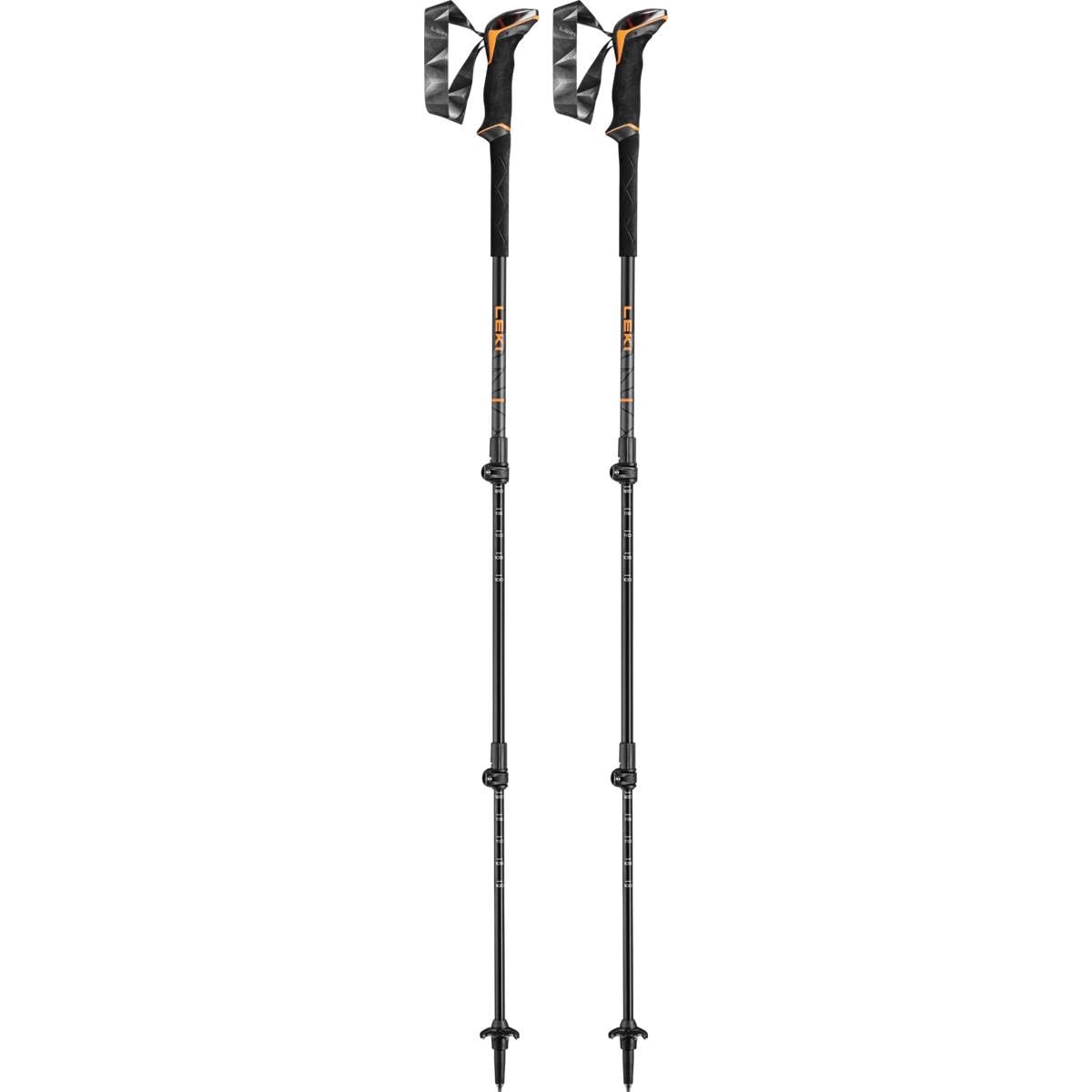
 Product photoLEKI Makalu Lite
A lighter trekking-pole option for hikers who want dependable adjustment without carrying expedition-grade weight. This long-form profile explains where the model fits, what to verify, and which trade-offs deserve attention before you buy.
The LEKI Makalu Lite is a lighter trekking-pole option for hikers who use poles consistently and care about swing weight. Three-section aluminum shafts with Speed Lock Plus adjustment and an extended Aergon CorTec grip make it a comfortable choice for long days on changing terrain. It is not the cheapest starter pair or a compact carbon race pole, so check the collapsed length and grip feel before buying.
Affiliate disclosure: some retailer links may earn a commission. That does not change the evidence labels or the need to verify the exact product, variant, current price, availability, warranty, and returns.
- Lightweight adjustable design
- Extended grip for changing hand positions
- Trail-focused durability
- Three-section aluminum shaft
- Aergon CorTec grip
- Speed Lock Plus adjustment
What retailer reviews can and cannot tell you
No exact-variant review signal is used until the listing is confirmed.
Retailer evidence captured on 13 November 2026. Ratings and review themes can change and are not firsthand testing.
A lighter pole for hikers who actually use poles all day
Pole weight matters most to people who use poles constantly. If your poles are in your hands for six or eight hours, every gram at the end of your arm adds up to real fatigue by the afternoon, and a lighter pole swings more easily with each plant. The Makalu Lite is built for that hiker: someone who poles on climbs, descents, and flats, not just on the hard sections.
Lighter does not mean fragile here. The three-section aluminum shaft keeps the durability that makes aluminum the standard choice for general hiking, while trimming weight compared to heavier duty poles. The result is a pole that suits long-distance walkers and multi-day hikers who want a dependable pair without carrying expedition-grade weight.
The extended grip and why hand position matters
The Aergon CorTec grip extends down the shaft, which lets you choke down on the pole without adjusting the length. That sounds minor, but on a route that alternates between climbs, traverses, and descents, changing your grip is faster than changing the pole length every ten minutes. The extended grip is the feature long-distance hikers notice first, because it matches how real terrain actually changes.
Grip comfort is personal, so the grip shape matters as much as the length. The Aergon design supports a natural hand position and reduces the pressure points that cause blisters on long days. Try the grip with the gloves you wear, and pay attention to how the strap and grip work together, since a good strap carries the load so your hand does not have to squeeze all day.
Speed Lock Plus: adjustment you can trust on the move
Speed Lock Plus is LEKI's lever locking system, and it works on the same principle as other lever locks: a visible clamp you can check by eye and tighten if it loosens. The practical test is the same for any pole: plant it, lean your weight on it, and confirm nothing slips. A lock that holds under body weight on a descent is the only kind worth carrying.
Adjustment speed matters on varied terrain. If changing length takes seconds, you will actually do it when the gradient changes; if it takes a struggle, you will leave the poles at one length and lose the benefit. Practice the adjustment at home until it is a one-handed habit, and check the locks again after the first hour on the trail.
Swing weight and the feel of a long day
Swing weight is the effort of moving the pole forward with each step, and it is where a lighter pole earns its price. A pole that feels light in the shop can still feel heavy after thousands of plants, so the real test is a full day on varied terrain. The Makalu Lite's lighter shaft reduces that cumulative effort, which is why it suits hikers who pole consistently rather than occasionally.
Balance also matters: a pole that is tip-heavy feels clumsy even if the total weight is low. The three-section aluminum construction keeps the weight distribution sensible, and the extended grip lets you shift your hand to change the balance on the move. If you have used heavier poles before, the difference will be obvious within the first hour.
Sizing, collapsed length, and packing the poles away
Start with the standard elbow test: with the tip on the ground beside you, your elbow should sit close to a right angle. From there, shorten for climbs and lengthen for descents, and use the extended grip for quick changes without touching the locks. The three-section design folds down short enough for most pack side pockets and straps, which matters when you need your hands free for a scramble or a transport connection.
Check the collapsed length against your pack before buying. Poles that do not stow securely end up carried in one hand or left behind, and both defeat the purpose. Also check the tip and basket options for your terrain: mud, snow, and rock each suit a different tip, and a pole without the right basket will sink or slip when you need it most.
How it compares: Makalu Lite vs BD Trail vs carbon poles
Against the BLACK DIAMOND Trail Trekking Poles, the Makalu Lite is the lighter, more refined option. The BD Trail poles are sturdier and more forgiving of rough treatment, while the Makalu Lite suits hikers who pole all day and notice swing weight. Both are three-section aluminum poles with lever locks, so the choice is about grip preference and how much weight matters to your daily distance.
Against carbon poles, the Makalu Lite is heavier but far more durable. Carbon saves grams and suits racers and fastpackers, but a carbon pole that cracks on a rocky descent is finished, while an aluminum pole can usually be bent back enough to finish the route. For most hikers, aluminum remains the sensible material, and the Makalu Lite is the lighter end of that sensible choice.
Who should choose a different pair
Skip the Makalu Lite if you want the cheapest starter pair, since budget aluminum poles do the same basic job for less money. Skip it if you need a compact carbon race pole for fastpacking or trail running, where every gram counts and the terrain is less rocky. And skip it if you rarely use poles, since a lighter pole only earns its price when it is in your hands for hours at a time.
Also look elsewhere if you need poles that double as tent supports, since that job needs specific lengths and lock strength. Check the tent's requirements against the pole's adjustment range before assuming the combination works.
A practical decision table
| Decision point | What to verify | Why it matters |
|---|---|---|
| Role | A lighter trekking-pole option for hikers who want dependable adjustment without carrying expedition-grade weight. | Lighter swing weight pays off over a full day |
| Fit and access | Long-distance hikers who use poles consistently and care about swing weight. | Extended grip suits terrain that keeps changing |
| Limit | You need the cheapest starter pair or a compact carbon race pole. | Price and weight class rule out some buyers |
| Evidence | Three-section aluminum shaft | Grip and lock details vary by listing |
Frequently asked questions
What is the Aergon CorTec grip?
It is LEKI's ergonomic grip design, extended down the shaft so you can change hand position without adjusting the pole length. The extended grip helps on terrain that changes often, since you can choke down for climbs and return to the full grip for descents.
How is the Makalu Lite different from the BD Trail poles?
The Makalu Lite is lighter and has an extended grip, which suits long-distance hikers who care about swing weight. The BD Trail poles are sturdier and more forgiving of rough treatment. Both are three-section aluminum poles with lever locks.
Are these poles good for long-distance hiking?
Yes, that is their main strength. The lighter shaft reduces swing-weight fatigue over a full day, and the extended grip suits changing terrain. They are built for hikers who use poles consistently, not just on the hard sections.
What is Speed Lock Plus?
Speed Lock Plus is LEKI's lever-style locking mechanism for the pole sections. It clamps visibly, can be tightened if it loosens, and lets you confirm at a glance that the pole is locked before you lean on it.
Can I use the Makalu Lite as a tent pole?
Only if the tent's instructions allow it. Trekking-pole tents need specific pole lengths and locking strength, so check the tent's requirements against this pole's adjustment range before relying on the combination.
How do I choose between aluminum and carbon poles?
Choose aluminum for durability and value: it bends rather than cracking under a sharp load. Choose carbon only if you race or fastpack and every gram matters. For general hiking, aluminum is the safer and cheaper choice.
Useful Sources and Verification
Use these source types to verify current details before buying or publishing a recommendation.
- The current manufacturer product page and technical documentation for LEKI Makalu Lite
- The exact retailer listing checked for the model, variant, included components, and commercial terms
- Independent review patterns treated as context rather than a substitute for personal fit or field testing
- LEKI official website for the current product page and technical documentation