
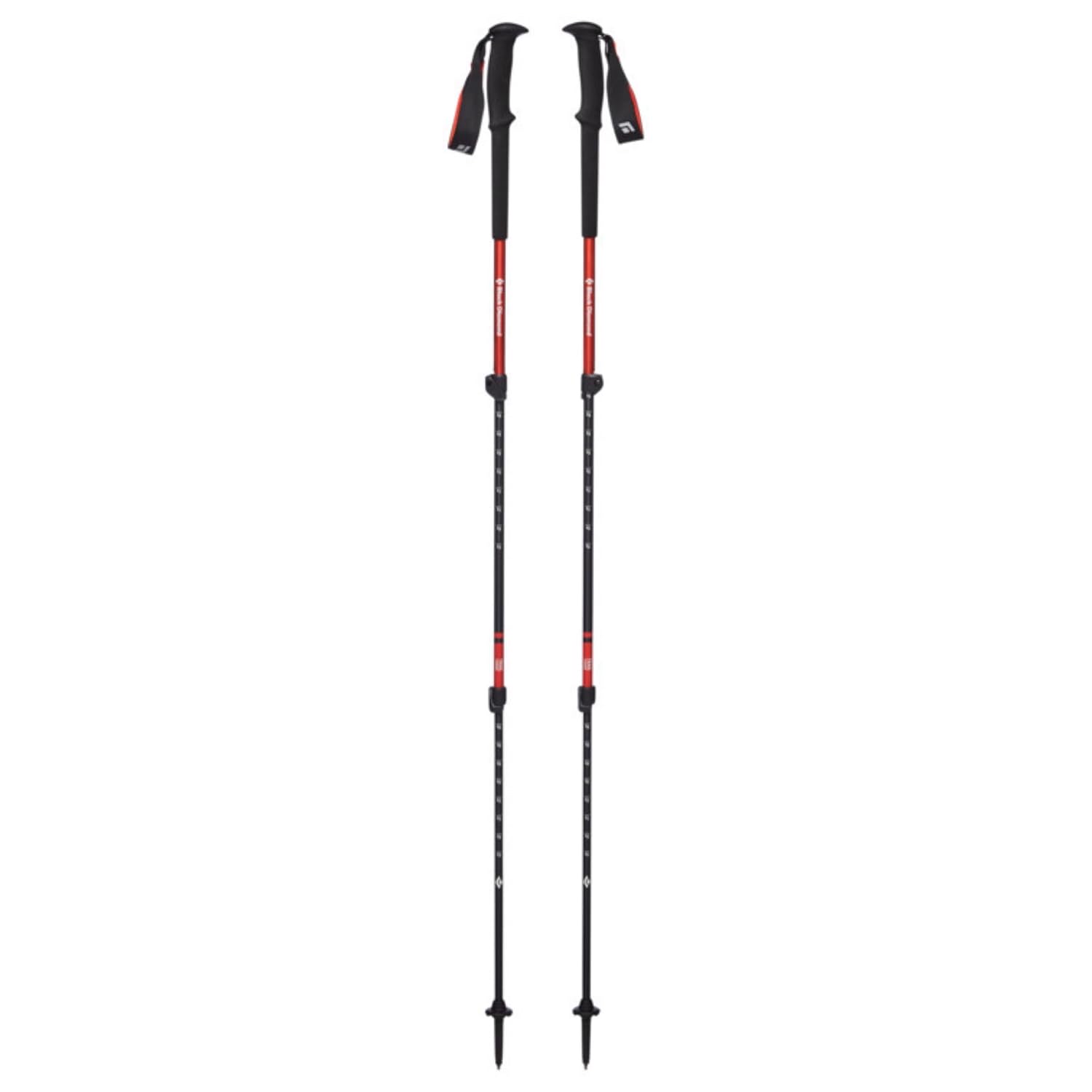
 Product photoBLACK DIAMOND Trail Trekking Poles
Adjustable trekking poles for stability on descents, uneven ground, and long days when your knees need help. This long-form profile explains where the model fits, what to verify, and which trade-offs deserve attention before you buy.
The BLACK DIAMOND Trail Trekking Poles are a dependable two-pole setup for hikers who want stability on descents, uneven ground, and long days when knees need help. Three-section aluminum shafts with FlickLock adjustment make them sturdy and easy to size, while the comfort-focused grips suit full days of use. They are not ultralight carbon poles, so check the weight and collapsed length against your pack before buying.
Affiliate disclosure: some retailer links may earn a commission. That does not change the evidence labels or the need to verify the exact product, variant, current price, availability, warranty, and returns.
- Adjustable aluminum construction
- Comfort-focused grips
- Useful for climbs, descents, and balance
- Three-section aluminum poles
- FlickLock® adjustment
- Two-pole stability for climbs and descents
What retailer reviews can and cannot tell you
Retailer evidence captured on 13 November 2026. Ratings and review themes can change and are not firsthand testing.
What two poles change on a steep route
Two poles turn a descent into a four-point movement instead of a two-point one. Each plant takes some load off your knees, gives you a balance check before committing your weight, and lets you brake with your arms on loose or steep ground. Over a long day with a pack, that assistance adds up to noticeably less fatigue in the legs.
Poles also change how you move uphill and across uneven ground. On climbs they let your arms share the work, on side-hill traverses they give you a downhill anchor, and on stream crossings they provide a third point of contact before each step. The benefit is largest for hikers with knee trouble, heavier loads, or routes with sustained elevation change.
FlickLock adjustment and why lock trust matters
A pole is only as good as its locking mechanism. FlickLock levers clamp the sections in place with a visible, adjustable lock that you can check by eye and tighten with a simple adjustment if it loosens. That matters because a pole that collapses under load on a descent is worse than no pole at all: it removes support at the exact moment you are leaning on it.
Before a serious route, test the locks under body weight at home. Plant each pole, lean on it, and confirm nothing slips. Check the locks again after the first hour on the trail, since new poles can settle. A lock you trust is the difference between poles you lean on and poles you merely carry.
Aluminum shafts: the durability trade
Aluminum is the workhorse material for trekking poles: it bends rather than snapping, survives being wedged between rocks, and tolerates the knocks of travel and storage. That toughness is why aluminum poles are the standard recommendation for general hiking, rocky terrain, and hikers who are hard on gear. The trade is weight, since aluminum poles are heavier than carbon poles of similar strength.
Carbon poles save weight but fail differently, cracking under a sharp sideways load where aluminum would bend. For most hikers, the weight saving of carbon is not worth the fragility and the higher price, especially on rocky routes where a pole can get trapped. Aluminum is the honest choice for a first pair and for anyone who values durability over grams.
Grips, straps, and hand comfort over a long day
Grip comfort decides whether poles stay in your hands all day or get strapped to the pack by lunchtime. The Trail poles use comfort-focused grips designed for long use, and the wrist straps should carry some of the load so your hands do not grip hard all day. Adjust the straps so your weight rests on the strap, not on a clenched fist, and you will finish the day with far less hand fatigue.
Grip material also matters in wet and hot conditions. A grip that gets slippery when wet, or that chafes after hours of sweat, will quietly discourage you from using the poles. Try the grips with the gloves you actually wear, and pay attention to how they feel after an hour rather than after a minute in the shop.
Sizing and adjusting for climbs and descents
The standard starting point is an elbow angle close to a right angle when the pole tip is on the ground beside you. From there, shorten the poles for steep climbs so you are not reaching uphill, and lengthen them for descents so you can plant ahead of your feet. The three-section adjustment makes these changes quick, which is the point: poles that are a hassle to adjust stay at one length all day.
Collapsed length matters for packing. Three-section poles fold shorter than two-section poles, which helps when you need to stow them for a scramble, a bus ride, or a flight. Check the collapsed length against your pack's side pockets or straps before buying, so the poles have a home when they are not in your hands.
How they compare: BD Trail vs LEKI Makalu Lite vs carbon poles
Against the LEKI Makalu Lite, the BD Trail poles are the sturdier, more forgiving option. The Makalu Lite is lighter and suits long-distance hikers who care about swing weight, while the Trail poles suit rocky routes and hikers who want a dependable pair they do not have to baby. Both are three-section aluminum poles, so the choice comes down to grip preference, lock feel, and how much weight matters to you.
Against carbon poles, the Trail poles are heavier but far more forgiving of abuse. Carbon saves grams and reduces swing weight, which matters on very long days, but a carbon pole that cracks on a rocky descent is finished, while a bent aluminum pole can often be straightened enough to finish the route. For a first pair, or for rough terrain, aluminum is the safer investment.
Who should skip poles, or choose a different pair
Skip poles entirely if your routes are flat, smooth, and short, since poles add complexity without much benefit on easy ground. Some hikers also dislike the rhythm of poling or find that poles get in the way on scrambles and ladders, and that preference is legitimate. Poles are a tool, not a requirement.
Choose a different pair if you need the lightest possible setup for racing or fastpacking, where carbon poles and a single-pole approach may suit you better. Also look elsewhere if you want poles that double as tent supports, since that job needs specific lengths and locking strength. Check the collapsed length and lock type against your tent's requirements before assuming any pole will do.
A practical decision table
| Decision point | What to verify | Why it matters |
|---|---|---|
| Role | Adjustable trekking poles for stability on descents, uneven ground, and long days when your knees need help. | Two poles share the load on climbs and descents |
| Fit and access | Hikers who want a dependable two-pole setup for rocky or steep routes. | Lock trust and grip comfort decide daily use |
| Limit | You only need an ultralight single pole or dislike carrying poles between obstacles. | Weight and bulk rule out ultralight buyers |
| Evidence | Three-section aluminum poles | Lock and shaft details vary by listing |
Frequently asked questions
Do trekking poles really help your knees?
Yes, mainly on descents, where poles let your arms share the braking load instead of leaving it all to your knees. The benefit is largest on steep, sustained descents with a pack. Poles do not fix knee problems, but they reduce the load each step places on the joint.
How do I set the right pole length?
Start with your elbow at roughly a right angle when the tip is on the ground beside you. Shorten the poles for steep climbs and lengthen them for descents. Adjust on the trail rather than sticking to one length all day.
Are aluminum poles better than carbon poles?
For most hikers, yes. Aluminum bends under a sharp load where carbon can crack, and aluminum poles cost less. Carbon saves weight, which matters for racing and very long days, but durability usually wins for general hiking.
What is FlickLock adjustment?
FlickLock is Black Diamond's lever-style locking mechanism for the pole sections. It clamps visibly, can be tightened if it loosens, and lets you check at a glance that the pole is locked before you lean on it.
Can I use these poles as tent poles?
Some trekking-pole tents use hiking poles as supports, but you must check the required length and locking strength against the tent's instructions. Not every pole suits every tent, so verify before relying on the combination.
How do I stop poles collapsing on a descent?
Test the locks under body weight before the trip, check them again after the first hour, and tighten the FlickLock adjustment if a section slips. A pole that collapses under load is dangerous, so never ignore a lock that feels loose.
Useful Sources and Verification
Use these source types to verify current details before buying or publishing a recommendation.
- The current manufacturer product page and technical documentation for BLACK DIAMOND Trail Trekking Poles
- The exact retailer listing checked for the model, variant, included components, and commercial terms
- Independent review patterns treated as context rather than a substitute for personal fit or field testing
- Black Diamond official website for the current product page and technical documentation