Carbon poles are lighter and calmer in the hand; aluminum poles bend instead of snapping and usually cost less. The right choice depends on your terrain, your pack weight and how hard you are on gear — not on which material sounds more advanced.
Choose carbon if you hike long distances, count grams and mostly walk established trails: a carbon pair typically saves about 100–200 g over aluminum and damps vibration. Choose aluminum if you carry heavy loads, hike rough rocky terrain or want the most durability per euro, because aluminum bends under impact instead of snapping.
At a glance
| Factor | Carbon vs aluminum |
|---|---|
| Weight | Carbon pairs are typically about 100–200 g lighter per pair. |
| Vibration | Carbon damps trail buzz; aluminum transmits more shock. |
| Impact behaviour | Carbon can snap under side impact; aluminum usually bends. |
| Heavy loads | Aluminum suits heavy packs and rough terrain better. |
| Long distance | Carbon reduces arm fatigue over long days. |
| Price | Aluminum usually costs less for similar features. |
| Repairs | Bent aluminum can often be straightened; snapped carbon cannot. |
| Best for | Carbon: distance and speed. Aluminum: durability and value. |
1. Which is lighter, carbon or aluminum?
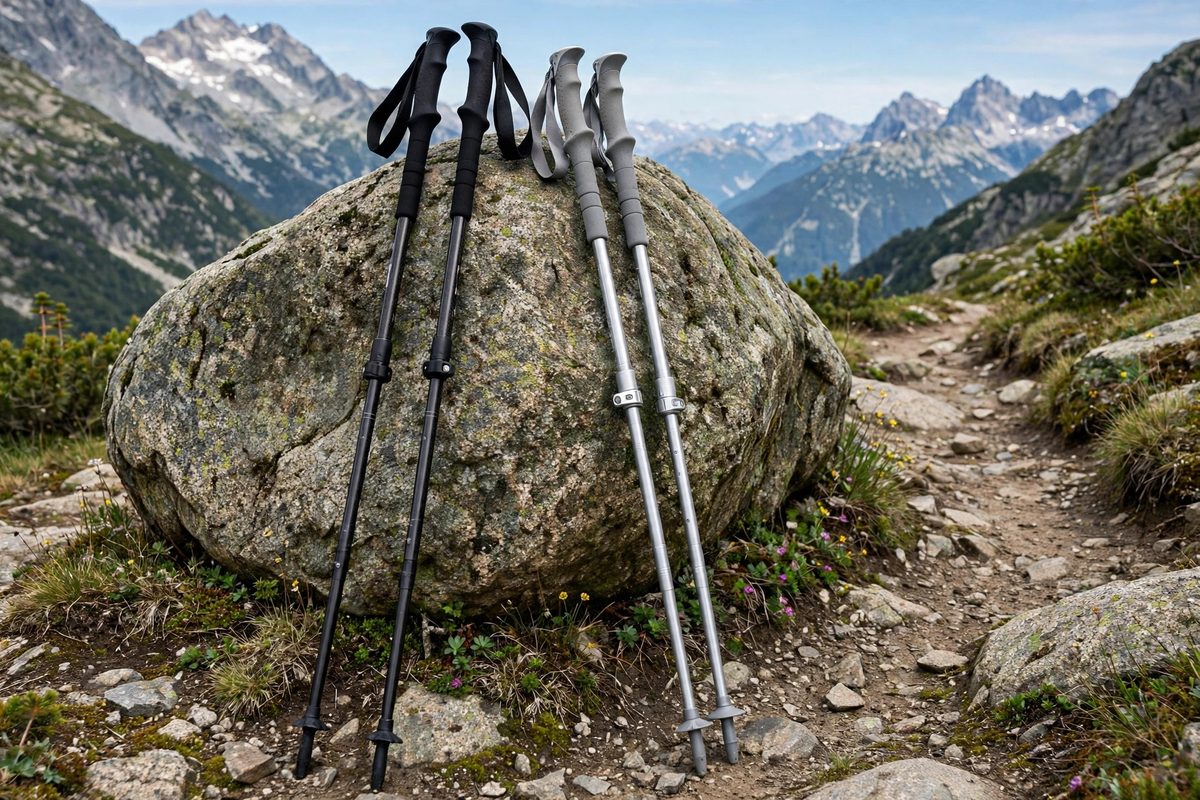
Carbon pairs are typically about 100–200 g lighter than comparable aluminum pairs, though grips, locks and baskets also affect the total. Always compare the full pair weight at the length you will actually use, because a heavy grip can erase a light shaft's advantage.
Weight matters most over long days: every pole plant lifts the pair thousands of times. If you count grams elsewhere in your kit, carbon is the consistent choice; if your pack is heavy, 150 g of pole weight is not where your comfort is decided.
2. Why does carbon feel smoother on the trail?
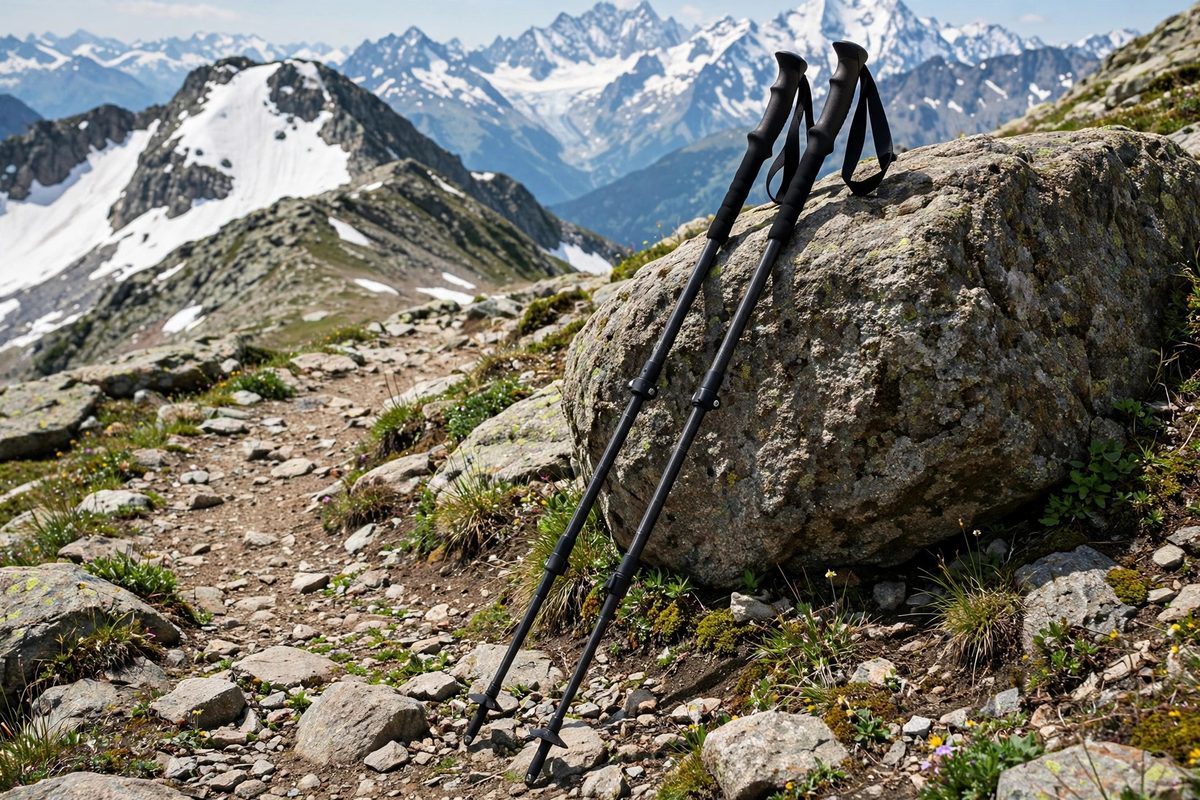
Carbon fibre damps the buzz and shock that travel up a pole on rocky ground, so hands, wrists and elbows feel less battered at the end of a long day. Aluminum transmits more of that impact, which some hikers barely notice and others find tiring within hours.
The difference shows most on hard, rocky descents where poles plant thousands of times. Cork or foam grips also absorb shock, so grip choice can narrow the gap between materials.
3. What happens when each material breaks?
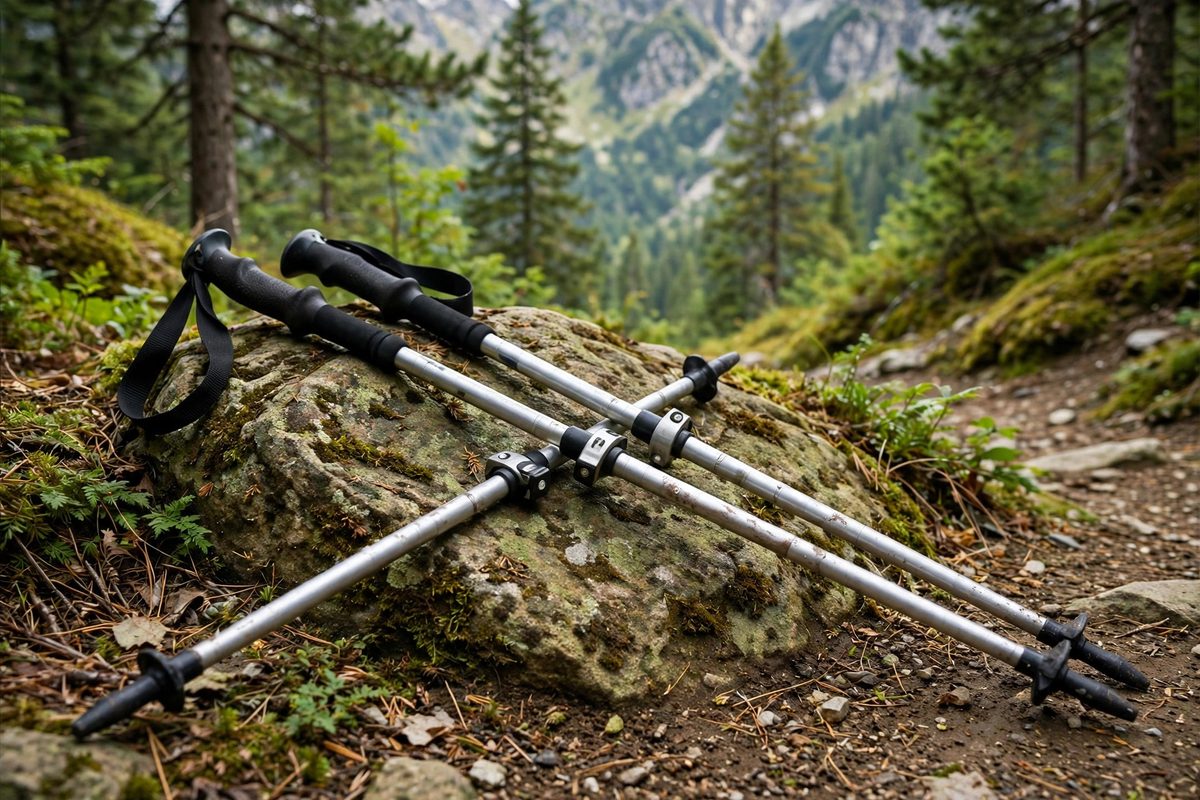
Under a side impact — a tip wedged between rocks while you fall sideways — aluminum usually bends and often can be straightened enough to finish the hike. Carbon can snap cleanly under the same load, leaving you with one pole or none.
This is the core durability trade: carbon is strong along its length but vulnerable to crushing and side loads. If your routes involve boulder fields, scree and stream crossings with wedged tips, aluminum's forgiveness is worth real money.
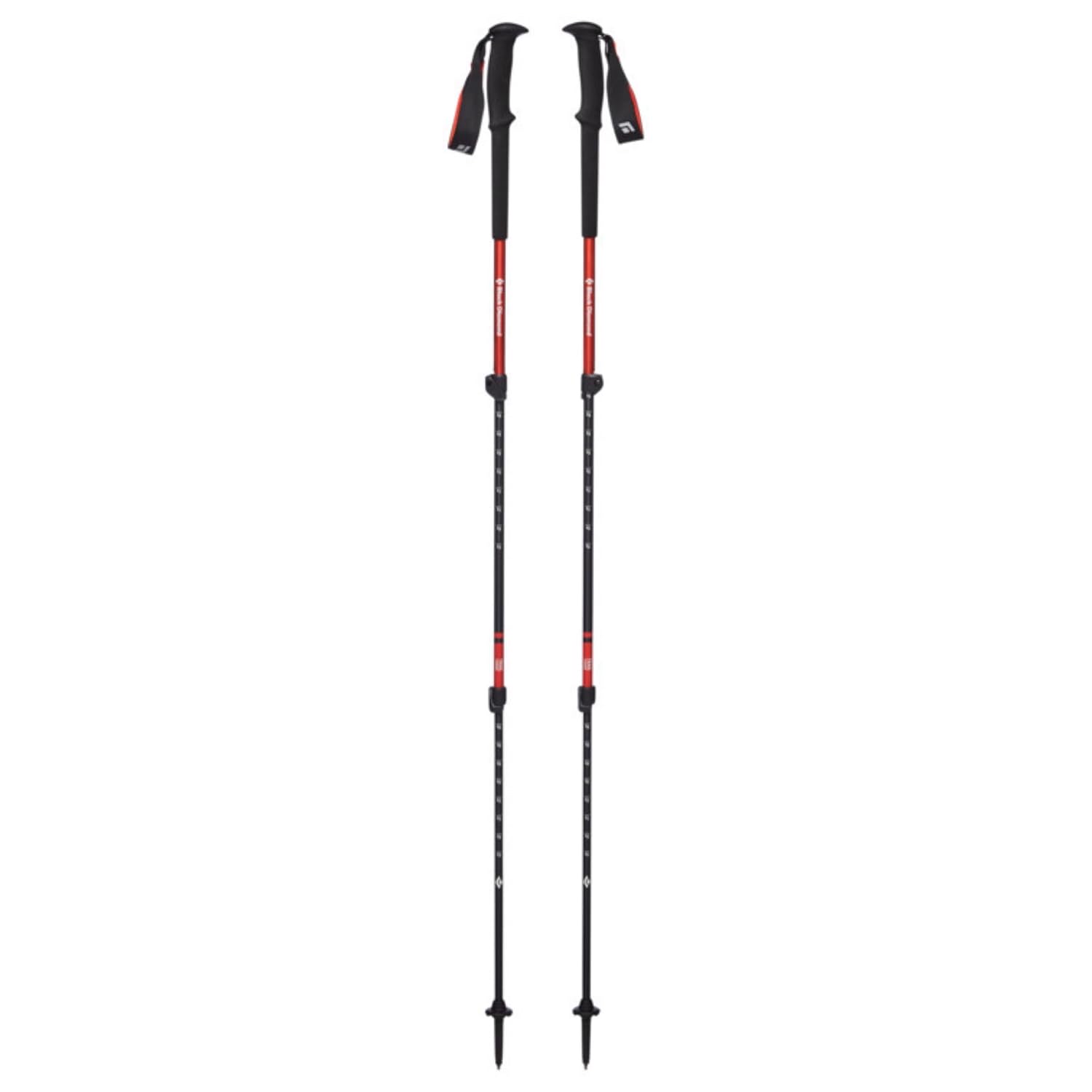
Black Diamond Trail Trekking Poles
Best for: Hikers who want a durable, adjustable pair for everyday trails.
An adjustable trekking pole pair built for regular trail use.
A reliable aluminium pair for learning correct pole technique
- Adjustable length for climbs and descents
- Durable build for rocky trails
- Comfortable grips for long days
- You want the lightest possible carbon pair.
4. Which material suits heavy packs?
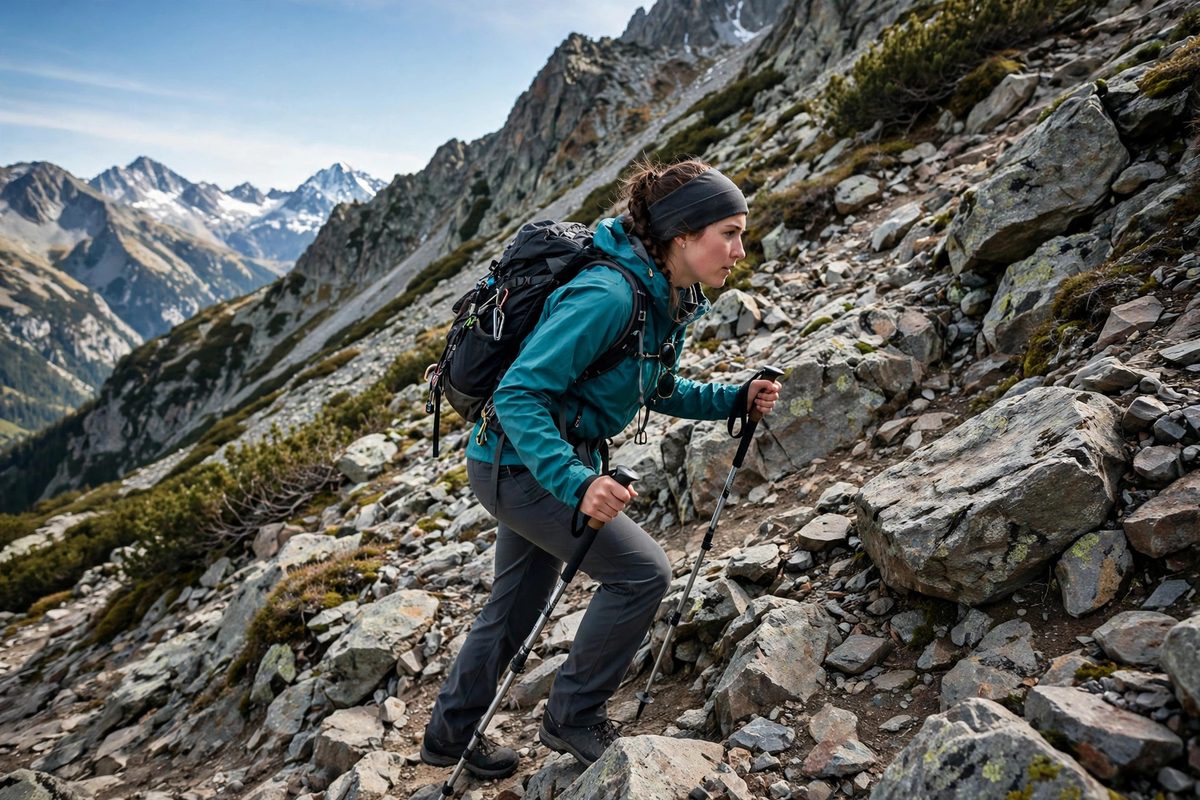
Aluminum suits heavy packs better, because descent braking with 15–20 kg on your back loads poles hard on every step. A bent aluminum pole still works; a snapped carbon pole does not. Fit and load distribution matter too — see our backpack fitting guide.
If you backpack with moderate loads on maintained trails, quality carbon handles it well. The risk grows with load, terrain roughness and how often you lean your full weight on a planted pole.
5. Which material suits long-distance hiking?
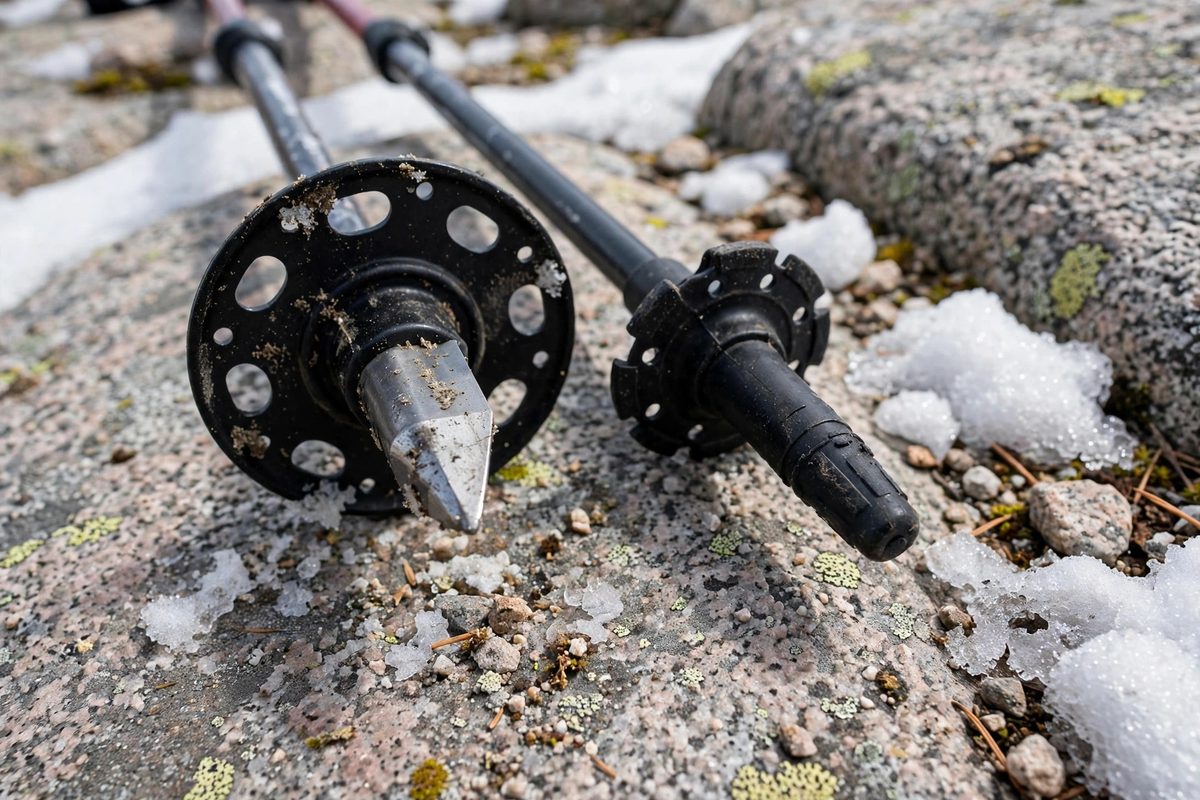
Carbon suits long-distance hiking, where saving 100–200 g and damping vibration repeats over thousands of pole plants per day. Thru-hikers also value poles that double as tent supports, where consistent length and low weight matter.
Long trails also mean remote breakage consequences. Many distance hikers choose carbon and accept the risk, or choose aluminum for peace of mind — the honest answer depends on how far you are from a replacement.
6. How much do carbon and aluminum poles cost?
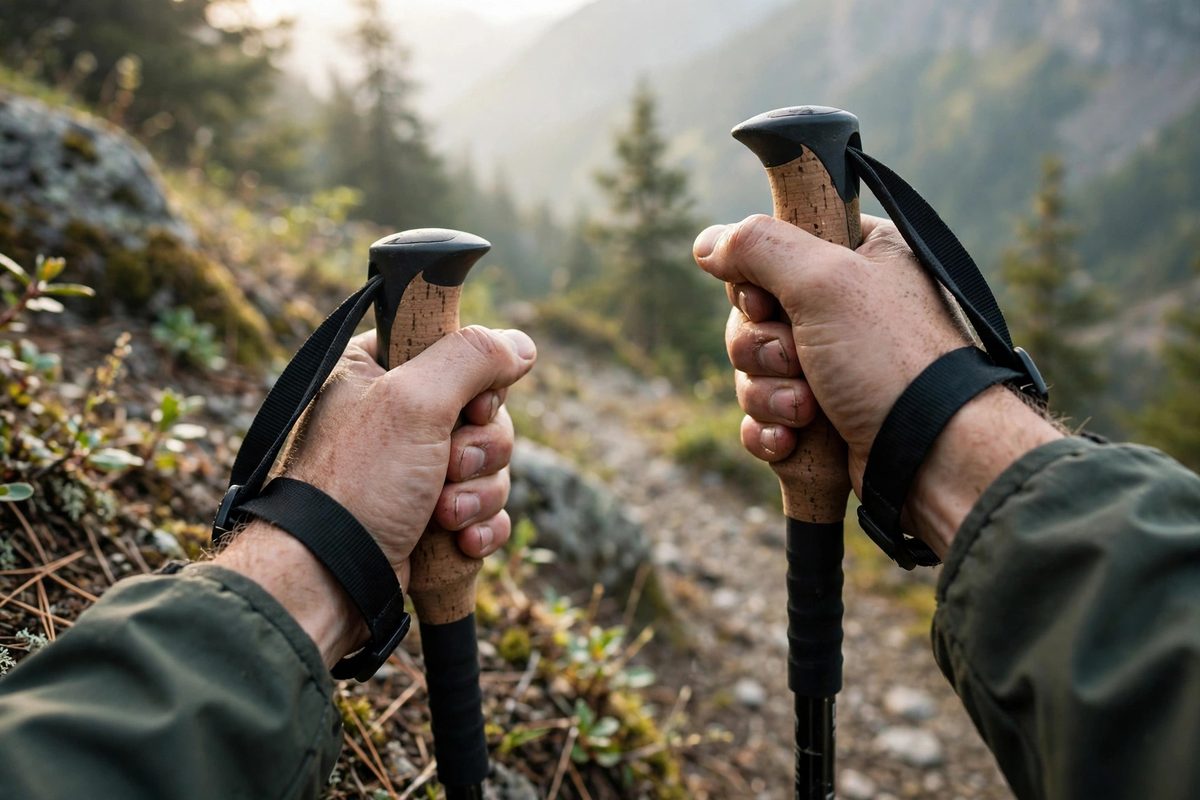
Aluminum poles usually cost less than carbon poles with similar locks and grips, so a fixed budget buys better locks and grips in aluminum. Carbon's premium buys weight and damping, not necessarily better hardware.
Spend first on reliable locks and comfortable grips in either material: a collapsing pole or blistered hands ruin more hikes than 150 g of extra weight. Compare pairs in our best trekking poles guide.
7. Does material affect packed size?
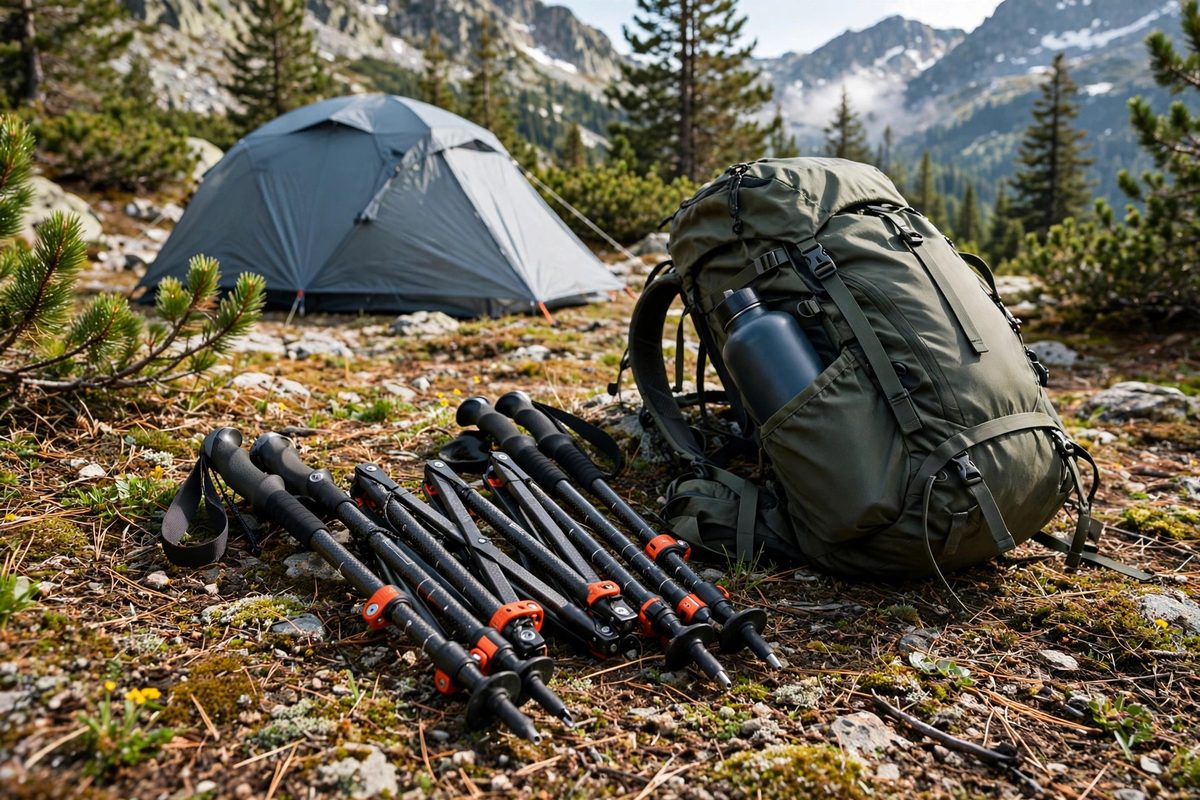
Packed size depends on design more than material: folding poles pack to roughly 35–45 cm, telescopic poles to about 60–70 cm, in both carbon and aluminum. Choose folding for travel and scrambling days, telescopic for maximum adjustability.
Folding poles have more joints to keep clean and check. Whatever the material, rinse grit from joints after muddy or sandy trips so locks keep working.
8. Which material is better in winter?
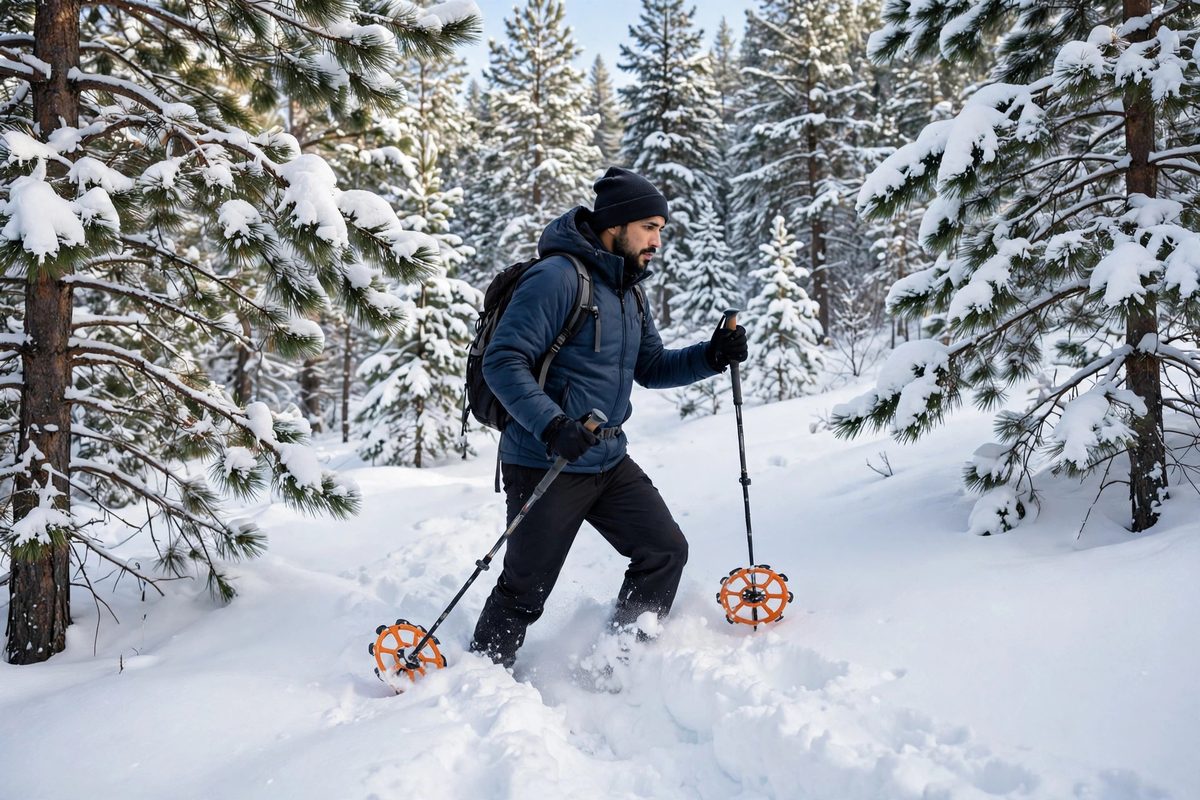
In winter, basket size and lock reliability with gloves matter more than shaft material. Wide baskets stop sinking in both materials, and lever locks are easier to adjust with cold hands than twist locks.
Carbon's vibration damping is pleasant on frozen ground, while aluminum's bend-don't-snap behaviour helps when tips wedge under ice crust. Either works — choose by your load and terrain, then fit snow baskets.
9. How do I choose between carbon and aluminum?
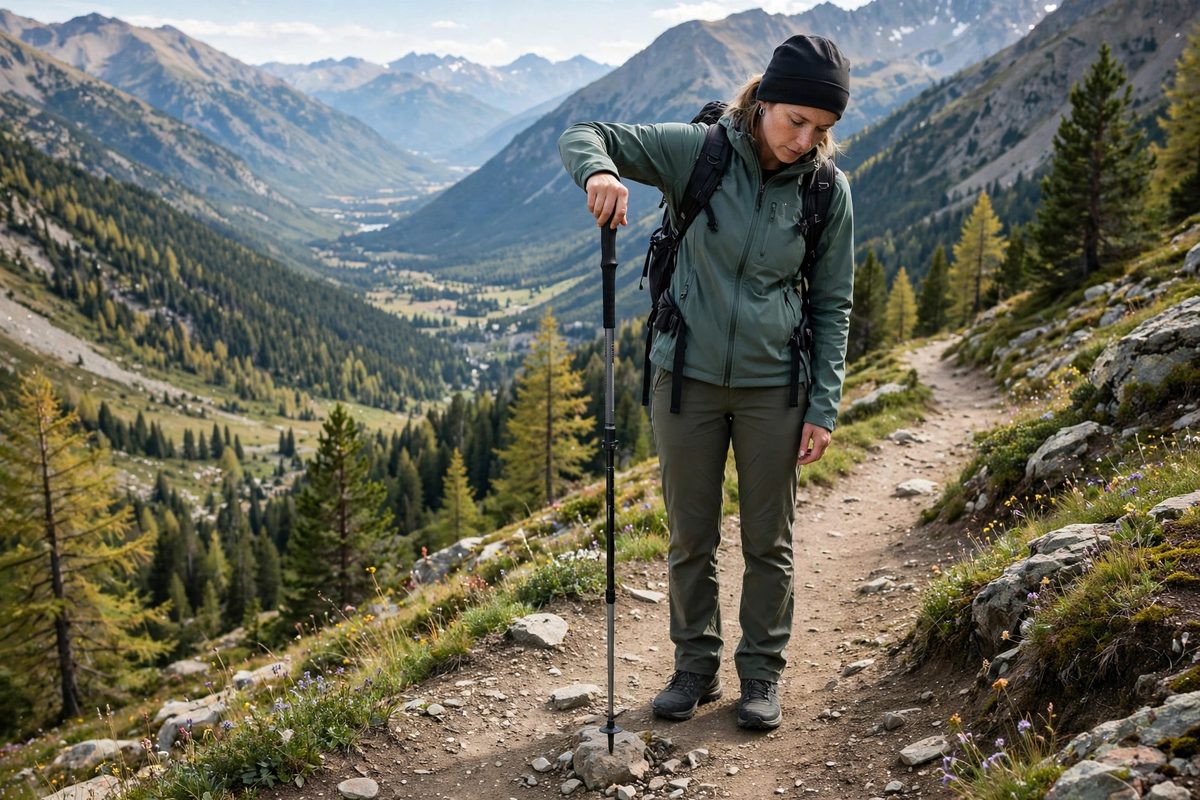
Choose carbon for long distances, established trails and light-to-moderate packs where arm fatigue is your main complaint. Choose aluminum for heavy loads, rocky or off-trail terrain, tight budgets and anyone who has bent a pole before.
Be honest about your actual hiking, not your aspirational hiking. Most weekend hikers on marked trails are well served by good aluminum; distance-focused hikers feel carbon's benefit daily.
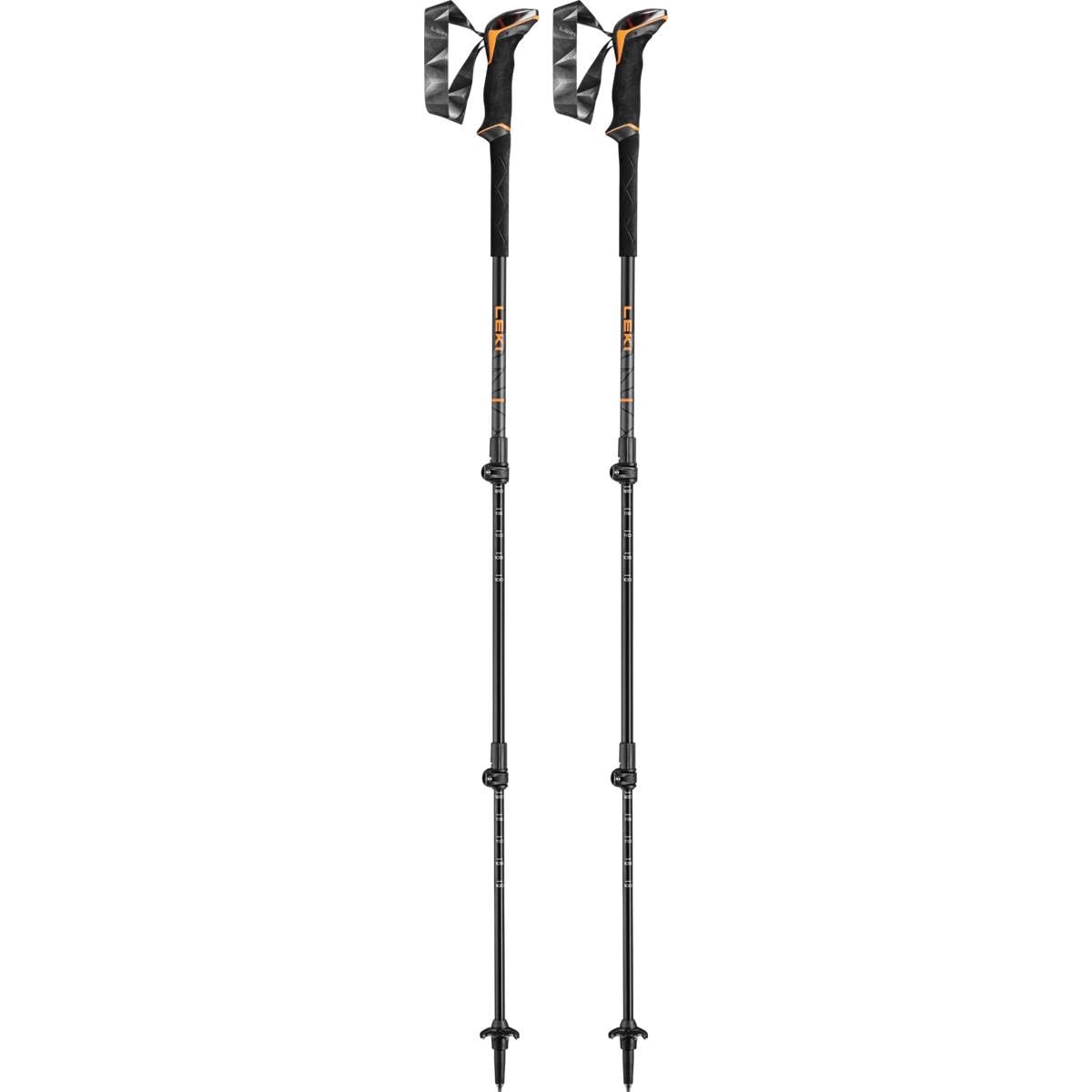
LEKI Makalu Lite
Best for: Hikers who want a lighter pole with a comfortable grip.
A lightweight trekking pole designed for comfortable long-distance walking.
A lighter option for long days and steady pole rhythm
- Light feel over long distances
- Comfortable grip shape
- Adjustable for different terrain
- You need maximum durability for heavy loads.
10. Can I mix materials or upgrade later?
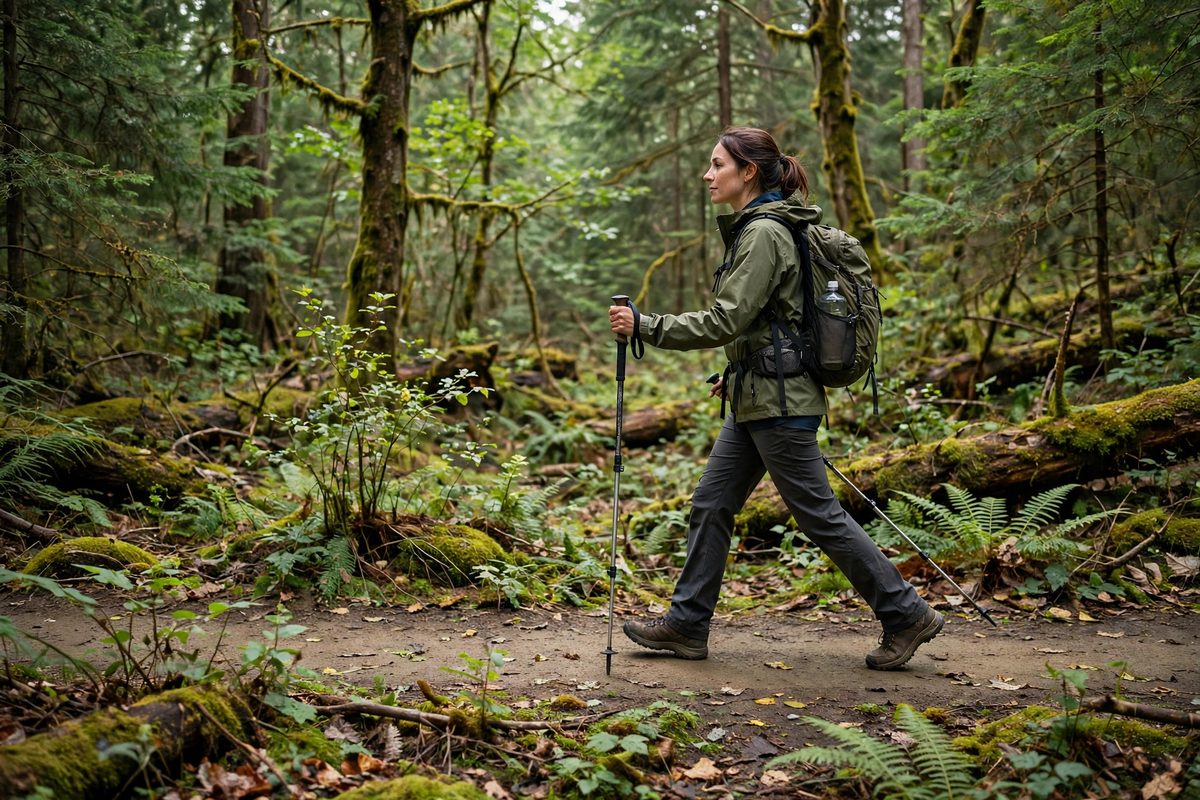
Many hikers start with aluminum, learn technique, and upgrade to carbon when long days make weight and vibration matter. Some poles mix materials — carbon upper sections with aluminum lowers — balancing damping with impact resistance.
Technique beats material: correct length and strap use help more than any shaft upgrade. Learn the basics in our guide to using trekking poles correctly, then choose material with experience.
Frequently asked questions
Is carbon worth the extra money?
For long-distance hikers who feel arm fatigue, yes: the weight saving and vibration damping repeat on every pole plant. For occasional weekend hikes on easy trails, good aluminum gives most of the benefit for less money.
Do carbon poles break easily?
Carbon is strong along its length but can snap under side impacts, such as a wedged tip during a sideways fall. Quality carbon on maintained trails lasts well; rough boulder terrain favours aluminum.
Can I repair a bent aluminum pole?
Often yes. A gently bent aluminum section can usually be straightened enough to finish a trip and sometimes fully repaired. A snapped carbon pole cannot be field-repaired reliably.
Which material is better for bad knees?
Technique matters more than material for knees: longer poles planted ahead on descents offload braking force in both materials. Carbon's damping may feel kinder on long rocky descents.
Are carbon poles better for tent support?
Both work if the length matches your shelter's requirement and locks hold firmly. Carbon's lower weight suits ultralight shelters; aluminum's toughness suits heavier tents and rough pitches.
Do carbon poles work in cold weather?
Yes. Carbon does not become brittle in normal winter hiking temperatures. In winter, choose wide baskets and glove-friendly lever locks in either material.
How long do trekking poles last?
With clean locks, replaced tips and dry storage, either material lasts years. Aluminum usually survives more abuse; carbon lasts longest on established trails without side impacts.
Useful Sources and Verification
Use these source types to check current details for the area you plan to visit.
- Manufacturer material and warranty guidance for the exact pole models named in this guide
- Independent long-term durability reporting on carbon and aluminum pole failures
- Current trail rules for the area you plan to visit, including any carbide-tip restrictions
Affiliate disclosure: Hiking Gear Shop participates in the Amazon Associates program. If you buy through a link on this page, we may earn a commission at no extra cost to you. Prices and availability can change — check the listing before you buy.