A practical route-planning guide to capacity, refill points, treatment limits, maintenance, and carrying water without guesswork.
The short answerPlan hydration from the route backward. Identify reliable refill points, estimate how long you will be between them, account for heat and effort, and choose a treatment method that matches the source and the contaminants you may face. Carry enough capacity for the gaps, but do not confuse a filter’s pore size with protection against every waterborne risk.
Affiliate disclosure: some retailer links on this site may earn a commission. That does not change the evidence labels or the need to verify the current product, variant, price, availability, and returns.
Planning water from the route backward
Water planning starts with the map, not the bottle. Mark every reliable water source on your route, estimate the time and distance between them, and identify the longest dry stretch. That gap sets how much you need to carry, and everything else follows from it.
A route with streams every hour needs a small bottle and a filter. A dry ridge walk needs large capacity and careful rationing. The same hiker, on two different routes, needs two different water plans. Plan the route first, then the water.
AFFILIATE PICK · Hydration and water treatment
Platypus QuickDraw 1 Liter Water Filter System
Planning water from the route backward: A compact squeeze filter for hikers who want a fast way to treat water on day hikes and overnights.
Best forBackpackers who refill from clear streams and want a small, simple treatment system.Skip ifYou need virus protection, expect silty water, or do not want a manual squeeze setup.
Open profile →How much water a day hike really needs
Water needs vary with heat, effort, altitude, and personal physiology, so there is no single number that fits everyone. A useful starting point is to carry more than you think you need on a first visit to a route, then adjust based on how much you actually drank. Your own history is a better guide than any general rule.
Heat and effort are the biggest variables. A cool, flat walk needs far less water than a hot climb, and a heavy pack increases the demand further. On hot days, plan for more water than seems reasonable, and drink before you feel thirsty.
Refill points: reading a map for water
A map symbol is not a guaranteed refill. Streams marked on a map can run dry in summer, springs can be seasonal, and a blue line on paper may be a damp ditch in reality. Check recent trip reports, ask local hikers, and carry a margin for a source that turns out to be dry.
Reliable sources share traits: they are marked on multiple maps, mentioned in recent reports, and located where water collects naturally, such as valley bottoms and spring lines. A source that only appears on one old map is a hope, not a plan. Always have a backup source in mind.
Bottles, reservoirs, and soft flasks
Rigid bottles are durable, easy to fill, and simple to measure, which makes them the standard choice for most hikers. Reservoirs let you drink on the move without stopping, which suits hikers who forget to drink, but they are harder to fill, harder to clean, and harder to tell how much you have left.
Soft flasks and collapsible bottles save space when empty and weigh almost nothing, which makes them ideal as extra capacity for dry stretches. The practical answer for most hikers is a rigid bottle for daily use plus a soft flask or two for extra capacity when the route demands it.
Squeeze filters: the QuickDraw and the Sawyer Squeeze
Squeeze filters are the most popular backcountry treatment method, and for good reason: they are light, fast, and simple. The Platypus QuickDraw offers a streamlined 1-litre system, while the Sawyer Squeeze offers more bottle and pouch options and an inline mode. Both remove bacteria and protozoa from clear water.
Squeeze filters suit solo hikers and pairs who refill on the move. They are less suited to groups, where filling water for several people becomes a slow chore, and to silty water, which clogs the hollow fibers. For clear streams and individual use, they are hard to beat.
AFFILIATE PICK · Hydration and water treatment
Sawyer Squeeze
Squeeze filters: the QuickDraw and the Sawyer Squeeze: A widely used squeeze-filter system for hikers who want flexible bottle and pouch compatibility.
Best forHikers who want a proven modular filter for weekend trips and longer routes.Skip ifYou want instant gravity filtration or do not want to backflush and maintain a filter.
Open profile →Gravity and pump filters for groups
Gravity filters hang a dirty-water bag above the filter and let gravity do the work, which means you can fill a large volume while doing other camp tasks. That makes them ideal for groups and base camps, where the water demand is high and the patience for squeezing is low. The trade is weight and bulk compared to a squeeze filter.
Pump filters use a hand pump to push water through the filter, which works well for shallow sources and awkward water access. They are heavier and have more moving parts, but they can draw from sources a squeeze filter cannot reach. Choose the method that matches your group size and your water sources.
Chemical treatment and when it makes sense
Chemical treatment, using chlorine dioxide drops or tablets, kills bacteria, protozoa, and viruses, which makes it the most complete treatment in a tiny package. The trade is time: chemical treatment needs up to half an hour to work, and the water can taste of chemicals. It is also less effective in very cold or murky water.
Chemical treatment shines as a backup method and for travel in regions where viruses are a concern. A small bottle of drops weighs almost nothing and covers the case where your filter fails or the water source is suspect. Carry it even if you normally use a filter.
Viruses, bacteria, and what each method removes
Different water risks need different treatments. Bacteria and protozoa, including giardia, are removed by hollow-fiber filters with a pore size of 0.1 or 0.2 microns. Viruses are smaller and pass through most filters, so they need chemical treatment or a purifier. Chemicals and heavy metals need activated carbon or a specialized filter.
Know the risks for your region before choosing a method. In most mountain areas, bacteria and protozoa are the realistic concern, and a squeeze filter is sufficient. In regions with human or livestock contamination, or where viruses are a known risk, add chemical treatment or choose a purifier.
Silty and suspect water: prefiltering and settling
Silty water clogs filters quickly and reduces the flow to a frustrating drip. The practical answer is to prefilter: pour the water through a bandana, a coffee filter, or a purpose-made prefilter to remove the worst sediment before it reaches the filter. Prefiltering extends the filter's life and keeps the flow rate usable.
Settling is the other technique: let silty water stand in a container until the sediment sinks, then carefully pour off the clearer water from the top. It takes time, but it turns an unusable source into a usable one. For consistently silty sources, a pump filter with a large prefilter may be the better tool.
Electrolytes and drinking on hot days
On hot days, water alone is not always enough. Sweating loses salts as well as fluid, and replacing only the water can dilute your blood sodium, which causes its own problems. Electrolyte tablets or drinks replace the salts and help your body retain the fluid you drink.
The practical habit is to drink regularly, eat salty snacks, and consider electrolytes on long, hot days. If you stop sweating, feel dizzy, or develop a headache, stop, rest in shade, and drink with electrolytes. Heat illness is serious and preventable.
Carrying capacity: the weight of water
Water weighs a kilogram per litre, which makes it the heaviest thing in your pack by a wide margin. Carrying three litres adds three kilograms, and carrying five adds five. That weight affects your pace, your knees, and your enjoyment, which is why water planning matters so much.
The goal is to carry enough for the gap between sources, plus a reserve, and no more. Overcarrying water is the most common weight mistake in hiking, and it is entirely avoidable with good route planning. Know your sources, trust your filter, and carry what the route actually demands.
Winter water: freezing, insulation, and melting snow
Winter hiking brings a different water problem: liquid water freezes. Bottles left in a pack can freeze solid, filters with water inside can crack, and streams may be frozen over. Insulate your bottles, keep them inside your pack or jacket, and carry them upside down so the opening freezes last.
Melting snow is the backup water source in winter, but it takes time and fuel, and it needs a stove and a pot. Plan for more fuel than usual on winter trips, and carry enough water to reach the first melting opportunity. Never eat snow for hydration: it lowers your core temperature and provides very little water.
Backflushing and filter maintenance
Every hollow-fiber filter slows down as sediment collects in the fibers, and backflushing is how you restore the flow. Push clean water backward through the filter after trips with less-than-clear water, and always backflush before storage. A filter that is maintained regularly will last for years.
Storage matters as much as backflushing. Never store a filter wet, never let it freeze with water inside, and keep it clean and dry between trips. A filter that is neglected will slow down, and a filter that freezes can crack and fail without any visible sign.
A backup method for when the filter fails
Filters fail: they clog, crack, freeze, or get lost. A backup method turns a failed filter from an emergency into an inconvenience. Chemical treatment drops are the lightest backup, weighing almost nothing and covering bacteria, protozoa, and viruses. Boiling is the most reliable backup, if you have a stove and fuel.
Carry the backup even when you trust your filter. The weight is negligible, and the day you need it, you will be glad it is there. A backup method is cheap insurance against the most common equipment failure in backpacking.
Teaching beginners to drink enough
Beginners often drink too little, either because they forget, because they dislike stopping, or because they want to save water. The result is fatigue, headaches, and a miserable afternoon. The habit to build is simple: drink a little at every break, and check your supply regularly.
Make drinking easy by keeping water accessible. A bottle in a side pocket, a reservoir with a hose, or a soft flask in a hipbelt pocket all encourage regular drinking. If you have to unpack the bag to drink, you will drink less. Access is the habit.
Frequently asked questions
How much water should I carry hiking?
Plan from the route: map your refill points, estimate the longest dry gap, and carry enough for that gap plus a reserve. Heat and effort increase the demand, so carry more on hot days.
Do I need a water filter for day hikes?
If your route has reliable streams, a filter lets you carry less water and refill on the way. If the route has no water sources, carry all the water you need. A filter is light insurance on any route with streams.
What is the difference between a filter and a purifier?
A filter removes bacteria and protozoa. A purifier also removes viruses. In most mountain areas a filter is sufficient, but in regions with virus risk you need a purifier or chemical treatment.
How do I maintain a squeeze filter?
Backflush with clean water after trips on murky water and always before storage. Never store it wet, and never let it freeze with water inside, since ice cracks the hollow fibers.
Can I drink from a stream without treating the water?
It is not worth the risk. Even clear mountain streams can carry giardia and other organisms. Always treat backcountry water with a filter, chemical treatment, or boiling.
What should I do if my filter fails on the trail?
Use your backup method: chemical treatment drops or boiling. That is why a backup is worth carrying. If you have no backup, do not drink untreated water; hike to the nearest reliable source or trailhead.

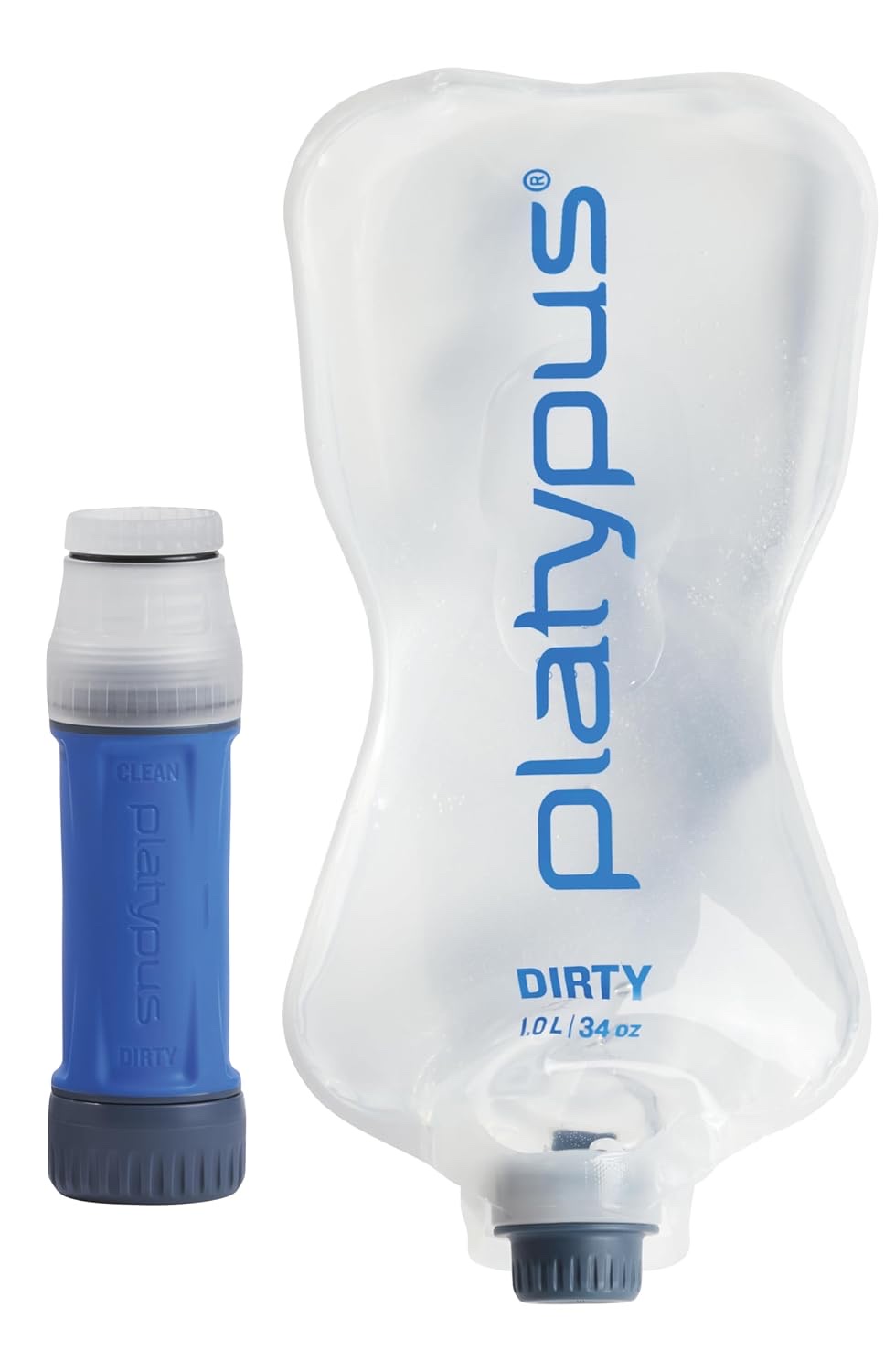 Product photoPlatypus QuickDraw 1 Liter Water Filter System
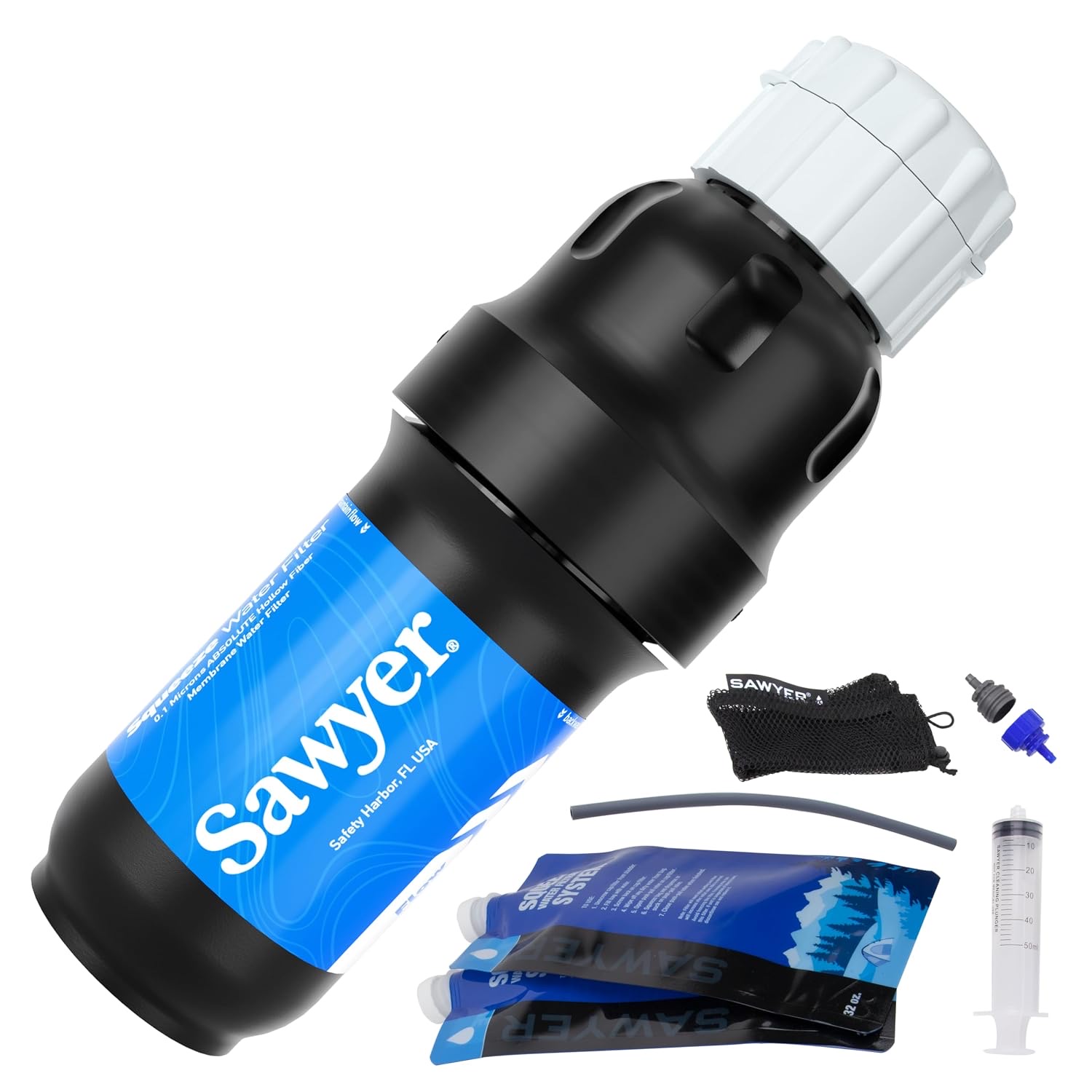 Product photoSawyer Squeeze