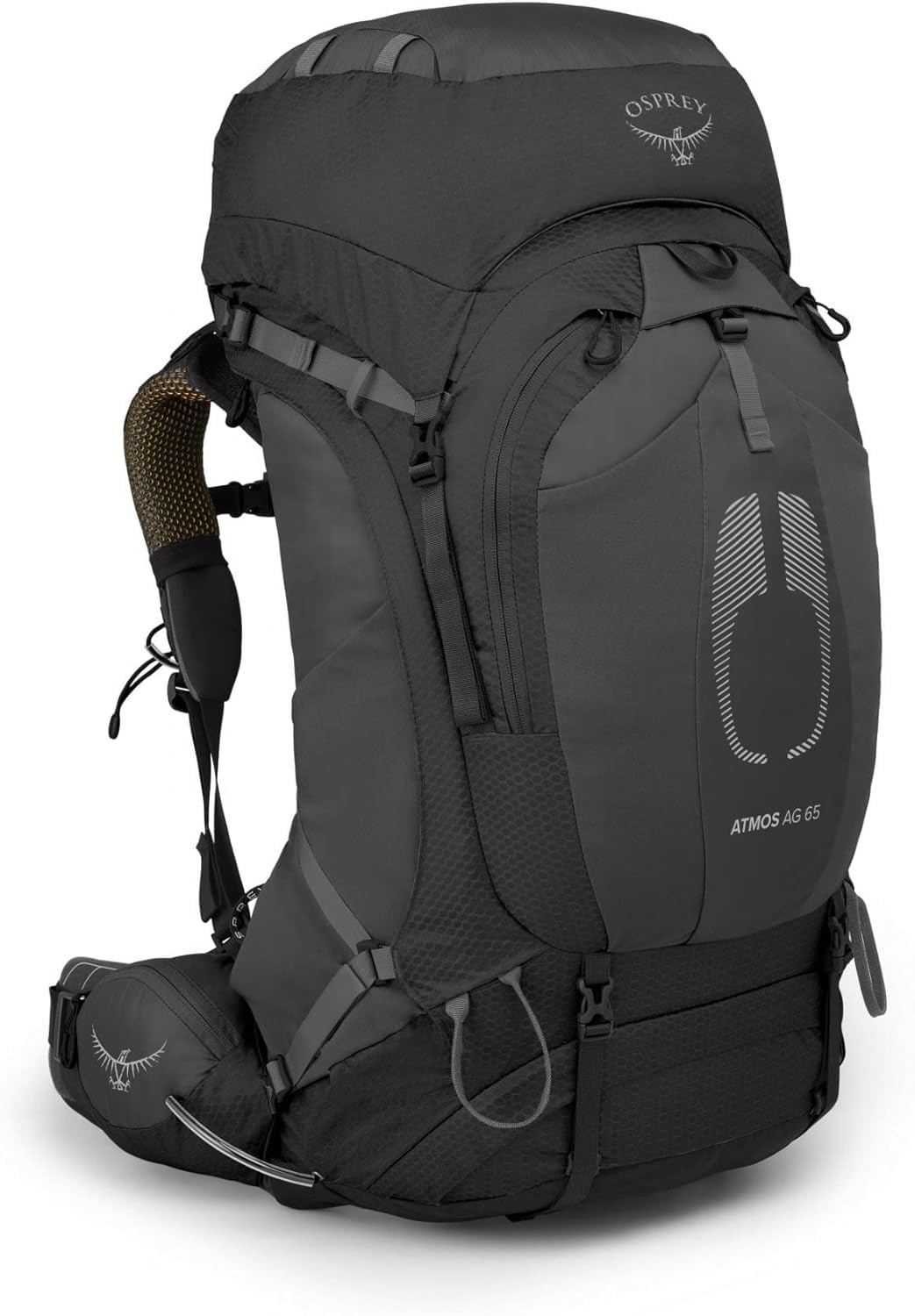
 Product photoOsprey Atmos AG 65
A ventilated overnight backpacking pack for multi-day trips where load comfort and airflow matter. This long-form profile explains where the model fits, what to verify, and which trade-offs deserve attention before you buy.
The Osprey Atmos AG 65 is a ventilated overnight backpacking pack for multi-day trips where load comfort and airflow matter. Its 65-litre capacity holds a full overnight kit, and the Anti-Gravity suspended mesh backsystem keeps air moving while distributing the load. It is not a daypack or an ultralight pack, so check the torso size and fit before buying.
Affiliate disclosure: some retailer links may earn a commission. That does not change the evidence labels or the need to verify the exact product, variant, current price, availability, warranty, and returns.
- 65-litre overnight capacity
- Anti-Gravity suspended mesh backsystem
- Size range S-M / L-XL
- Atmos AG 65L Men's family
- Black colour on the referenced listing
- Ventilated multi-day pack format
A multi-day pack built around ventilation
The Atmos AG 65 is built for backpackers who carry a full overnight kit over several days and want to stay comfortable doing it. The 65-litre capacity holds shelter, sleep gear, food, water, and clothing for a multi-day trip, and the Anti-Gravity backsystem keeps the load ventilated and well-distributed. On a warm climb with a heavy pack, that ventilation is the difference between a sweaty back and a bearable one.
The Anti-Gravity system uses a suspended mesh backpanel that holds the pack away from your body, allowing air to flow through the gap. That airflow reduces sweat buildup on long climbs, which is the most common comfort complaint on multi-day trips. The mesh also spreads the load across a larger area, which helps the pack feel stable even with a heavy load.
65 litres: what fits, and what does not
Sixty-five litres is a standard multi-day capacity. It covers a tent, sleeping bag, pad, stove, food for several days, water, clothing, and the small essentials, with room to spare for a bear canister or extra layers. For most backpackers, 65 litres is enough for a trip of three to five days without forcing hard choices about what to leave behind.
What does not fit is a full winter kit with bulky insulation and snow gear, or a trip longer than a week without resupply. The honest test is to lay out your gear and see how much space it takes. If your kit fills the pack with room to spare, the capacity is right. If it strains the zippers, you need a larger pack or a lighter kit.
Fit: torso size, hipbelt, and load position
A multi-day pack only works if it fits your torso, and the Atmos AG 65 comes in sizes to match different back lengths. The referenced listing offers S-M and L-XL sizes, so measure your torso and check the size chart before ordering. A pack that is too long pulls on your shoulders, and a pack that is too short rides high and feels unstable.
Load the pack with your real gear, tighten the hipbelt first, then the shoulder straps, then the load lifters, and walk around. The hipbelt should sit on your hip bones and carry most of the weight, while the shoulder straps stabilise the load. When the fit is right, you stop noticing the pack; when it is wrong, you notice it within the first hour.
Organization for a multi-day trip
Multi-day organization is about access and separation. The main compartment holds the bulk of your gear, while pockets and compartments keep frequently used items reachable: rain gear, snacks, water treatment, navigation, and sun protection. A sleeping bag compartment at the bottom keeps the bag separate and accessible at camp.
Think about the day's sequence when you pack. The rain shell should be reachable before the rain starts, the water filter should be accessible at a stream, and the headlamp should be findable in the dark. A well-organized pack is a plan, not just a container, and it saves time and frustration at every stop.
Ventilation and the load-shift trade
The suspended mesh back that makes the Atmos AG 65 so ventilated also shifts the load slightly rearward, which can feel less stable on steep or uneven ground. For normal trail hiking, the trade is worth it: the airflow keeps you cooler and drier, and the load distribution keeps the pack comfortable over long days.
On scrambles, off-trail routes, or very steep terrain, a close-fitting pack may feel more stable. The honest test is to load the pack and walk on varied terrain, including an incline, before deciding. If the ventilation feels like a benefit and the stability feels adequate, the trade is right for you.
How it compares: Atmos AG 65 vs a daypack vs an ultralight pack
Against a daypack like the Osprey Talon 22, the Atmos AG 65 is a different tool for a different job. The Talon carries a day load with agility and a close fit, while the Atmos carries a multi-day load with ventilation and load distribution. Neither replaces the other; they serve different trips.
Against an ultralight pack, the Atmos AG 65 is heavier but far more comfortable under a full load. Ultralight packs work when the load is light and carefully packed, but they transfer weight poorly once you add food, water, and shelter. If your multi-day loads are consistently substantial, the Atmos's frame and ventilation earn their weight.
Who should choose a different pack
Skip the Atmos AG 65 if you need a daypack, since 65 litres is far more than a day load requires. Skip it if you want an ultralight pack for fast, minimal trips, since the frame and ventilation system add weight. And skip it if you prefer a close-fitting technical pack for scrambling or off-trail routes, where the suspended back feels less stable.
Also consider a different pack if your torso falls outside the available sizes, or if you need a women's specific fit. A pack that does not fit cannot be fixed by features, so check the size and try the pack loaded before committing.
A practical decision table
| Decision point | What to verify | Why it matters |
|---|---|---|
| Role | A ventilated overnight backpacking pack for multi-day trips where load comfort and airflow matter. | Ventilation and capacity suit multi-day loads |
| Fit and access | Multi-day backpackers carrying a full overnight kit who want ventilation and load comfort. | Torso fit and hipbelt decide long-day comfort |
| Limit | You need a daypack, an ultralight pack, or a close-fitting technical fit. | Size and weight rule out day and ultralight buyers |
| Evidence | 65 L ventilated overnight pack | Size and capacity vary by listing |
Frequently asked questions
Is 65 litres enough for a multi-day trip?
For most backpackers, yes. It covers shelter, sleep gear, food for several days, water, and clothing. Lay out your gear first to confirm, since bulky winter kit or trips longer than a week may need more.
What is the Anti-Gravity backsystem?
It is Osprey's suspended mesh backpanel, which holds the pack away from your body so air can flow through the gap. It reduces sweat buildup and spreads the load, at the cost of shifting the load slightly rearward.
How do I choose the right size?
Measure your torso from the base of your neck to the top of your hip bones, and check the size chart. The referenced listing offers S-M and L-XL sizes. Test the fit loaded before buying.
Can I use the Atmos AG 65 as a daypack?
Not sensibly. It is a multi-day pack, and 65 litres is far more than a day load needs. A daypack like the Osprey Talon 22 is the right tool for day hikes.
Is the Atmos AG 65 waterproof?
No. Light rain is fine, but for a real downpour you need a rain cover or a liner inside the pack. Put electronics and spare clothes in dry bags, whatever the forecast.
How does it compare to an ultralight pack?
The Atmos is heavier but far more comfortable under a full load, with better ventilation and load distribution. Ultralight packs suit minimal loads; the Atmos suits real multi-day kits.
Useful Sources and Verification
Use these source types to verify current details before buying or publishing a recommendation.
- The current manufacturer product page and technical documentation for Osprey Atmos AG 65
- The exact retailer listing checked for the model, variant, included components, and commercial terms
- Independent review patterns treated as context rather than a substitute for personal fit or field testing
- Osprey official website for the current product page and technical documentation